

List Of New Species
A Growing Archive of India’s Hidden Biodiversity — Species Discovered Through Our Research
| Sr. No. | Taxa | Family | Scientific Name | Common Name | Authority | Year | Journal | District | State | Country | Etymology | DOI Number | Posters |
|---|---|---|---|---|---|---|---|---|---|---|---|---|---|
| 1 | Lizard | Gekkonidae | Hemiphyllodactylus nilgiriensis | Nilgiris slender gecko | AGARWAL, BAUER, PAL, SRIKANTHAN & KHANDEKAR | 2020 | Zootaxa | The Nilgiris | Tamil Nadu | India | The specific epithet is a toponym for the Nilgiri mountain range or Nilgiris, to which the new species is restricted | Here | N.A TWF-001.webp |
| 2 | Lizard | Gekkonidae | Hemiphyllodactylus peninsularis | KMTR slender gecko | AGARWAL, BAUER, PAL, SRIKANTHAN & KHANDEKAR | 2020 | Zootaxa | Tirunelveli | Tamil Nadu | India | The specific epithet comes from the Latin paene (almost) and insula (island), reflecting the isolated nature of the montane type locality of the new species at the southern extreme of the Indian peninsula. | Here | N.A TWF-001.webp |
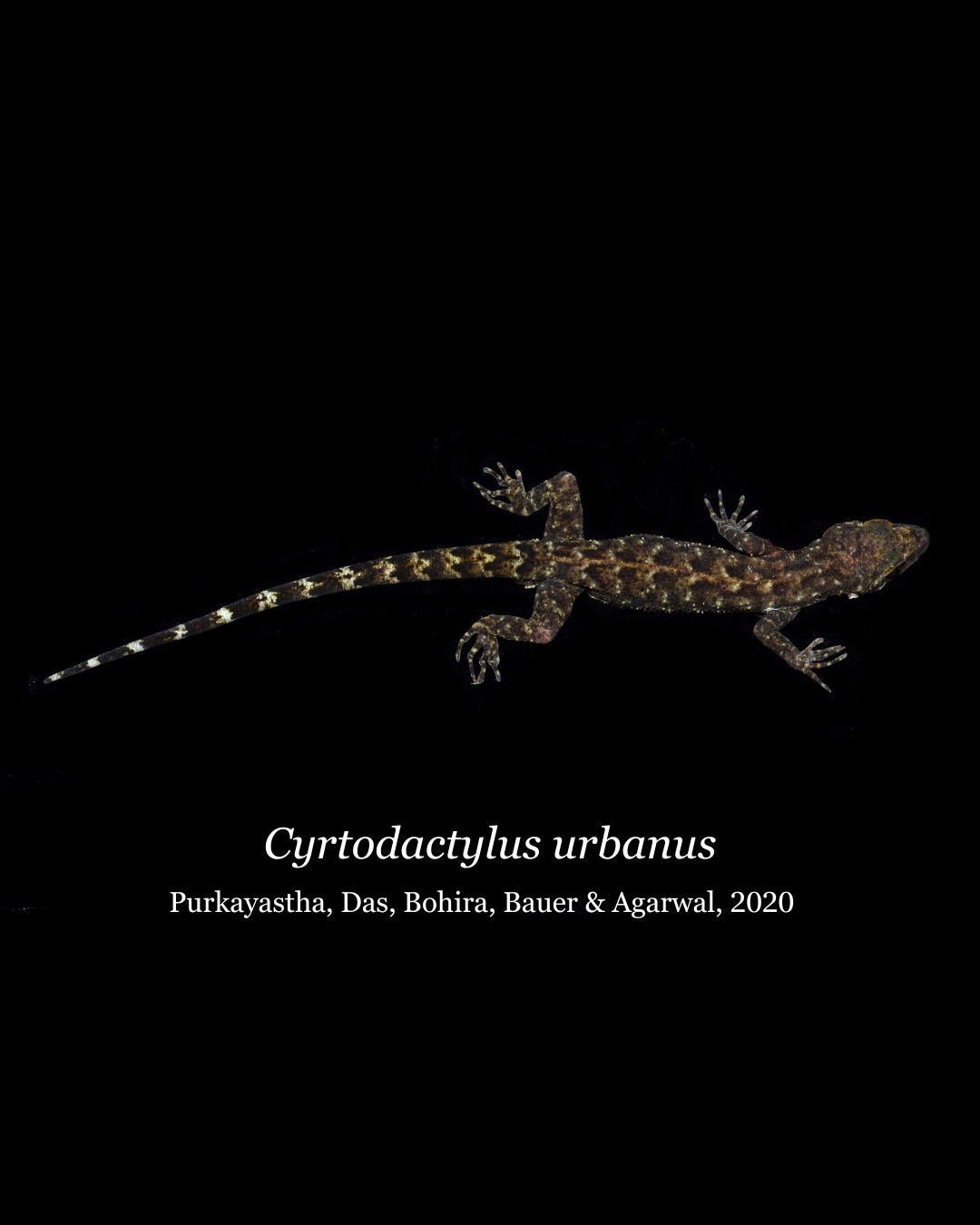
| 3 | Lizard | Gekkonidae | Cyrtodactylus urbanus | Urban bent-toed gecko | PURKAYASTHA, DAS, BOHIRA, BAUER & AGARWAL | 2020 | Zootaxa | Kamrup metropolitan | Assam | India | The specific epithet is an adjective meaning of or belonging to a city and reflects the urban habitat of the species, through which we also wish to highlight the importance of urban biodiversity. We propose Urban bent-toed gecko as common name for the gecko. | Here | Here |
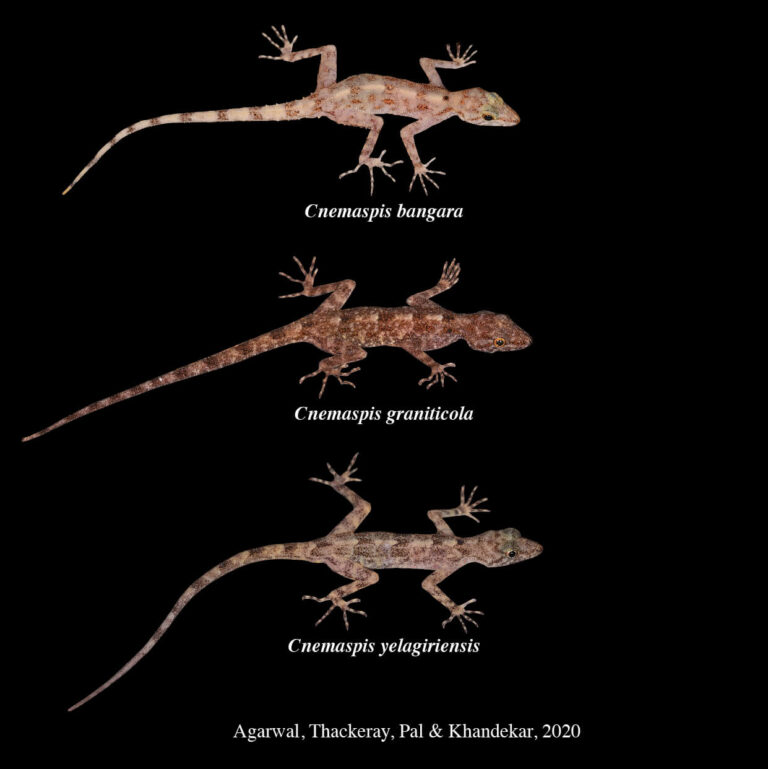
| 4 | Lizard | Gekkonidae | Cnemaspis bangara | Golden striped dwarf gecko | AGARWAL, THACKERAY, PAL, & KHANDEKAR | 2020 | Journal of Zoological Systematics and Evolutionary Research | Kolar | Karnataka | India | The specific epithet is the Kannada word for gold, used as a noun in apposition. The name is given for the yellow tail tip of the species and that the type locality of the species is just 27 km straight-line distance from the largest gold mine in India, Kolar Gold Fields. | Here | Here |
| 5 | Lizard | Gekkonidae | Cnemaspis graniticola | Granite dwarf gecko | AGARWAL, THACKERAY, PAL, & KHANDEKAR | 2020 | Journal of Zoological Systematics and Evolutionary Research | Chittoor | Andhra Pradesh | India | The species is named for the granite rock formations to which it appears restricted | Here | Here |
| 6 | Lizard | Gekkonidae | Cnemaspis yelagiriensis | Yelagiri dwarf gecko | AGARWAL, THACKERAY, PAL, & KHANDEKAR | 2020 | Journal of Zoological Systematics and Evolutionary Research | Vellore | Tamil Nadu | India | The specific epithet is a toponym for Yelagiri hills in Vellore District of Tamil Nadu, the type and only known locality for this species. | Here | Here |
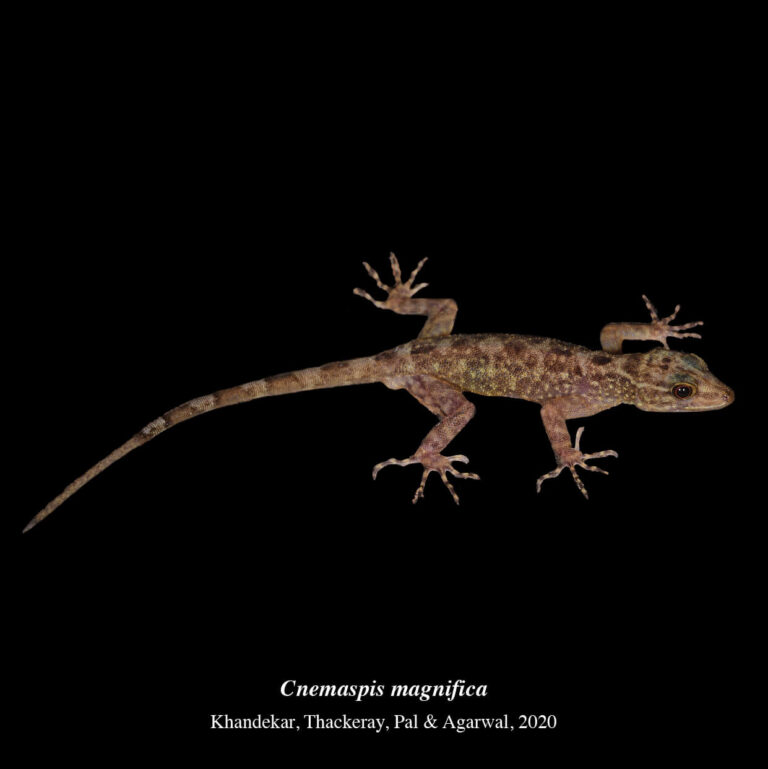
| 7 | Lizard | Gekkonidae | Cnemaspis magnifica | Magnificent dwarf gecko | KHANDEKAR, THACKERAY, PAL, & AGARWAL | 2020 | Zootaxa | Hassan | Karnataka | India | The epithet is derived from the Latin magnifico (=magnificent) and is given to this striking species for its large size and conspicuous colour pattern. | Here | Here |
| 8 | Lizard | Gekkonidae | Cnemaspis avasabinae | Nellore dwarf gecko | AGARWAL, BAUER & KHANDEKAR | 2020 | Zootaxa | Nellore | Andhra Pradesh | India | The specific epithet “avasabinae” honors Ava Sabin of the Sabin family, philanthropic supporters of herpetofaunal conservation. | Here | N.A TWF-005.webp |
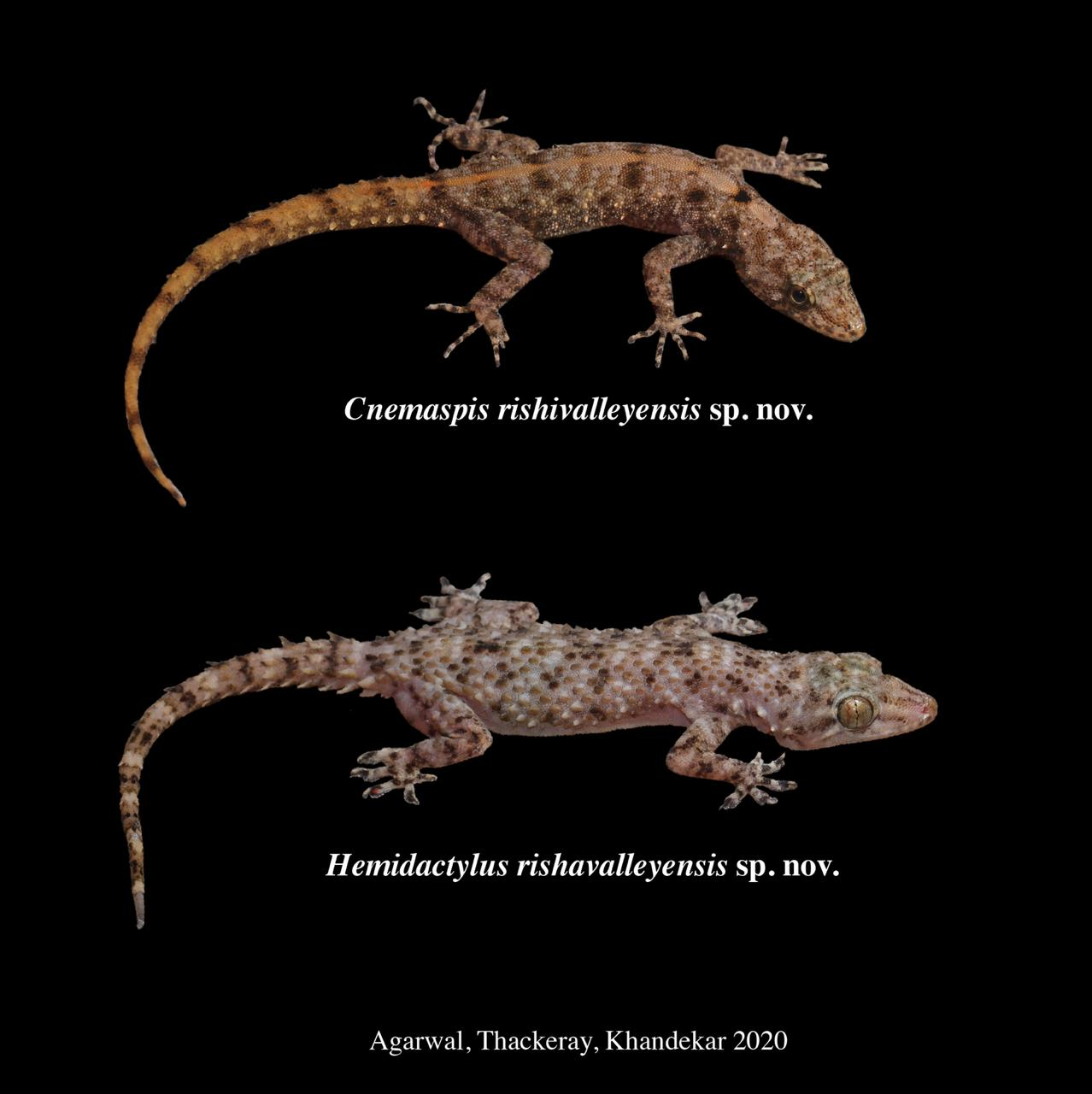
| 9 | Lizard | Gekkonidae | Hemidactylus rishivalleyensis | Rishi Valley brookiish gecko | AGARWAL, THACKERAY & KHANDEKAR | 2020 | Zootaxa | Chittoor | Andhra Pradesh | India | The specific epithet is a toponym for the Rishi Valley, the type and only known locality for the new species. | Here | Here |
| 10 | Lizard | Gekkonidae | Cnemaspis rishivalleyensis | Rishi Valley dwarf gecko | AGARWAL, THACKERAY & KHANDEKAR | 2020 | Zootaxa | Chittoor | Andhra Pradesh | India | The specific epithet is a toponym for the Rishi Valley, the type and only known locality for the new species. | Here | Here |
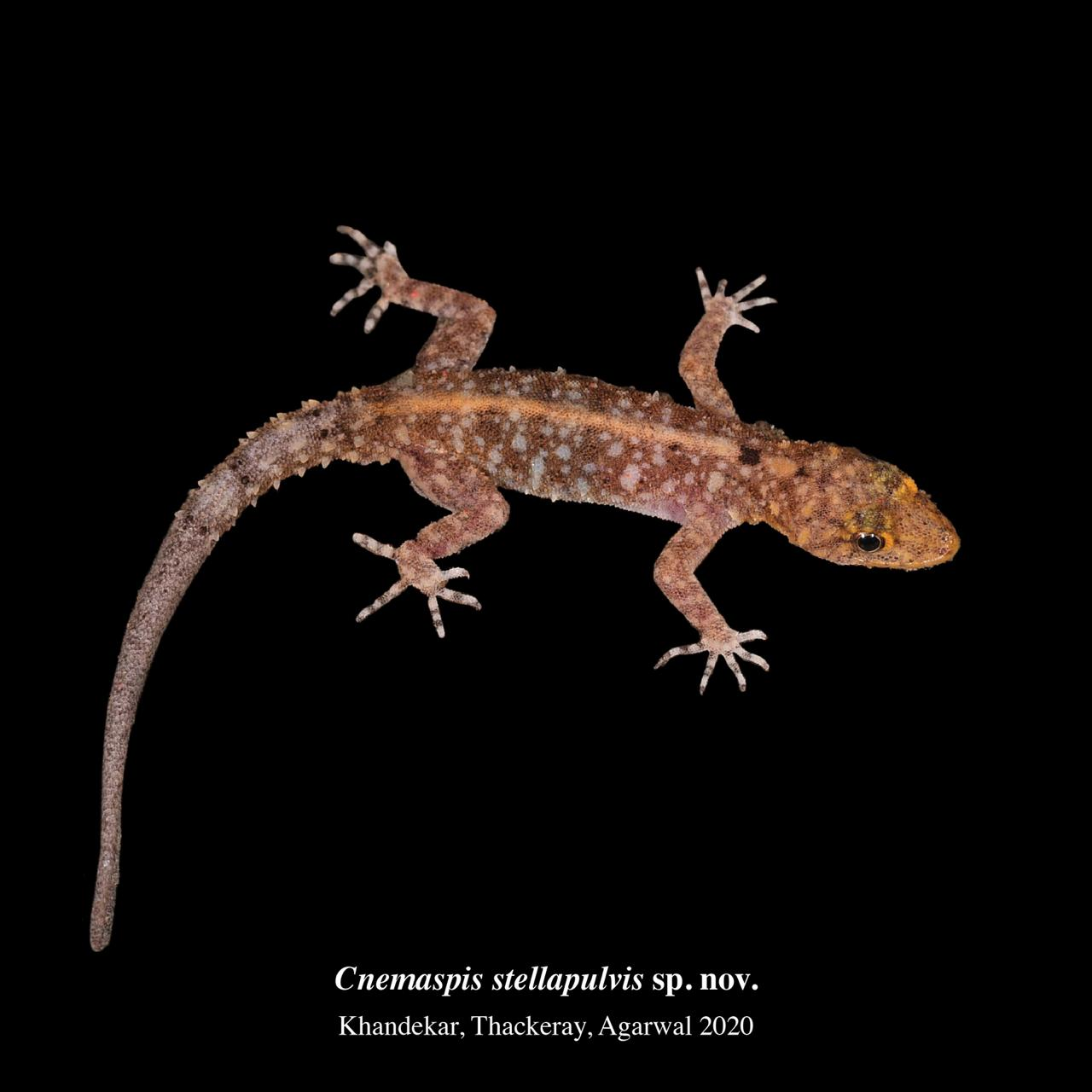
| 11 | Lizard | Gekkonidae | Cnemaspis stellapulvis | Stardust dwarf gecko | KHANDEKAR, THACKERAY & AGARWAL | 2020 | Zootaxa | Mandya | Karnataka | India | The specific epithet is an adjective formed by the combination of the Latin words stella and pulvis meaning stardust, an allusion to the prominent grey spots on the dorsum of the new species. | Here | Here |
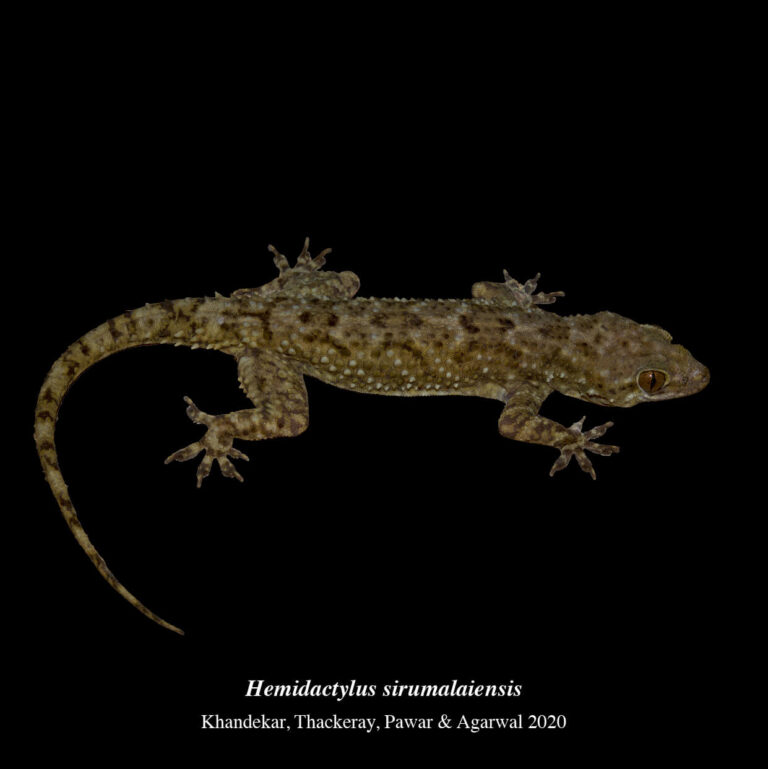
| 12 | Lizard | Gekkonidae | Hemidactylus sirumalaiensis | Sirumalai rock gecko | KHANDEKAR, THACKERAY, PAWAR, & AGARWAL | 2020 | Zootaxa | Dindigul | Tamil Nadu | India | The specific epithet is a toponym for the type locality of the species. | Here | Here |
| 13 | Lizard | Gekkonidae | Hemiphyllodactylus minimus | Ganjam rock gecko | MOHAPATRA, KHANDEKAR, DUTTA, MAHAPATRA, & AGARWAL | 2020 | Zootaxa | Ganjam | Odisha | India | The specific epithet is the Latin word for smallest as this is the smallest known species of the genus Hemiphyllodactylus. | Here | N.A TWF-009.webp |
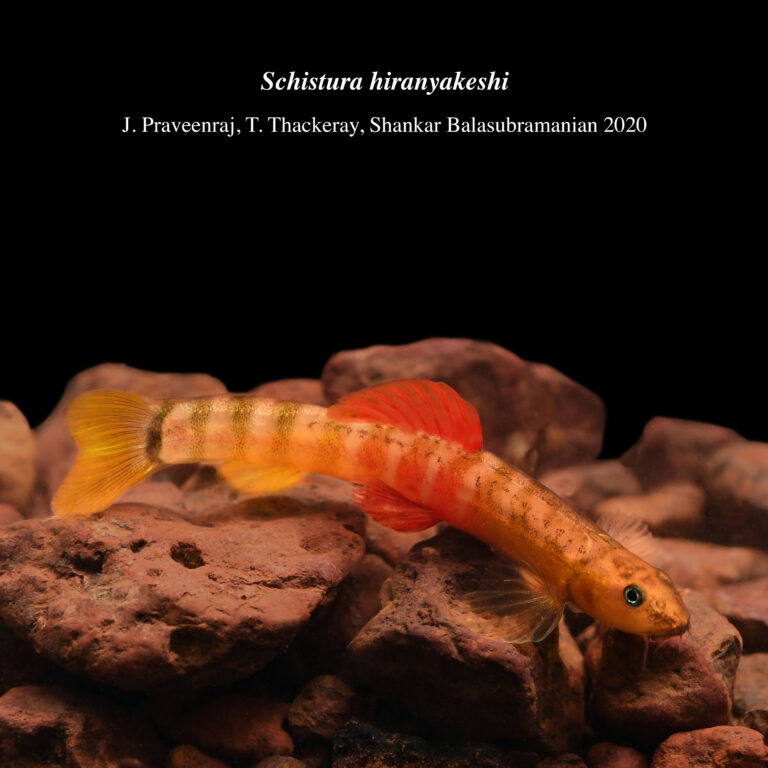
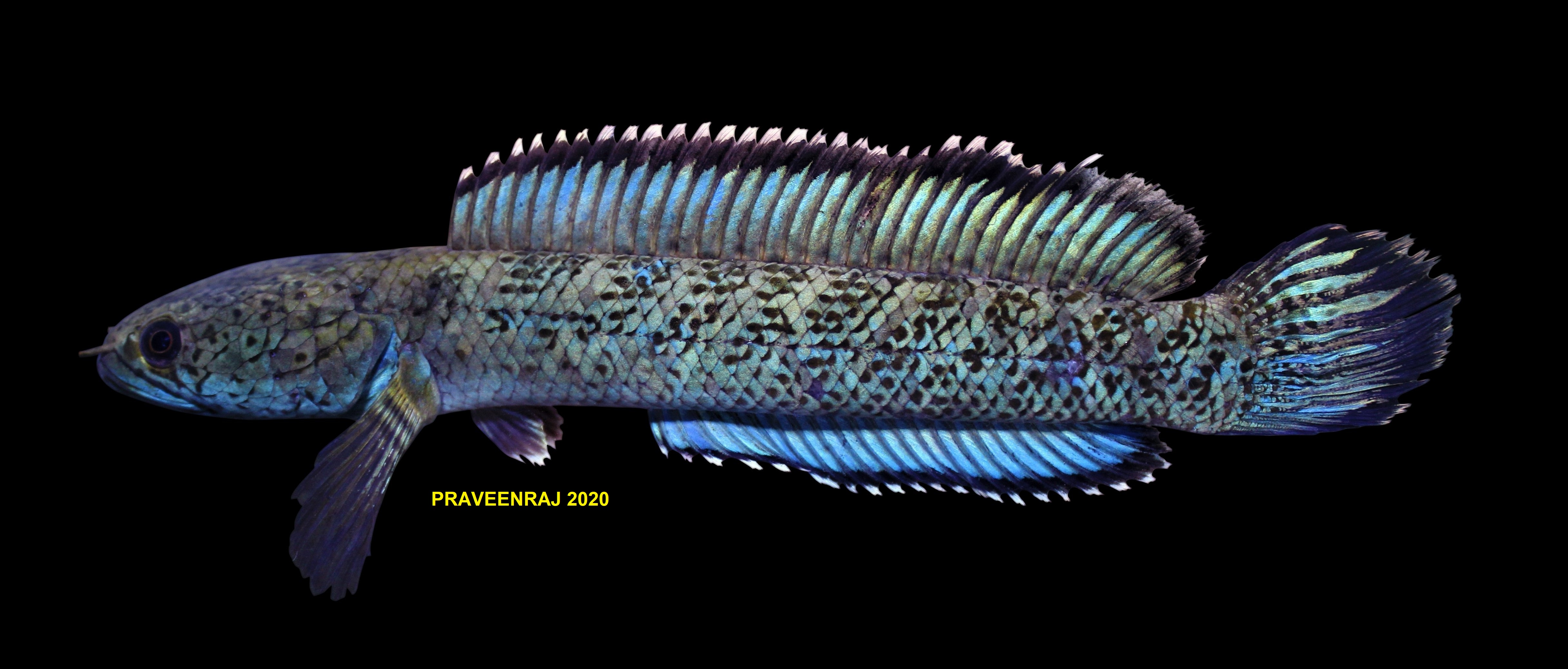
| 14 | Fish | Nemacheilidae | Schistura hiranyakeshi | hiranyakeshi loach | PRAVEENRAJ, THACKERAY & BALASUBRAMANIAN | 2020 | aqua, International Journal of Ichthyology | Sindhudurg | Maharashtra | India | The species is named after the Hiranyakeshi River in Sindhudurg District of Maharashtra. The epithet “hiranyakeshi” in Sanskrit means ‘golden hair’, also alludes to the golden-yellow coloration and stripes on the body of adult specimens | N.A | Here |
| 15 | Lizard | Gekkonidae | Hemidactylus hannahsabinae | CERIACO, AGARWAL, MARQUES & BAUER | 2020 | Zootaxa | Bié Province | Angola | The specific epithet hannahsabinae honors Hannah Sabin of the Sabin family, philanthropic supporters of herpetofaunal conservation | Here | N.A TWF-011.webp | ||
| 16 | Lizard | Gekkonidae | Hemidactylus vernayi | CERIACO, AGARWAL, MARQUES & BAUER | 2020 | Zootaxa | Benguela Province | Angola | The specific epithet “vernayi”, formed in the genitive singular and is masculine, is given in honor of Arthur Stannard Vernay (1877–1960), English-born American explorer and philanthropist who funded and organized the Vernay Angolan Expedition for the American Museum of Natural History, where the type series were collected. Vernay also supported the Vernay-Lang Kalahari Expedition for the Transvaal Museum, on which the herpetologist V.F. FitzSimons (1901–1975) made important reptile discoveries. We propose the Portuguese common name of “Osga de Vernay”, and the English common name of “Vernay’s Tropical Gecko”. | Here | N.A TWF-011.webp | ||
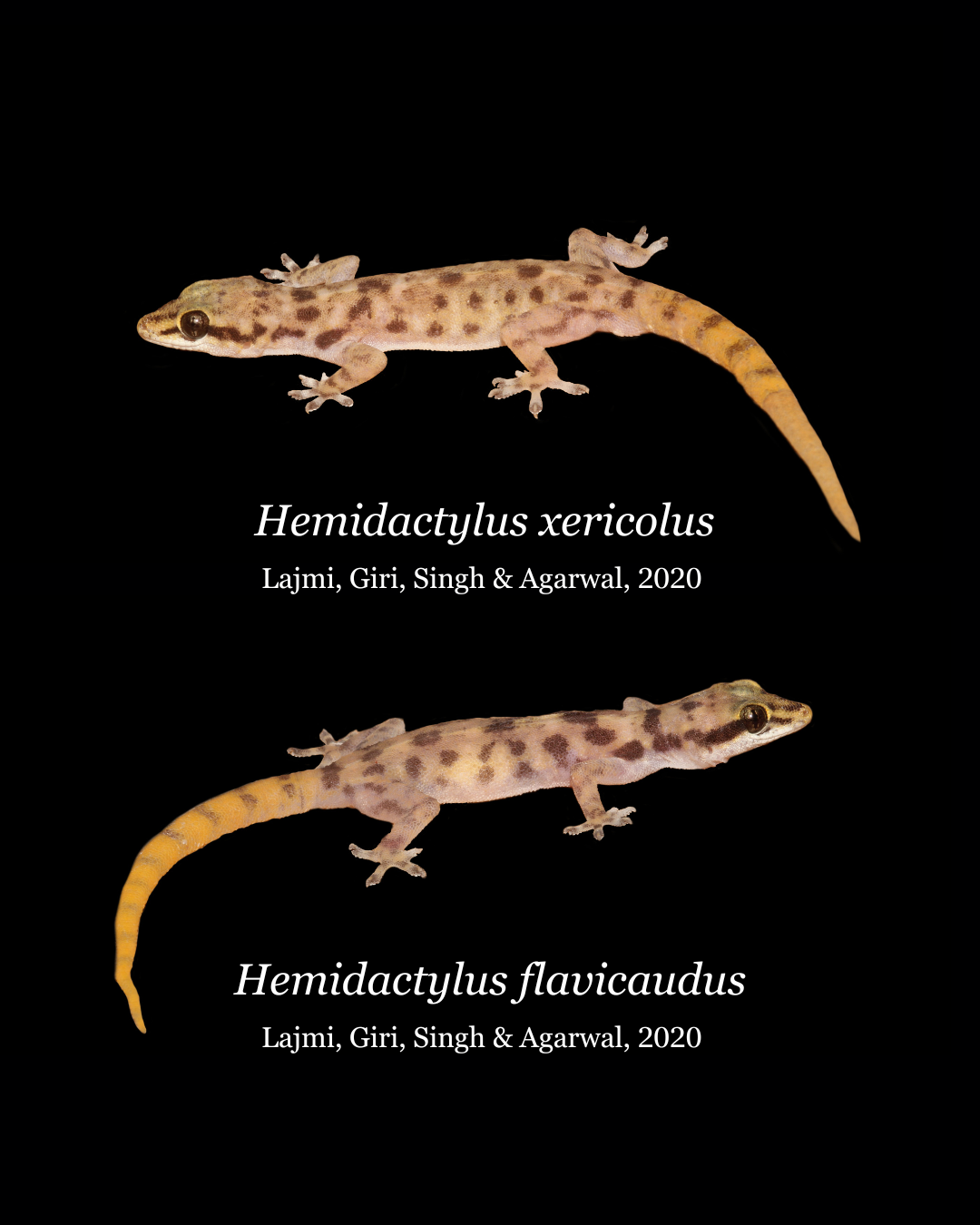
| 17 | Lizard | Gekkonidae | Hemidactylus xericolus | Nalgonda yellow- tailed brookish gecko | LAJMI, GIRI, SINGH & AGARWAL | 2020 | Zootaxa | Nalgonda | Telangana | India | The specific epithet is a masculine adjective derived from the Greek xeros (= dry) and the Latincola (= inhabitant of) and is descriptive of the arid, scrub habitats that the new species and many other endemic Indian Hemidactylus inhabit. The name also seeks to bring attention to the neglected and biodiverse Indian dry zone. | Here | Here |
| 18 | Lizard | Gekkonidae | Hemidactylus flavicaudus | Mahabubnagar yellow- tailed brookish gecko | LAJMI, GIRI, SINGH & AGARWAL | 2020 | Zootaxa | Mahabubnagar | Telangana | India | The specific epithet is an adjective derived from the Latin flavus (= yellow) and cauda (= tail), for the yellow tail of the new species. | Here | Here |
| 19 | Fish | Channidae | Channa aristonie | PRAVEENRAJ, THACKERAY, SINGH, UMA, MOULITHARAN & MUKHIM | 2020 | Copeia | Meghalaya | India | This species is named after Aristone M. Ryndongsngi from Meghalaya, in recognition of his discovery of this new species and assistance to the authors during the field work. | Here | Here | ||
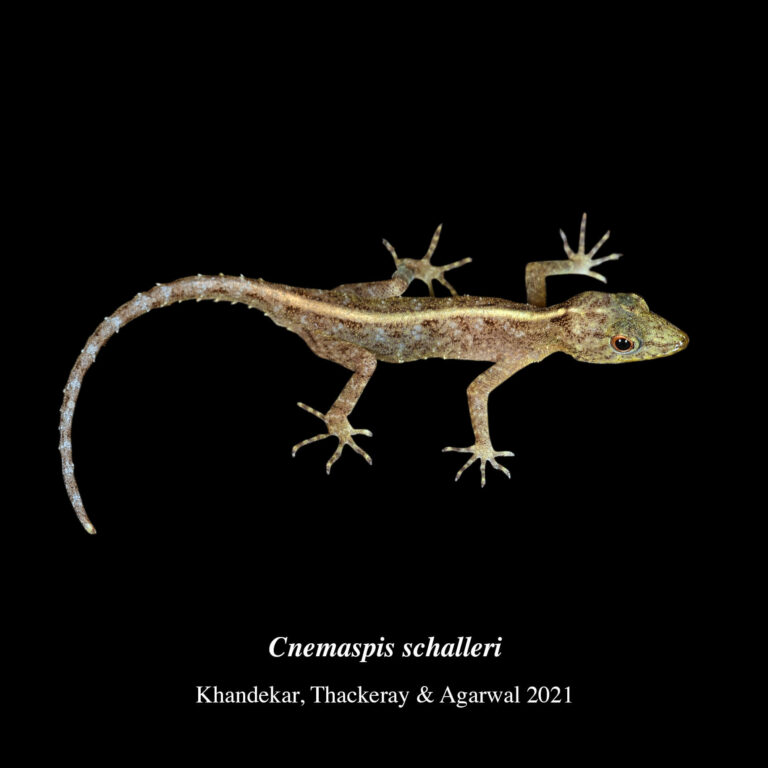
| 20 | Lizard | Gekkonidae | Cnemaspis schalleri | Schaller's Sakleshpur dwarf gecko | KHANDEKAR, THACKERAY & AGARWAL | 2021 | Zootaxa | Hassan | Karnataka | India | The specific epithet is a patronym honouring George Beals Schaller, for his contributions to conservation, field research and science. Dr. Schaller has worked across a diversity of landscapes, but his early work was in the grasslands of Kanha, Madhya Pradesh, India and he continues to work on large mammals in the Indian subcontinent. | Here | Here |
| 21 | Lizard | Gekkonidae | Hemidactylus gramineus | CERIACO, BAUER, KUSAMBA, AGARWAL & GREENBAUM | 2021 | Journal of Herpetology | Bombo-Lumene Reserve | Kinshasa Province | Congo (DRC) | The specific epithet ‘‘gramineus’’ refers to thegrassy type of habitat from which the species was collected in the DRC and the Republic of the Congo (Fig. 5) and is applied here as an adjective in the genitive singular. We propose the French common name of ‘‘Gecko de l’herbe’’ and the English common name of ‘‘grass-dwelling tropical gecko.’ | Here | N.A TWF-016.webp | |
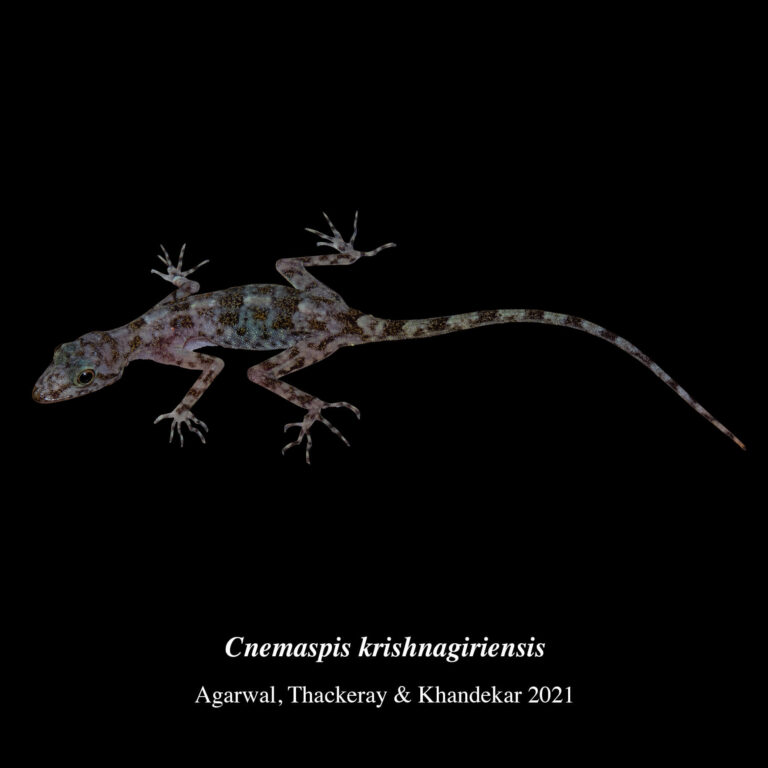
| 22 | Lizard | Gekkonidae | Cnemaspis krishnagiriensis | Krishnagiri dwarf gecko | AGARWAL, THACKERAY & KHANDEKAR | 2021 | Zootaxa | Krishnagiri | Tamil Nadu | India | The specific epithet is a toponym for Krishnagiri in Krishnagiri District of Tamil Nadu, the type and only known locality for this species. | Here | Here |
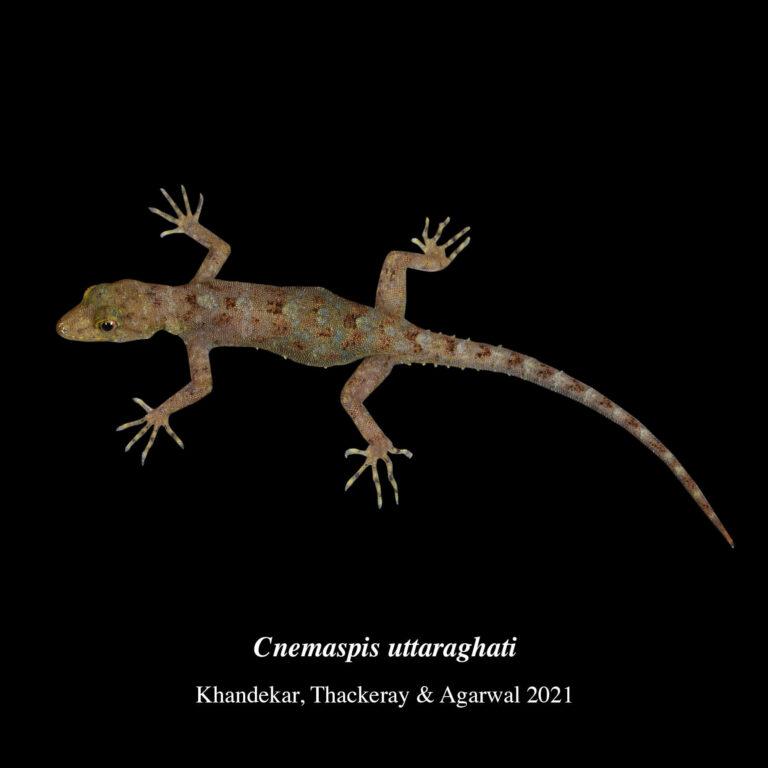
| 23 | Lizard | Gekkonidae | Cnemaspis uttaraghati | Harishchandragad dwarf gecko | KHANDEKAR, THACKERAY & AGARWAL | 2021 | Zootaxa | Ahmednagar | Maharashtra | India | The specific epithet is used as a noun in apposition and is derived from the Sanskrit ‘uttara’ for north and ‘ghat’ for mountains, as this mountain locality represents the currently known northern limit of Cnemaspis distribution in the Western Ghats. | Here | Here |
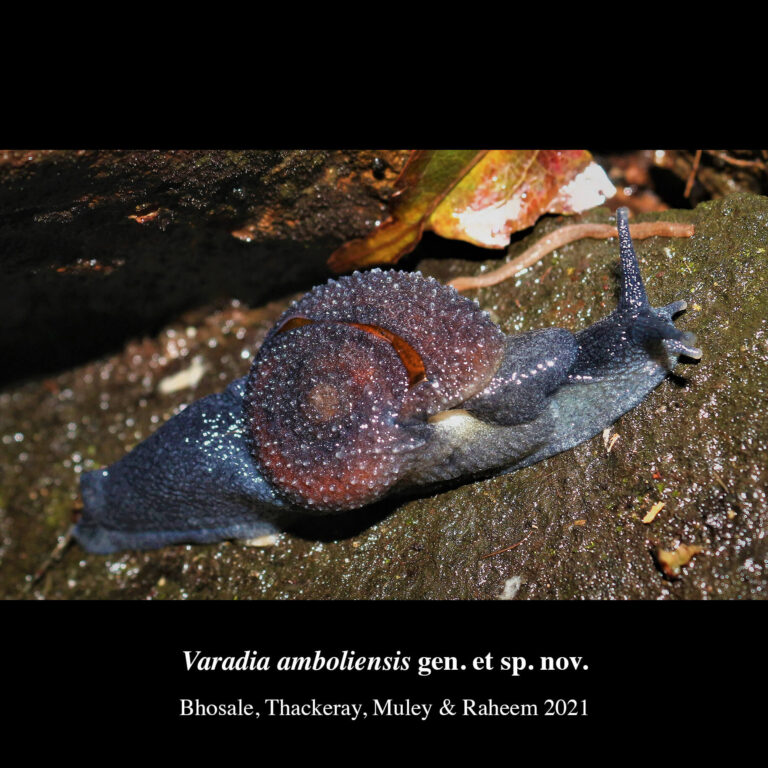
| 24 | Snail | Ariophantidae | Varadia amboliensis | BHOSALE, THACKERAY, MULEY & RAHEEM | 2021 | European Journal of Taxonomy | Sindhudurg | Maharashtra | India | Named after the type locality, Amboli, in the Sindhudurg District of southern Maharashtra, India. In recent years, Amboli has emerged as a hotspot for the discovery of new species (particularly reptiles and amphibians) in the northern Western Ghats. | Here | Here | |
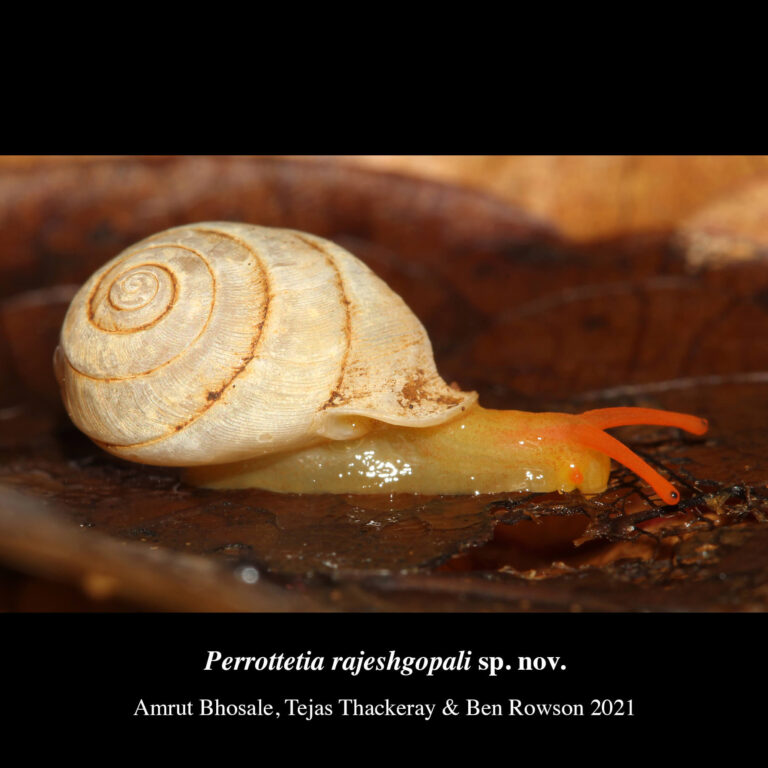
| 25 | Snail | Streptaxidae | Perrottetia rajeshgopali | BHOSALE, THACKERAY & ROWSON | 2021 | Archiv fur Molluskenkunde | Kolhapur | Maharashtra | India | The specific epithet is an eponym honouring Dr Rajesh Gopal, currently the secretary General of the Global Tiger Forum. Dr Gopal is recognised for his remarkable work on the tigers of India during his tenure in the Indian Forest Service. His work has facilitated a better understanding of the mysterious lives of the big cats, helped to formulate better conservation action plans, and also proved to be instrumental in mitigating human-animal conflict to a great extent. | Here | Here | |
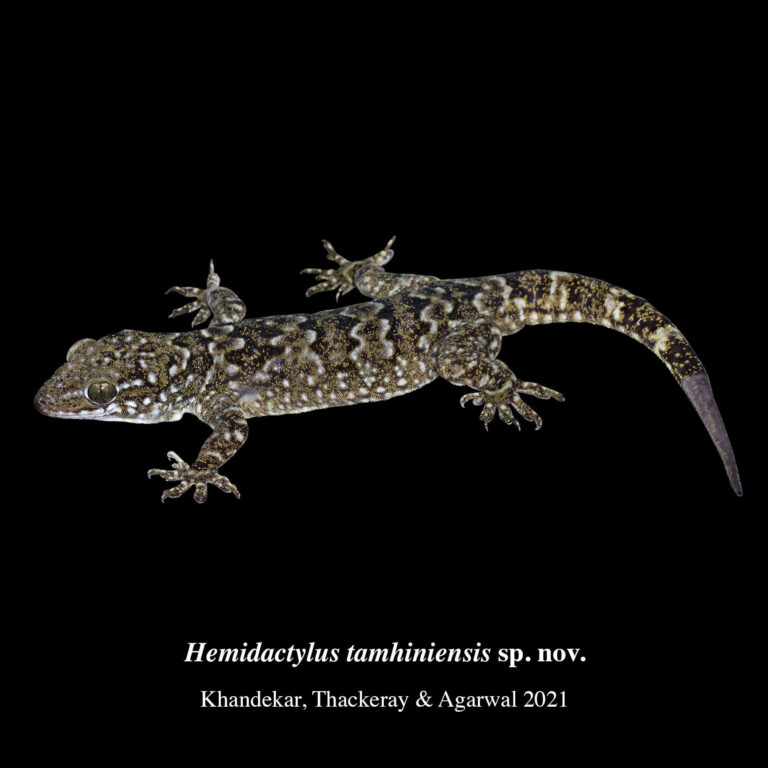
| 26 | Lizard | Gekkonidae | Hemidactylus tamhiniensis | Tamhini giant rock gecko or basalt giant rock gecko | KHANDEKAR, THACKERAY & AGARWAL | 2021 | Zootaxa | Raigad | Maharashtra | India | The specific epithet is a toponym for Tamhini Ghat in Pune and Raigad Districts of Maharashtra, the type and currently only known locality for this species. | Here | Here |
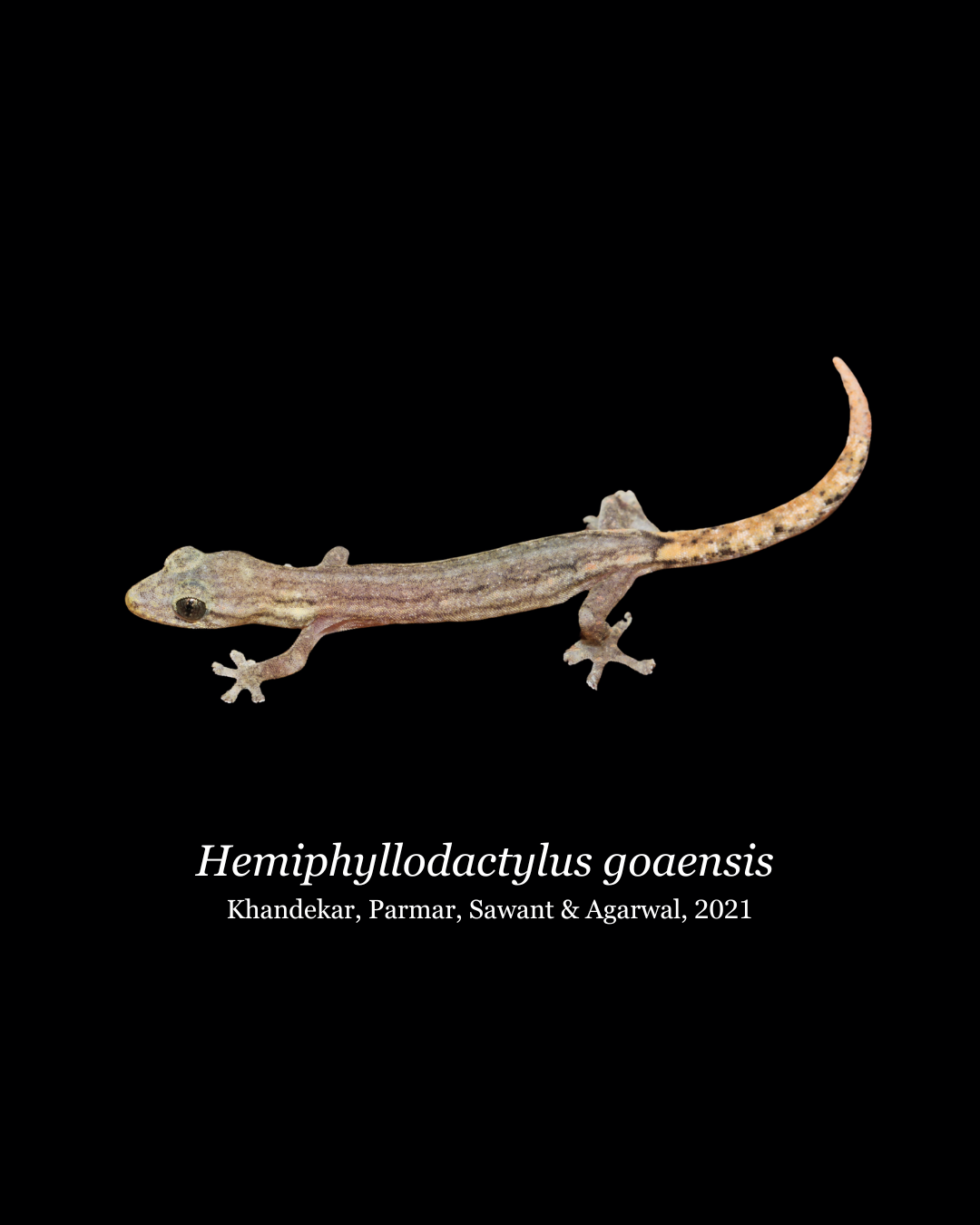
| 27 | Lizard | Gekkonidae | Hemiphyllodactylus goaensis | Goan slender gecko | KHANDEKAR, PARMAR, SAWANT & AGARWAL | 2021 | Zootaxa | North Goa | Goa | India | The specific epithet is a toponym for Goa state, to which the new species is currently restricted to. | Here | Here |
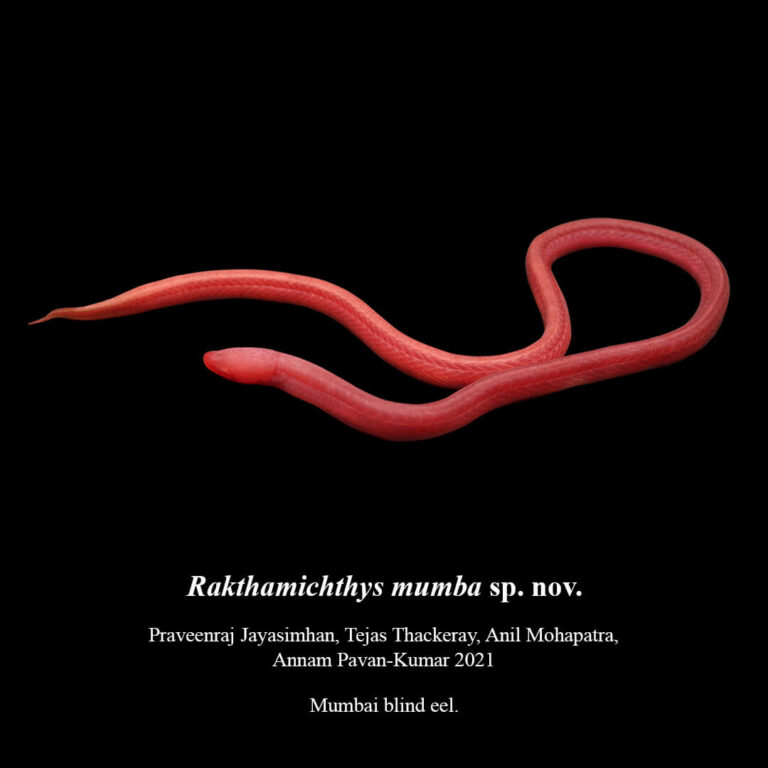
| 28 | Fish | Synbranchidae) | Rakthamichthys mumba | PRAVEENRAJ, THACKERAY, MOHAPATRA & PAVAN-KUMAR | 2021 | aqua, International Journal of Ichthyology | Maharashtra | India | The species name mumba refers to the type locality, the city of Mumbai. The word ‘mumba’ originated from Marathi, an official language spoken by the inhabitants of Maharashtra,which honours the ‘Maha Amba’ or ‘Mumba Aai’, the patron goddess worshipped by the inhabitants of this city. It is used as a noun in apposition. | N.A | Here | ||
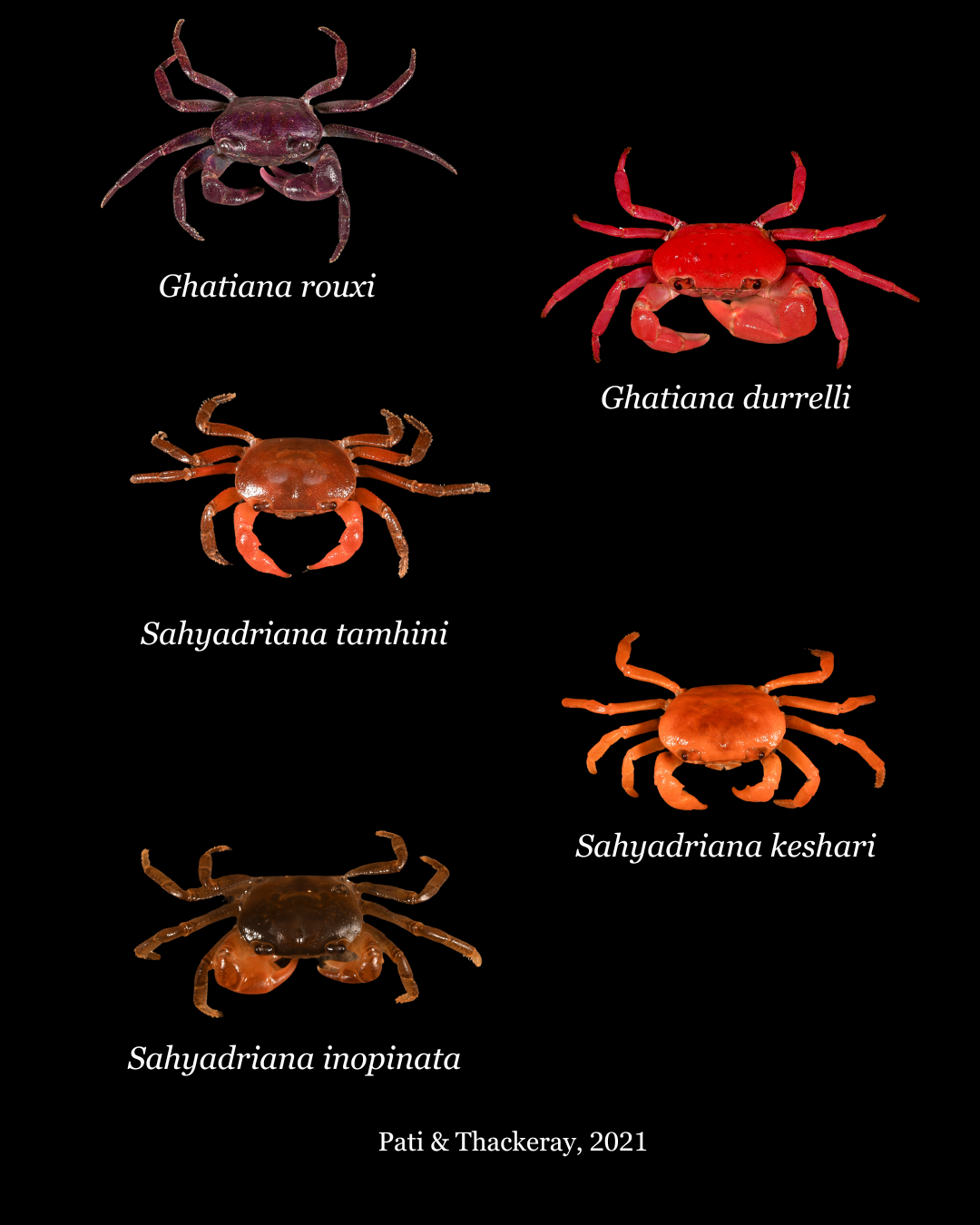
| 29 | Crab | Gecarcinucidae | Ghatiana durrelli | PATI & THACKERAY | 2021 | Zoosystema | Satara | Maharashtra | India | The species name honours British naturalist, Gerald Malcolm Durrell for his in situ and ex situ conservation efforts. The specific epithet is thus conceived as a noun in the genitive singular. | Here | Here | |
| 30 | Crab | Gecarcinucidae | Ghatiana rouxi | PATI & THACKERAY | 2021 | Zoosystema | Uttara Kannada | Karnataka | India | The species is named after the Swiss zoologist, Dr Jean Roux for his contributions on the study of crabs of the Western Ghats. The species name is conceived as a noun in the genitive singular. | Here | Here | |
| 31 | Crab | Gecarcinucidae | Sahyadriana inopinata | PATI & THACKERAY | 2021 | Zoosystema | Satara | Maharashtra | India | The species name is an adjective in the Latin nominative singular meaning unexpected, referring to the unexpected discovery of the species from the type locality of a congener, i.e., S. triangulus (Pati & Sharma, 2014). | Here | Here | |
| 32 | Crab | Gecarcinucidae | Sahyadriana keshari | PATI & THACKERAY | 2021 | Zoosystema | Nashik | Maharashtra | India | The species name, derived from the Marathi language for orange coloured, refers to live colouration of the crab. The name is used as a Latin noun in apposition. | Here | Here | |
| 33 | Crab | Gecarcinucidae | Sahyadriana tamhini | PATI & THACKERAY | 2021 | Zoosystema | Pune | Maharashtra | India | The species is named after the type locality, Tamhini Ghat, a hotspot for wildlife in Maharashtra that hosts rich biodiversity and many endemic species, including that of the freshwater crabs. The species name is used as a Latin noun in apposition. | Here | Here | |
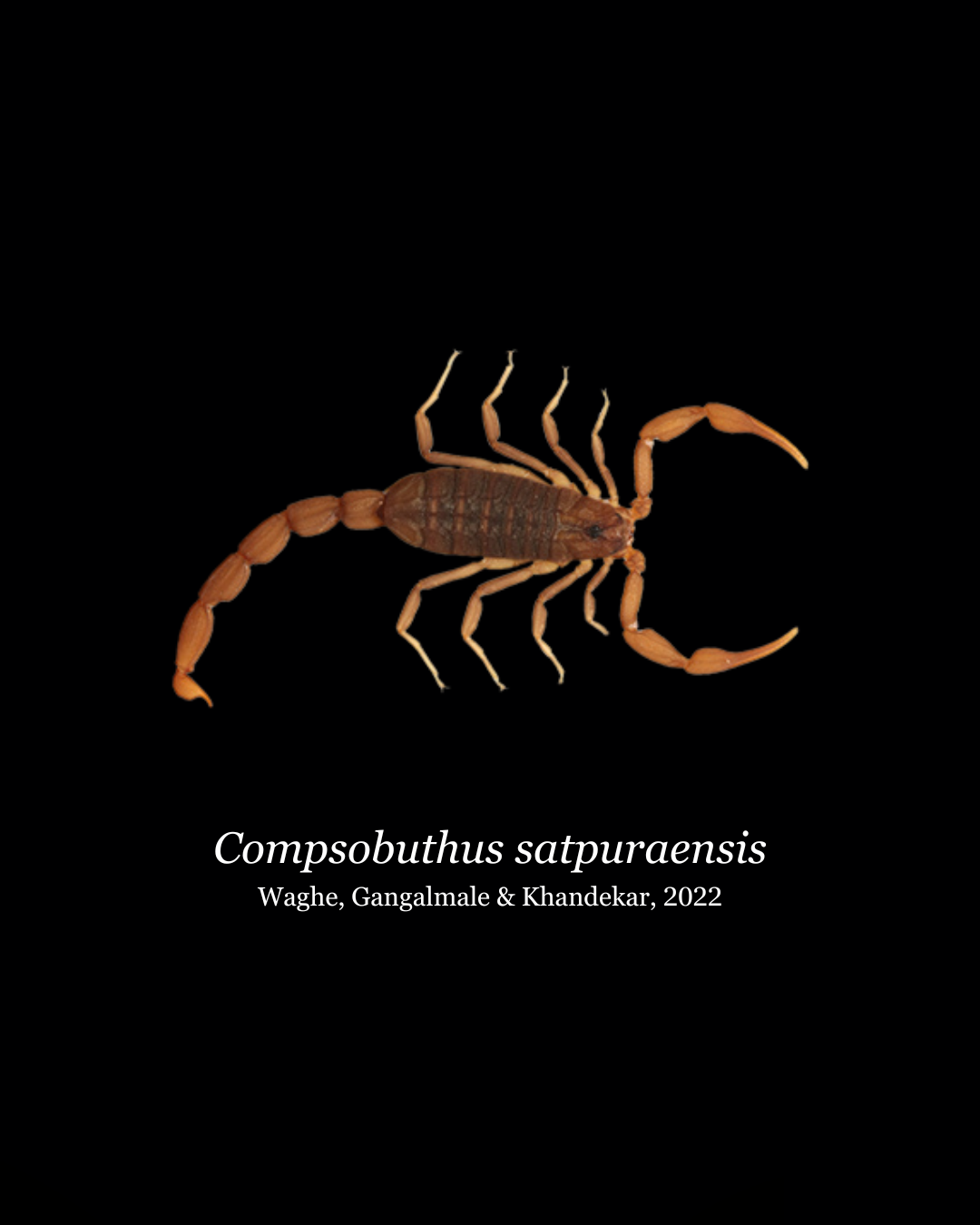
| 34 | Scorpion | Buthidae | Compsobuthus satpuraensis | Satpura ground scorpion | WAGHE, GANGALMALE & KHANDEKAR | 2022 | Euscorpius | Jalgaon | Maharashtra | India | The specific epithet is a toponym for Satpura Hills; the species is currently only known from the foothills of this hill range in Jalgaon District of Maharashtra. | Here | Here |
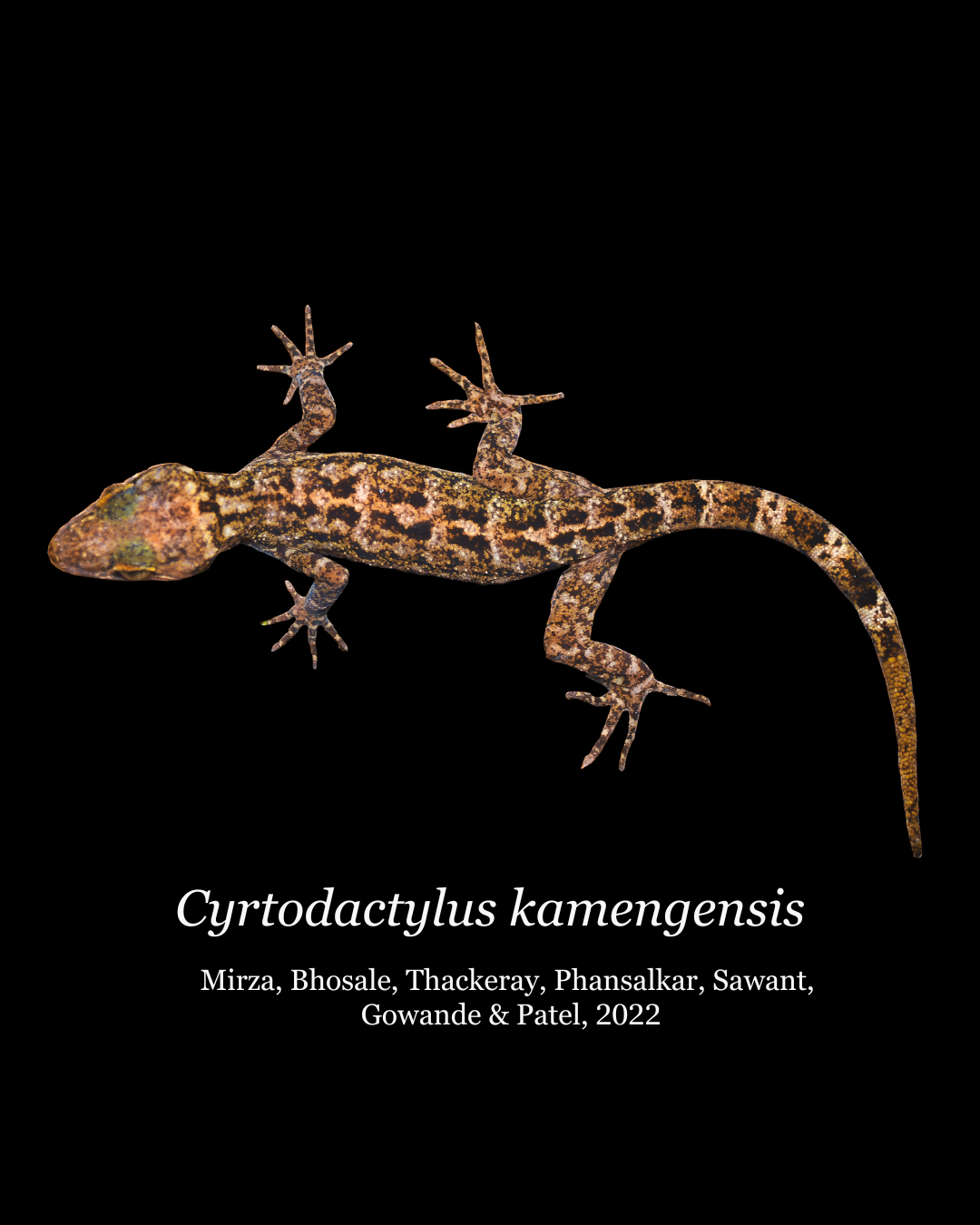
| 35 | Lizard | Gekkonidae | Cyrtodactylus kamengensis | MIRZA, BHOSALE, THACKERAY, PHANSALKAR, SAWANT, GOWANDE & PATEL | 2022 | Herpetozoa | West Kameng | Arunachal Pradesh | India | The specific epithet refers to the Kameng River in western Arunachal Pradesh close to which the new species was discovered. | Here | Here | |
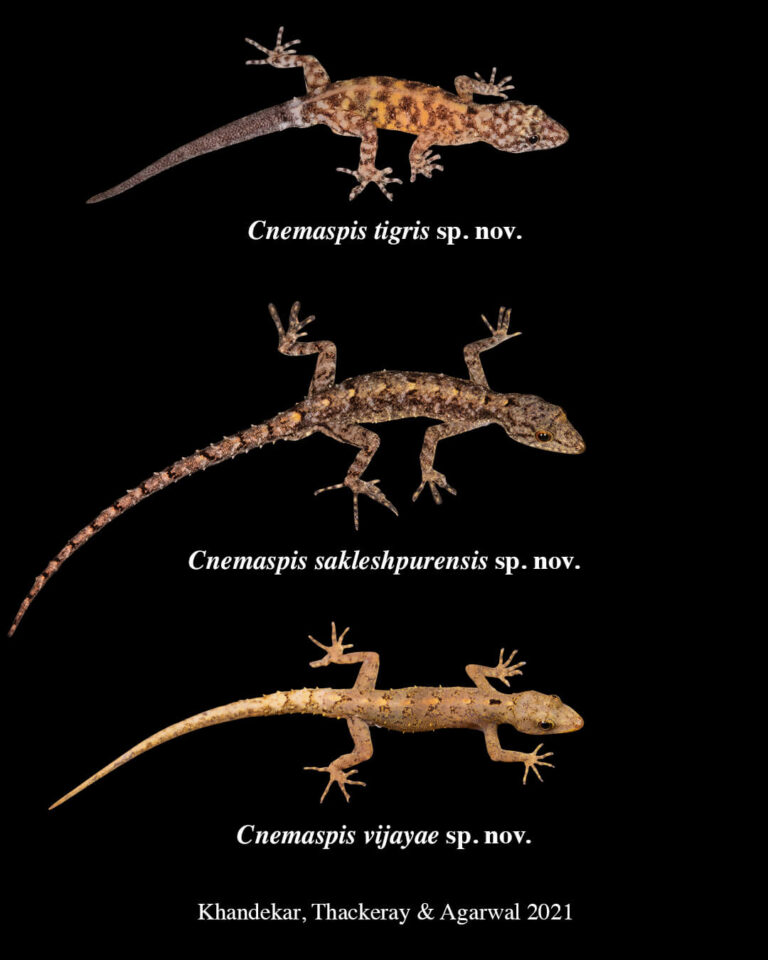
| 36 | Lizard | Gekkonidae | Cnemaspis tigris | Tiger-striped dwarf gecko | KHANDEKAR, THACKERAY & AGARWAL | 2022 | Vertebrate Zoology | Chickballapur | Karnataka | India | The specific epithet is the Latin tigris (tiger), treated here as a noun in apposition, referencing the tiger-like colour pattern in males of the new species with a strongly banded dorsum suffused with yellow. | Here | Here |
| 37 | Lizard | Gekkonidae | Cnemaspis sakleshpurensis | Sakleshpur dwarf gecko | KHANDEKAR, THACKERAY & AGARWAL | 2022 | Vertebrate Zoology | Hassan | Karnataka | India | The specific epithet is a toponym for Sakleshpur in Hassan district of Karnataka, the place where the species is currently known from. | Here | Here |
| 38 | Lizard | Gekkonidae | Cnemaspis vijayae | Vijaya's Coorg dwarf gecko | KHANDEKAR, THACKERAY & AGARWAL | 2022 | Vertebrate Zoology | Kodagu | Karnataka | India | The specific epithet is a Latinized eponym in honour of India’s first women herpetologist, Late Jagannathan Vijaya (1959–1987) for her inspiring contribution towards ecology of rare Indian turtles. | Here | Here |
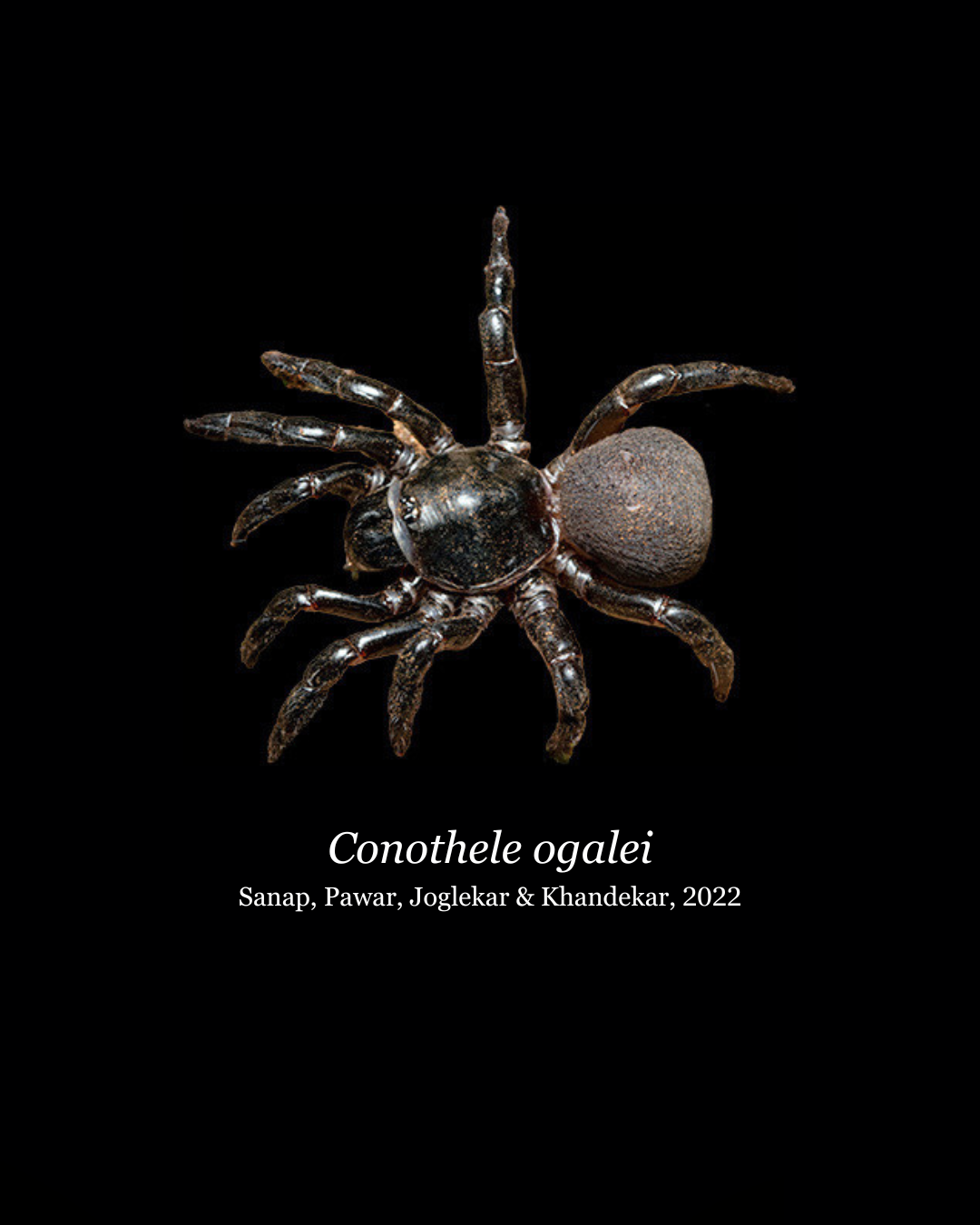
| 39 | Spider | Halonoproctidae | Conothele ogalei | Ogale's Amboli trapdoor spider | SANAP, PAWAR, JOGLEKAR & KHANDEKAR | 2022 | Arthropoda Selecta | Sindhudurg | Maharashtra | India | The specific epithet is a patronym honoring our friend Mr. Hemant Ogale, an eminent naturalist who also runs a resort in Amboli from where the type series were collected. He has been documenting biodiversity around Amboli and working toward the conservation of the landscape for two decades. | Here | Here |
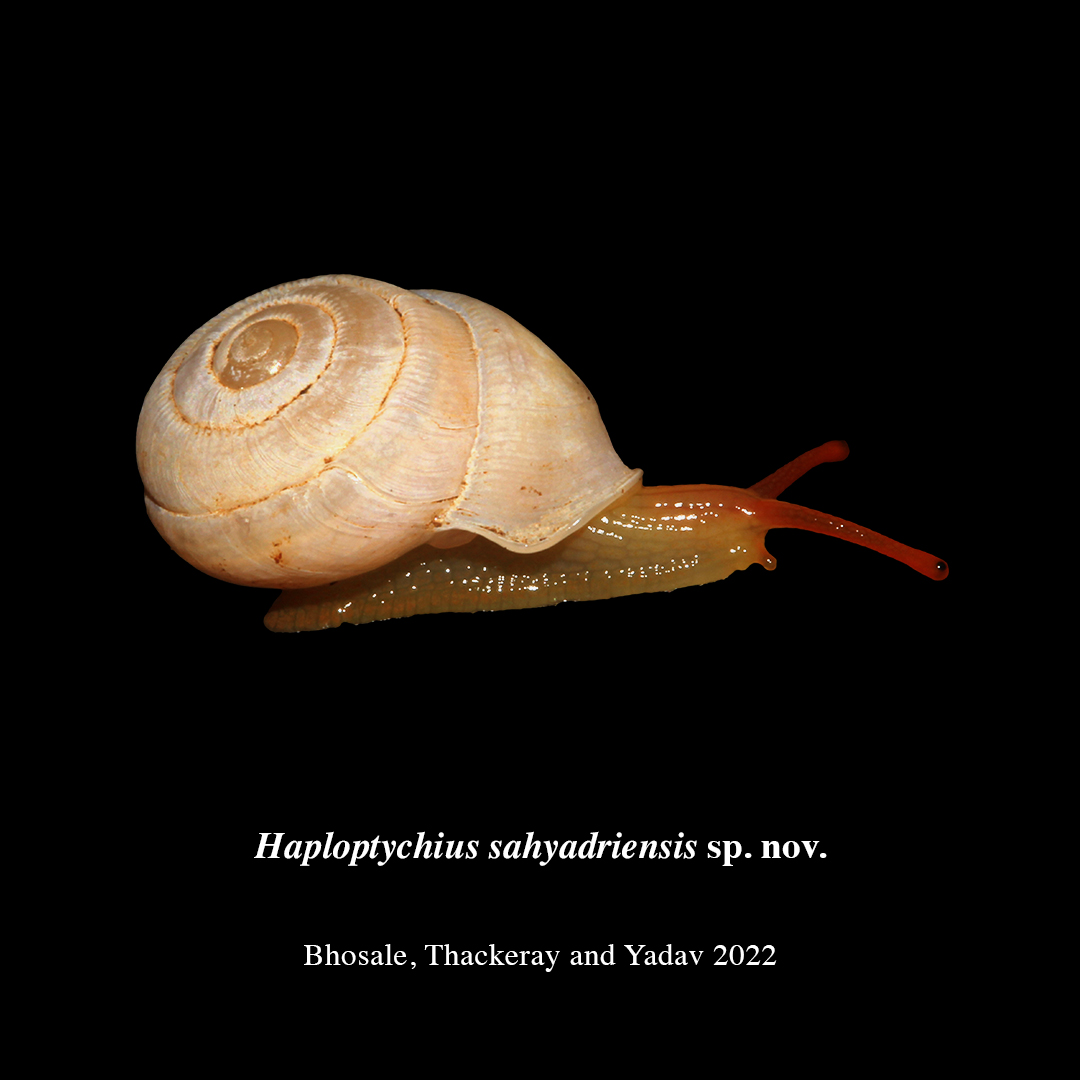
| 40 | Snail | Streptaxidae | Haploptychius sahyadriensis | BHOSALE, THACKERAY & YADAV | 2022 | Molluscan Research | Kolhapur | Maharashtra | India | The specific epithet is a toponym referring to the type locality of the species in the Northern part of the Western Ghats (Sahyadri in Sanskrit) mountain range. | Here | Here | |
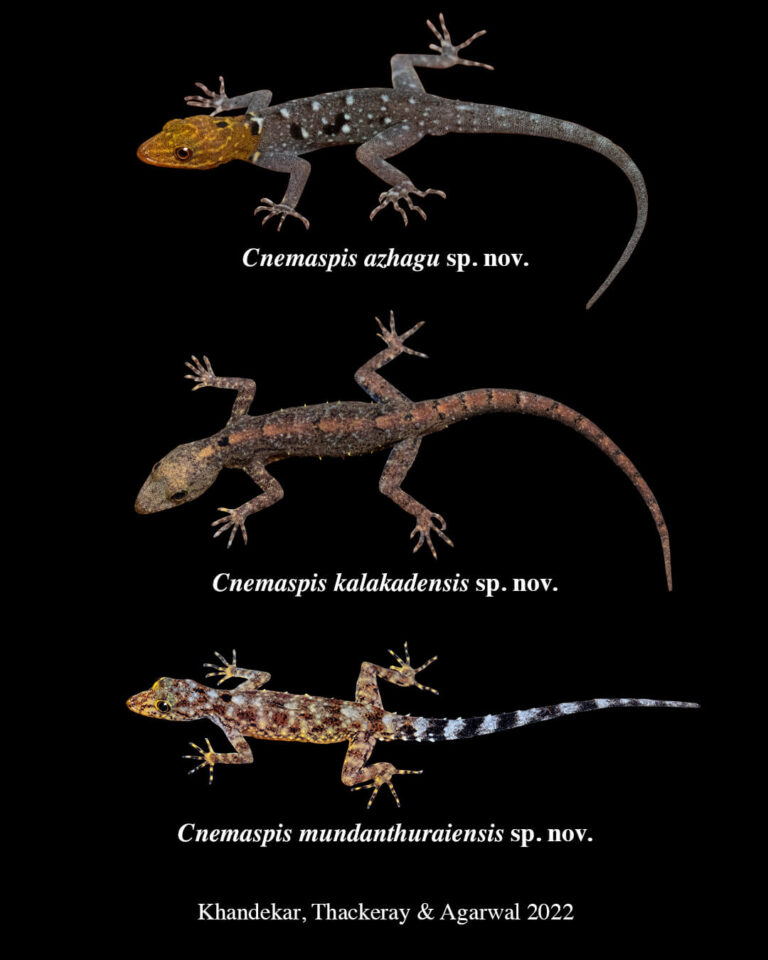
| 41 | Lizard | Gekkonidae | Cnemaspis azhagu | Thirukurungudi dwarf gecko | KHANDEKAR, THACKERAY & AGARWAL | 2022 | Vertebrate Zoology | Tirunelveli | Tamil Nadu | India | The specific epithet, azhagu (a-lha-gu, also sometimes transliterated as alaku), is the Tamil word for beauty (அழகு) and is used as a noun in apposition for this beautiful new species. | Here | Here |
| 42 | Lizard | Gekkonidae | Cnemaspis mundanthuraiensis | Mundanthurai dwarf gecko | KHANDEKAR, THACKERAY & AGARWAL | 2022 | Vertebrate Zoology | Tirunelveli | Tamil Nadu | India | The specific epithet is a toponym for the Mundanthurai forest range of Kalakad-Mundanthurai Tiger Reserve in Tirunelveli district of Tamil Nadu, the type and currently only known locality for this species. | Here | Here |
| 43 | Lizard | Gekkonidae | Cnemaspis kalakadensis | Kalakad dwarf gecko | KHANDEKAR, THACKERAY & AGARWAL | 2022 | Vertebrate Zoology | Tirunelveli | Tamil Nadu | India | The specific epithet is a toponym for the Kalakad forest range of Kalakad-Mundanthurai Tiger Reserve in Tirunelveli district of Tamil Nadu, the type and currently only known locality for this species. | Here | Here |
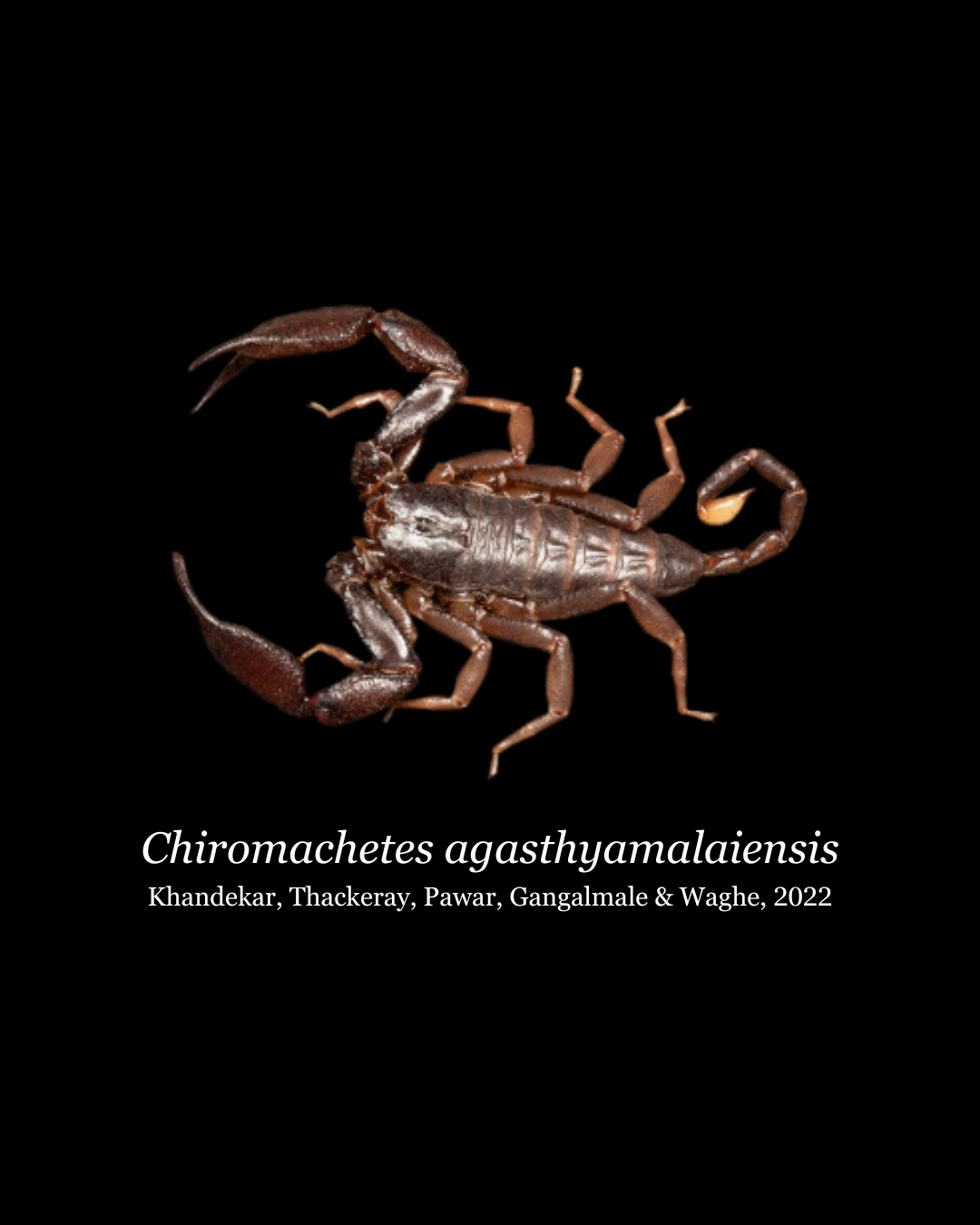
| 44 | Scorpion | Hormuridae | Chiromachetes agasthyamalaiensis | Agasthyamalai rock scorpion | KHANDEKAR, THACKERAY, PAWAR, GANGALMALE & WAGHE | 2022 | Euscorpius | Tirunelveli | Tamil Nadu | India | The specific epithet is a toponym for the Agasthyamalai Mountains in Kalakad-Mundanthurai Tiger Reserve in Tirunelveli District of Tamil Nadu, the type and currently the only known locality for this species. | Here | Here |
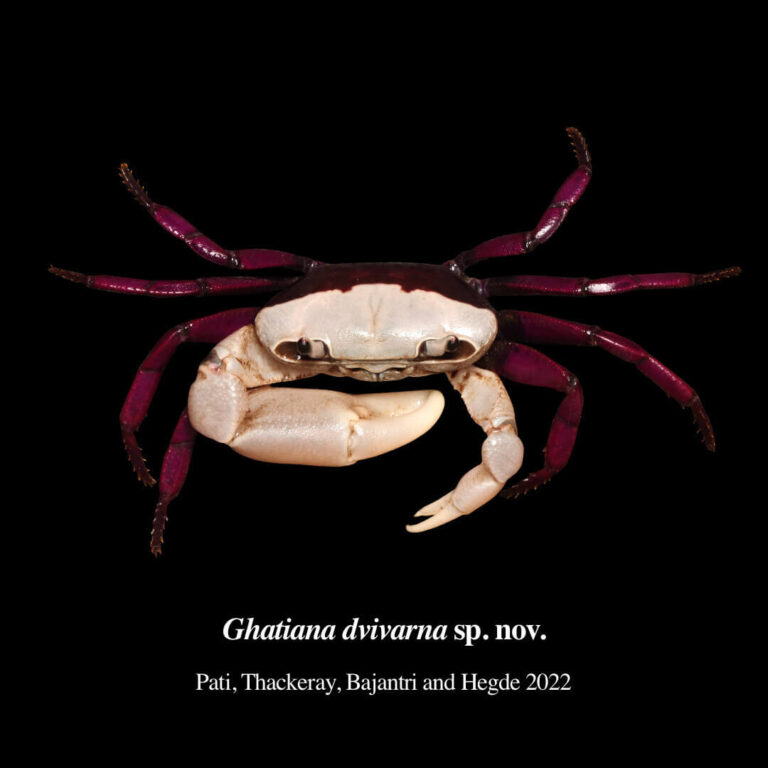
| 45 | Crab | Gecarcinucidae | Ghatiana dvivarna | PATI, THACKERAY, BAJANTRI, HEGDE | 2022 | Nauplius | Uttara Kannada | Karnataka | India | The specific epithet, dvivarna, is derived from the Sanskrit for ‘bicolor’, referring to the crab’s colour in life, which mainly consists of two colours (white and red-violet). The name is conceived here as a noun in apposition. | Here | Here | |
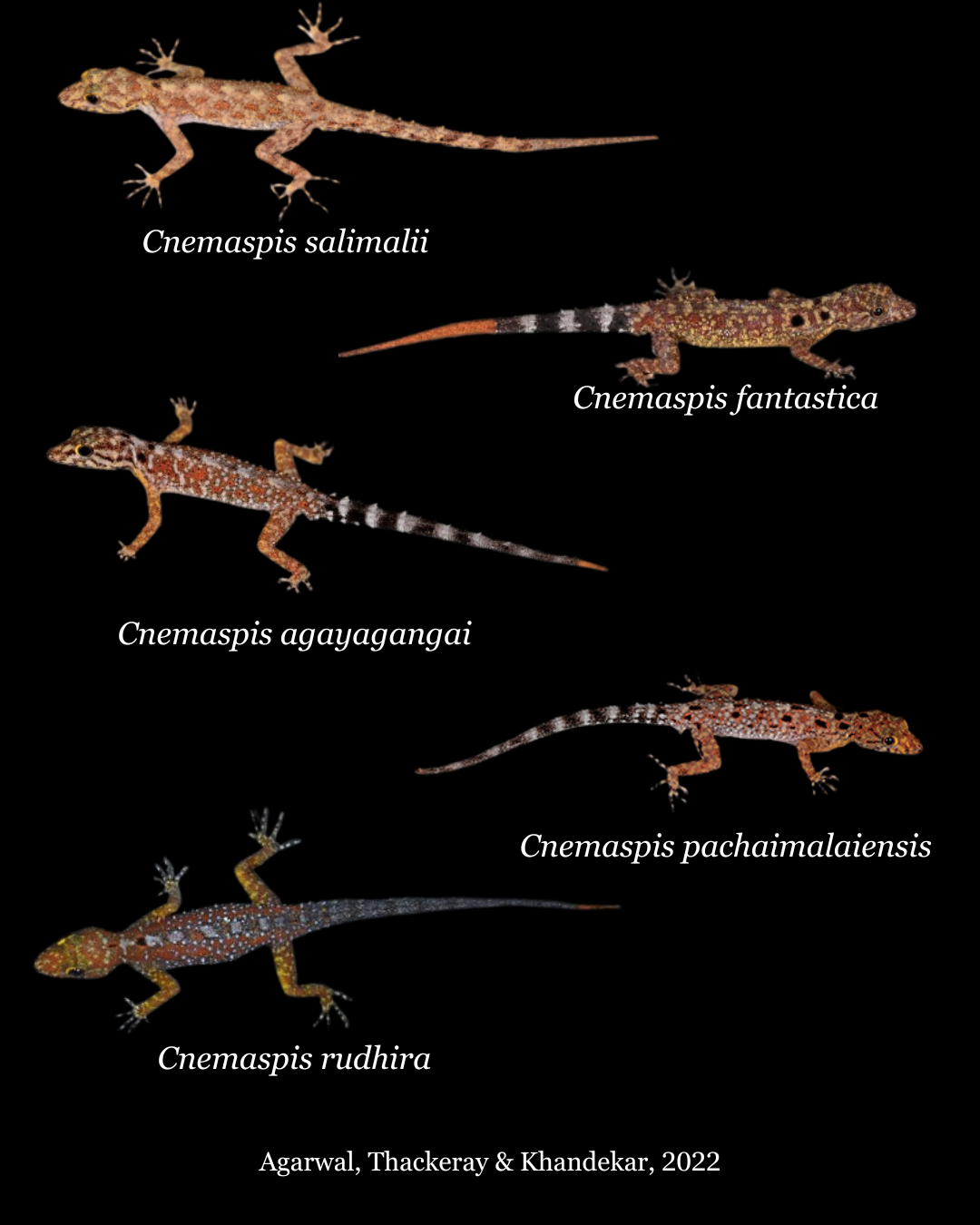
| 46 | Lizard | Gekkonidae | Cnemaspis salimalii | Salim Ali's dwarf gecko | AGARWAL, THACKERAY & KHANDEKAR | 2022 | Vertebrate Zoology | Namakkal | Tamil Nadu | India | The specific epithet is a patronym honouring the eminent ornithologist Dr. Salim Ali (1896–1987) for his immense contributions to field research and conservation in India. | Here | Here |
| 47 | Lizard | Gekkonidae | Cnemaspis agayagangai | Agayagangai dwarf gecko | AGARWAL, THACKERAY & KHANDEKAR | 2022 | Vertebrate Zoology | Namakkal | Tamil Nadu | India | The specific epithet is for the type locality of the new species, the Agaya Gangai Waterfalls, and is used as a noun in apposition. | Here | Here |
| 48 | Lizard | Gekkonidae | Cnemaspis fantastica | Fantastic dwarf gecko | AGARWAL, THACKERAY & KHANDEKAR | 2022 | Vertebrate Zoology | Namakkal | Tamil Nadu | India | The specific epithet is derived from the Greek phantastikós, alluding to the spectacular colouration of the new species. | Here | Here |
| 49 | Lizard | Gekkonidae | Cnemaspis pachaimalaiensis | Pachaimalai dwarf gecko | AGARWAL, THACKERAY & KHANDEKAR | 2022 | Vertebrate Zoology | Trichy | Tamil Nadu | India | The specific epithet is a toponym for the Pachaimalai hills in Trichy district of Tamil Nadu, the type and currently only known locality for this species. | Here | Here |
| 50 | Lizard | Gekkonidae | Cnemaspis rudhira | Scarlet dwarf gecko | AGARWAL, THACKERAY & KHANDEKAR | 2022 | Vertebrate Zoology | Salem | Tamil Nadu | India | The specific epithet is from the Sanskrit rudhira which means blood, alluding to the blood-red colouration of this beautiful species, and is used as a noun in apposition. | Here | Here |
| 51 | Lizard | Gekkonidae | Cyrtopodion vindhya | - | PATEL, THACKERAY, MIRZA, VYAS | 2023 | Zootaxa | Dahod | Gujarat | India | The specific epithet is a noun in apposition for the Vindhya hill ranges from where the new species was collected. | Here | Here |
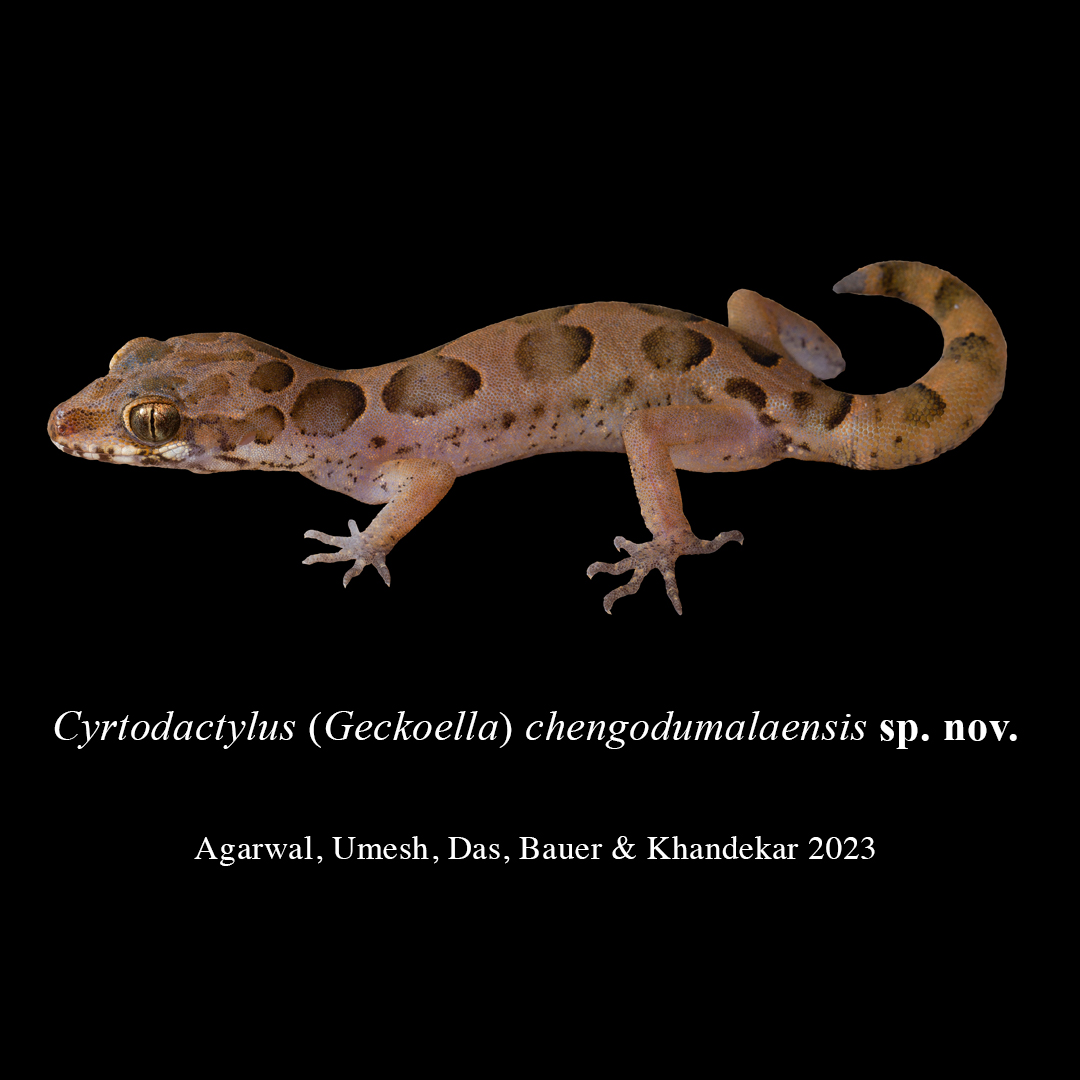
| 52 | Lizard | Gekkonidae | Cyrtodactylus chengodumalaensis | Chengodumala geckoella | AGARWAL, UMESH, DAS, BAUER & KHANDEKAR | 2023 | Journal of Herpetology | Malappuram | Tamil Nadu | India | The specific epithet is a toponym referring to Chengodumala, a midland hillock where the new species was found in great abundance and some of the type series came from.Chengodumala is under threat from extensive illegal quarrying. We suggest the common names of Chengodumala Geckoella or Coastal Kerala Geckoella. | Here | Here |
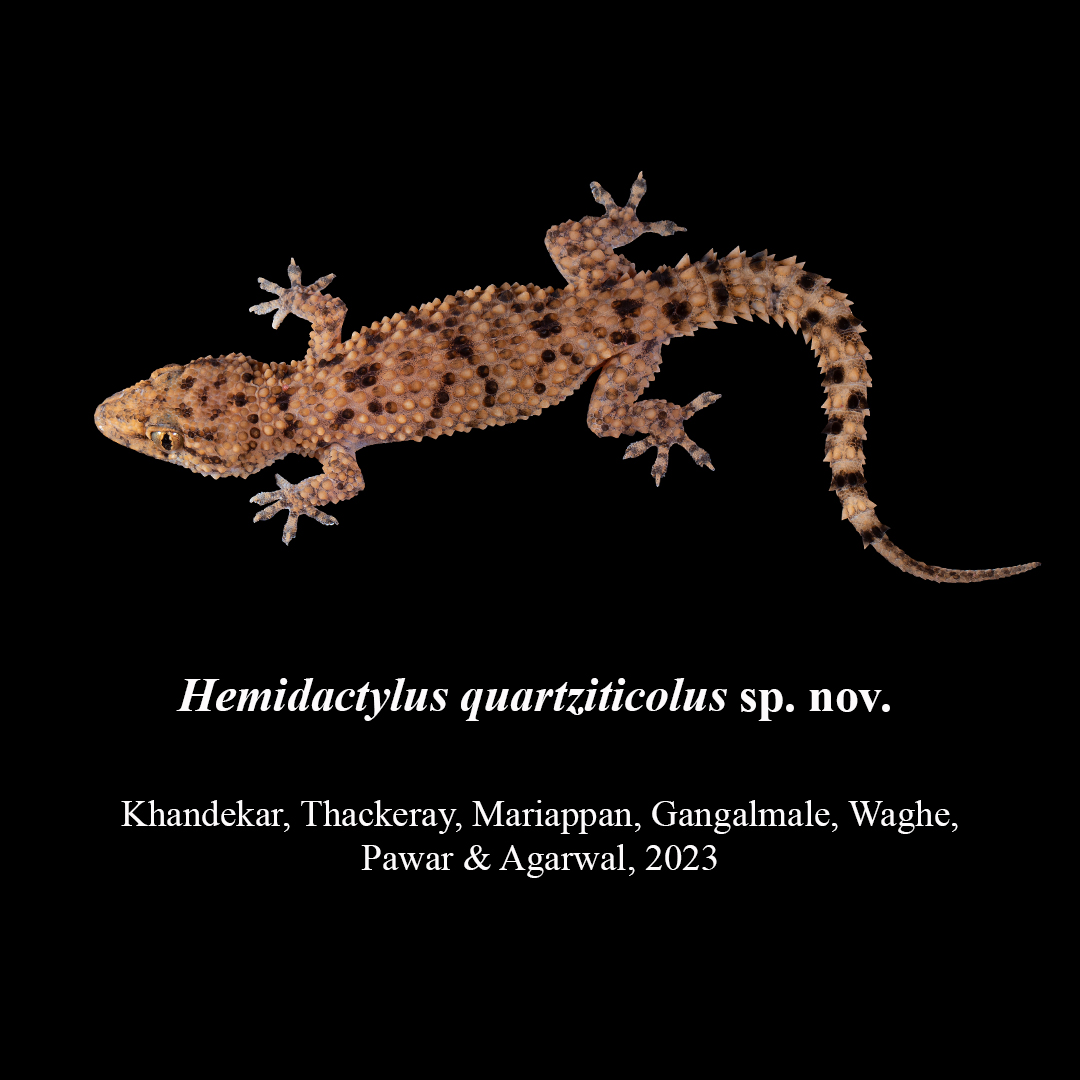
| 53 | Lizard | Gekkonidae | Hemidactylus quartziticolus | Quartzite /Thoothukudi brookiish gecko | KHANDEKAR, THACKERAY, MARIAPPAN, GANGALMALE, WAGHE, PAWAR & AGARWAL | 2023 | Vertebrate Zoology | Thoothukudi | Tamil Nadu | India | The specific epithet is a combination of the German noun “quartz” + the Latin suffix -ite (used to denote rocks and minerals) and the Latin suffix -cola that means inhabitant or dweller of, referring to the quartzite rock formations the new species inhabits | Here | Here |
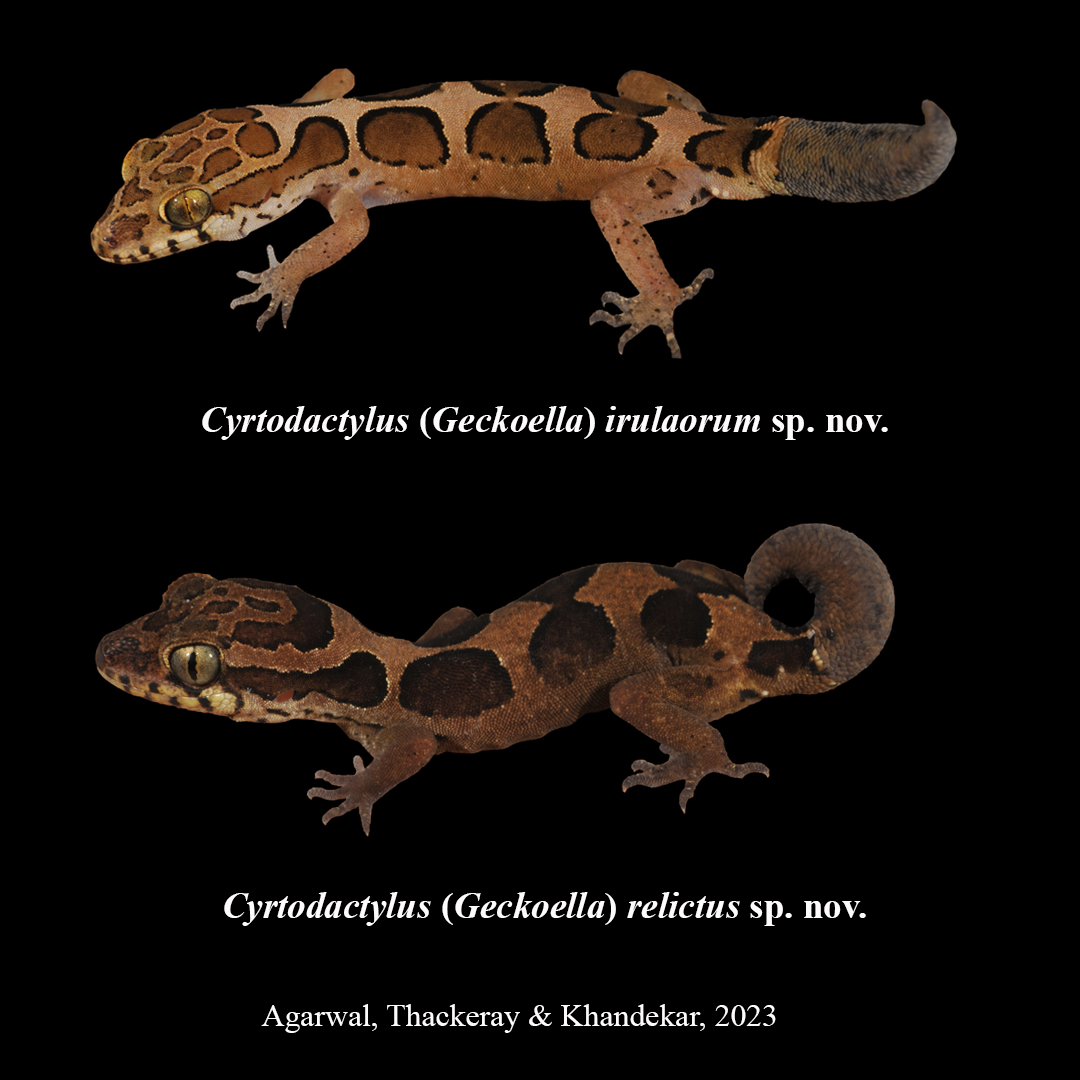
| 54 | Lizard | Gekkonidae | Cyrtodactylus irulaorum | Irula geckoella | AGARWAL, THACKERAY & KHANDEKAR | 2023 | Vertebrate Zoology | Kancheepuram | Tamil Nadu | India | The specific epithet is a patronym in honour of the Irula tribe, an indigenous Dravidian group who are expert snake trackers and catchers. Romulus Whitaker, whose farm the type series was collected at, has worked closely with the Irulas for decades and helped them set up a venom extraction cooperative in 1978. The Irula Snake Catchers’ Industrial Cooperative Society is the largest contributor to antivenom production in India | Here | Here |
| 55 | Lizard | Gekkonidae | Cyrtodactylus relictus | Relict geckoella | AGARWAL, THACKERAY & KHANDEKAR | 2023 | Vertebrate Zoology | Tirupati | Andhra Pradesh | India | The specific epithet is from the Latin relictus; which refers to an organism or species that has survived from an earlier period with different environmental conditions. Peninsular India was covered by wet forests and has gradually become more arid since at least the Miocene (Morley 2007; Patnaik et al. 2012; Pound et al. 2012). This is apt for the new species as it is known only from small areas of relatively cool, closed canopy habitats in a matrix of otherwise warm and open habitats. | Here | Here |
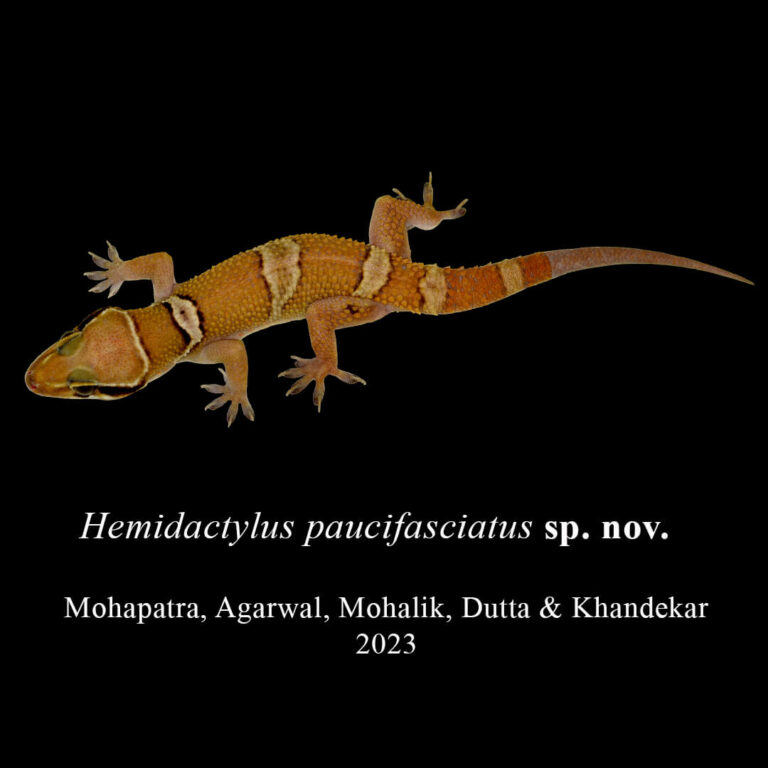
| 56 | Lizard | Gekkonidae | Hemidactylus paucifasciatus | Few banded rock gecko | MOHAPATRA, AGARWAL, MOHALIK, DUTTA & KHANDEKAR | 2023 | Zootaxa | Keonjhar | Odisha | India | The species epithet is derived from a combination of the Latin adjectives pauci (English: few) and fasciatus (English: banded), referring to the lesser number of dorsal bands in this species. | Here | Here |
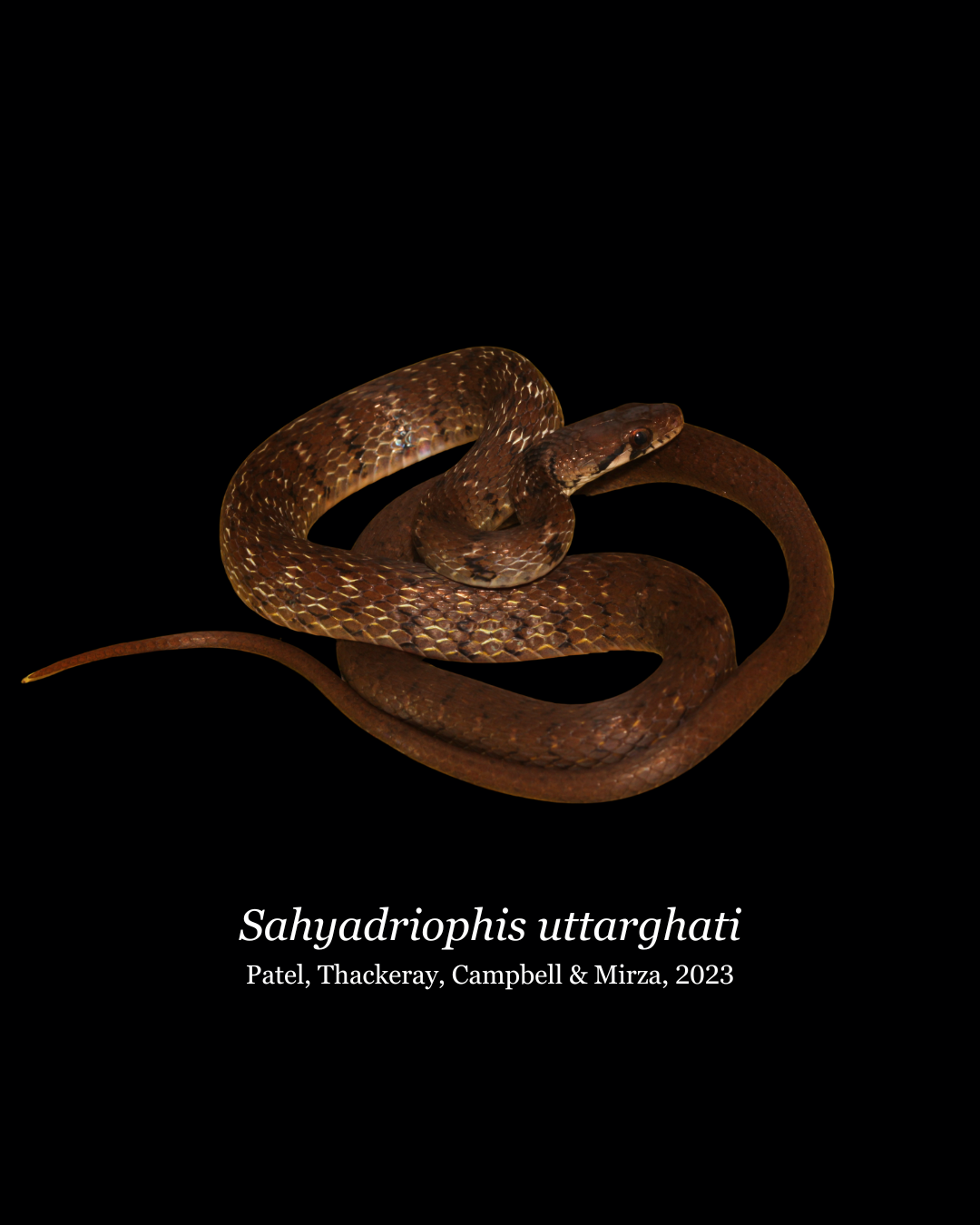
| 57 | Snake | Colubridae | Sahyadriophis uttarghati | PATEL, THACKERAY, CAMPBELL & MIRZA | 2023 | Taxonomy | Sindhudurg | Maharashtra | India | The specific epithet is a combination of two Sanskrit words: ‘uttara’ for north and ‘ghati’ meaning dweller of the mountains/Ghats. The combination refers to the northern distribution of the new species. | Here | Here | |
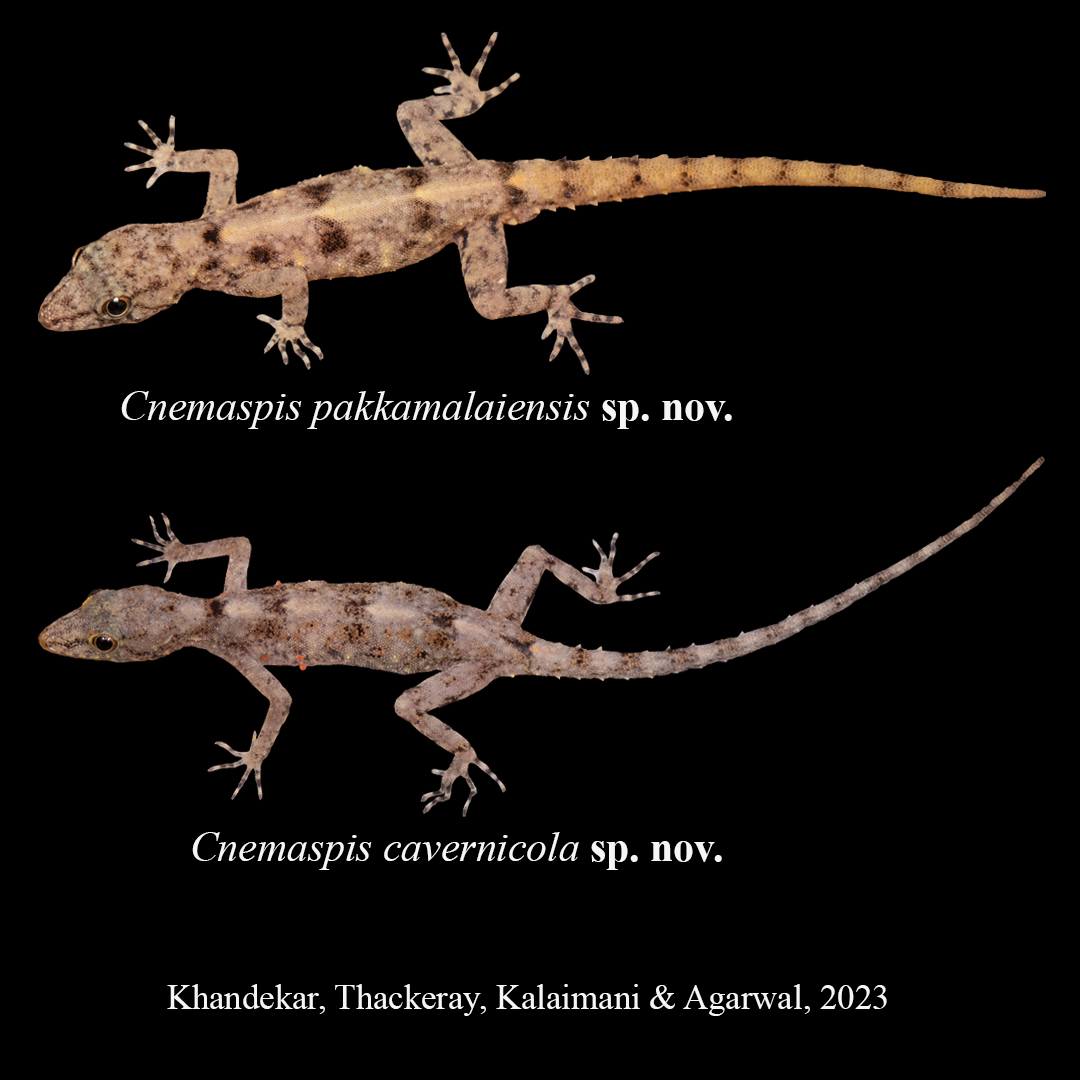
| 58 | Lizard | Gekkonidae | Cnemaspis pakkamalaiensis | Pakkamalai dwarf gecko | KHANDEKAR, THACKERAY, KALAIMANI & AGARWAL | 2023 | Vertebrate Zoology | Villipuram | Tamil Nadu | India | The specific epithet is a toponym for Pakkamalai, Gingee Hills in Viluppuram district of Tamil Nadu state, the type and only known locality for this species. | Here | Here |
| 59 | Lizard | Gekkonidae | Cnemaspis cavernicola | Cave-dwelling dwarf gecko | KHANDEKAR, THACKERAY, KALAIMANI & AGARWAL | 2023 | Vertebrate Zoology | Villipuram | Tamil Nadu | India | The specific epithet is an adjective formed from the Latin “caverna’ for cave and “cola” meaning inhabitant or dweller, as the species is only known to occur in caves and crevices below large granite boulders. | Here | Here |
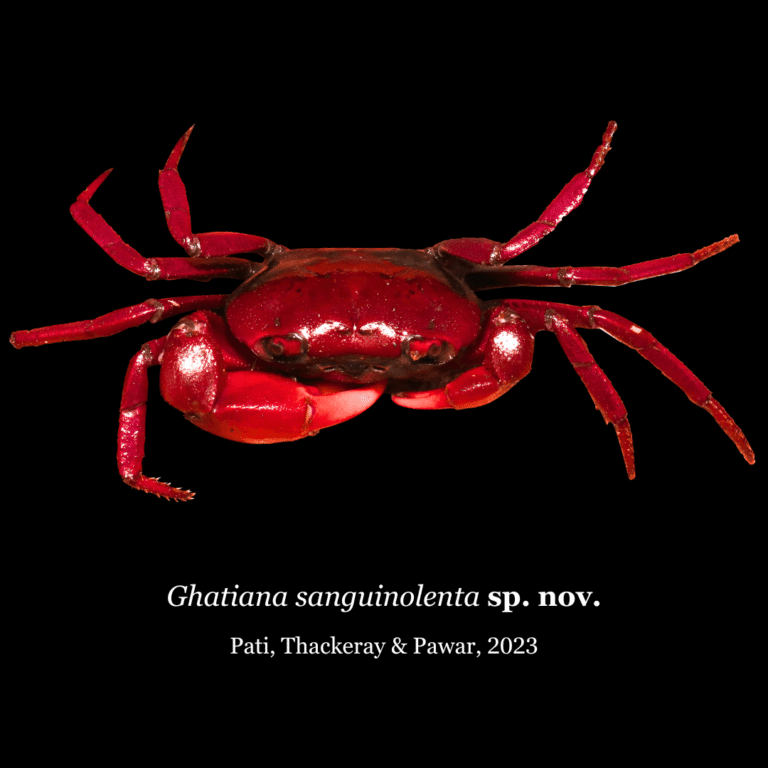
| 60 | Crab | Gecarcinucidae | Ghatiana sanguinolenta | PATI, THACKERAY & PAWAR | 2023 | Zootaxa | Sirsi | Karnataka | India | The specific epithet, ‘sanguinolenta’ meaning blood-red, is a Latin adjective in the nominative singular, which alludes to the crab's colour in life. | Here | Here | |
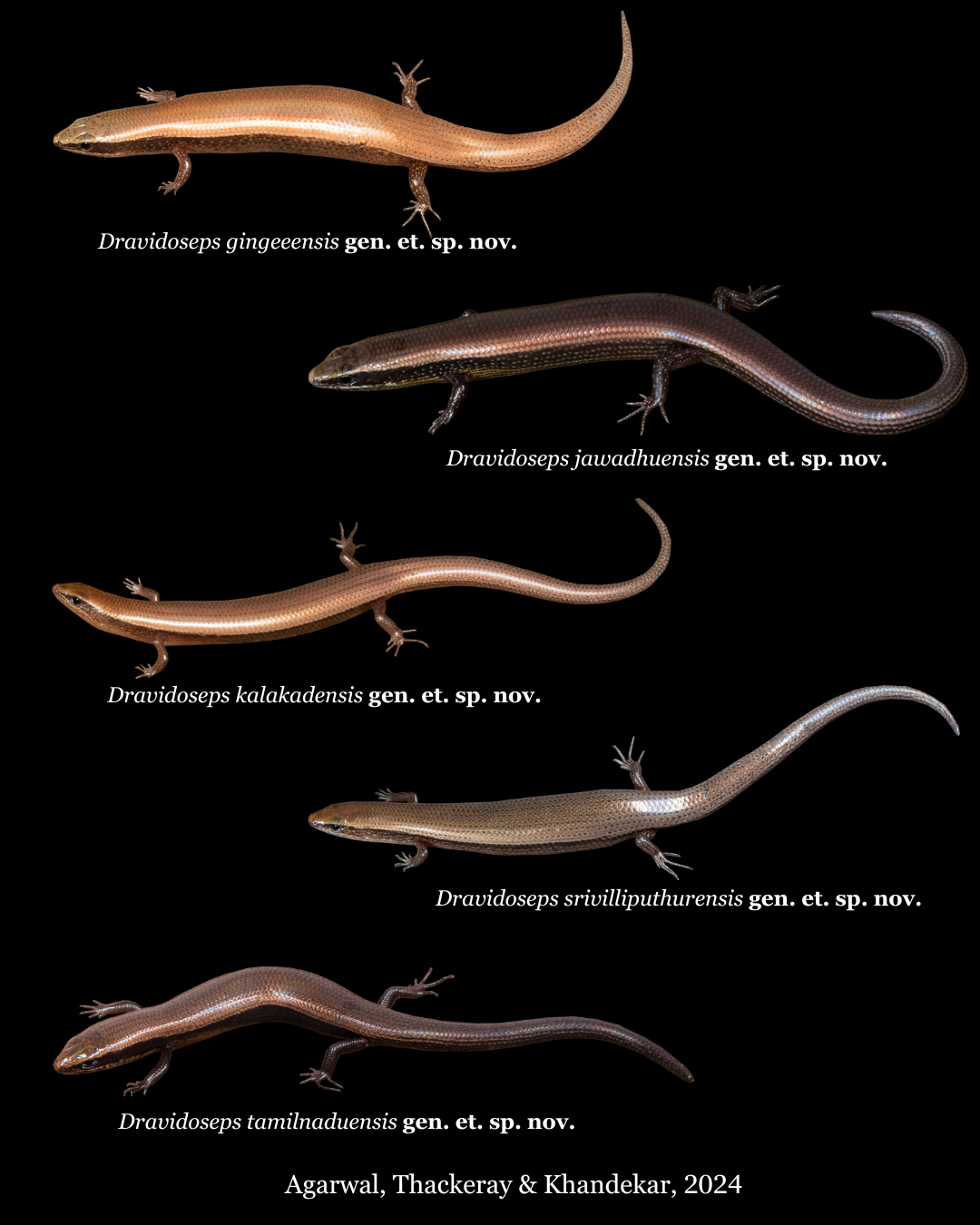
| 61 | Lizard | Scincidae | Dravidoseps gingeeensis | Gingee leaf-litter skink | AGARWAL, THACKERAY & KHANDEKAR | 2024 | Vertebrate Zoology | Villipuram | Tamil Nadu | India | The specific epithet is a toponym for the Gingee Hills in Villupuram District of Tamil Nadu State, the type locality of the new species. | Here | Here |
| 62 | Lizard | Scincidae | Dravidoseps jawadhuensis | Jawadhu leaf-litter skink | AGARWAL, THACKERAY & KHANDEKAR | 2024 | Vertebrate Zoology | Vellore | Tamil Nadu | India | The specific epithet is a toponym for the Jawadhu Hills in Vellore District of Tamil Nadu State, the type and currently only known locality for the new species. | Here | Here |
| 63 | Lizard | Scincidae | Dravidoseps kalakadensis | KMTR leaf-litter skink | AGARWAL, THACKERAY & KHANDEKAR | 2024 | Vertebrate Zoology | Thirunelveli | Tamil Nadu | India | The specific epithet is a toponym for Kalakad in Kalakad-Mundanthurai Tiger Reserve (KMTR), Tirunelveli District of Tamil Nadu State, the type locality of the new species. | Here | Here |
| 64 | Lizard | Scincidae | Dravidoseps srivilliputhurensis | SMTR leaf-litter skink | AGARWAL, THACKERAY & KHANDEKAR | 2024 | Vertebrate Zoology | Virudhunagar | Tamil Nadu | India | The specific epithet is a toponym for Srivilliputhur in Srivilliputhur-Megamalai Tiger Reserve (SMTR), Virudhunagar District of Tamil Nadu State, the type locality of the new species. | Here | Here |
| 65 | Lizard | Scincidae | Dravidoseps tamilnaduensis | Tamilnadu leaf-litter skink | AGARWAL, THACKERAY & KHANDEKAR | 2024 | Vertebrate Zoology | Tiruchirappalli | Tamil Nadu | India | The specific epithet is a toponym for Tamil Nadu State to which the new species is endemic. | Here | Here |
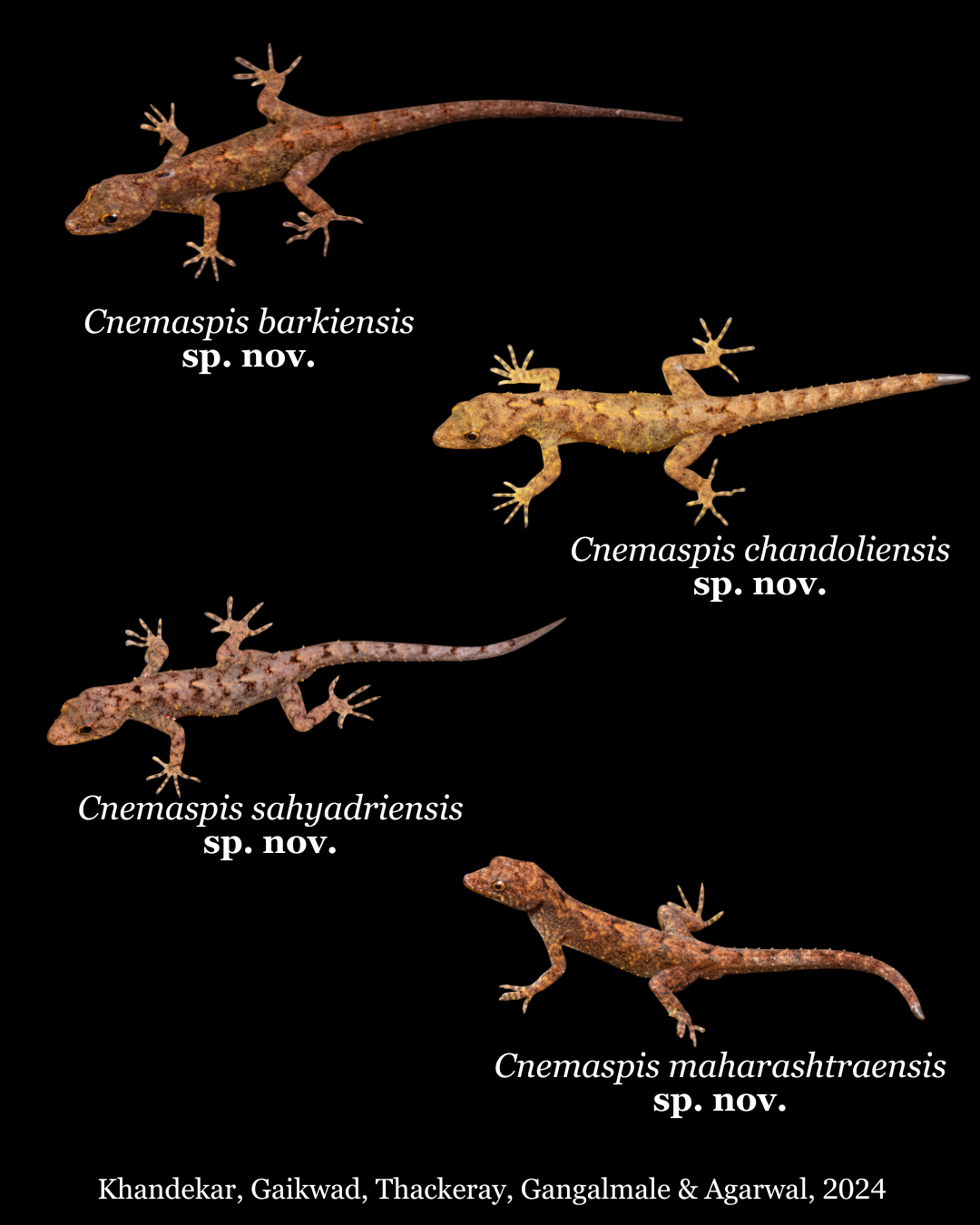
| 66 | Lizard | Gekkonidae | Cnemaspis barkiensis | Barki dwarf gecko | KHANDEKAR, GAIKWAD, THACKERAY, GANGALMALE & AGARWAL | 2024 | Zootaxa | Kolhapur | Maharashtra | India | The specific epithet is a toponym for Barki in Kolhapur District of Maharashtra, the type locality for this species. | Here | Here |
| 67 | Lizard | Gekkonidae | Cnemaspis chandoliensis | Chandoli dwarf gecko | KHANDEKAR, GAIKWAD, THACKERAY, GANGALMALE & AGARWAL | 2024 | Zootaxa | Kolhapur | Maharashtra | India | The specific epithet is a toponym for Chandoli National Park in Sahyadri Tiger Reserve, Kolhapur District of Maharashtra, the type and only known locality for this species. | Here | Here |
| 68 | Lizard | Gekkonidae | Cnemaspis maharashtraensis | Maharashtra dwarf gecko | KHANDEKAR, GAIKWAD, THACKERAY, GANGALMALE & AGARWAL | 2024 | Zootaxa | Sangli | Maharashtra | India | The specific epithet is a toponym for Maharashtra State, India in which the type locality of the species is located. | Here | Here |
| 69 | Lizard | Gekkonidae | Cnemaspis sahyadriensis | Sahyadri dwarf gecko | KHANDEKAR, GAIKWAD, THACKERAY, GANGALMALE & AGARWAL | 2024 | Zootaxa | Sangli | Maharashtra | India | The specific epithet is a toponym for the type locality, located in Sahyadri Tiger Reserve. Sahyadri is also the local name for the Western Ghats. | Here | Here |
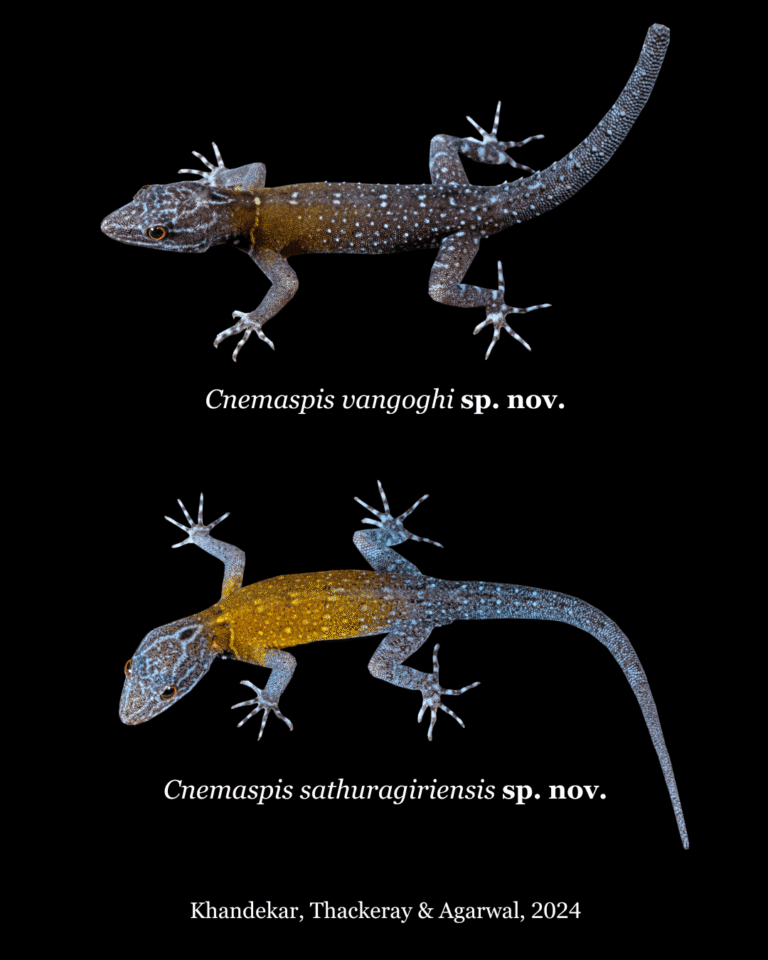
| 70 | Lizard | Gekkonidae | Cnemaspis vangoghi | Van Gogh's dwarf gecko | KHANDEKAR, THACKERAY & AGARWAL | 2024 | Zoo Keys | Virudhunagar | Tamil Nadu | India | The specific epithet is a patronym for Dutch painter Vincent Van Gogh (1853–1890). The colouration of the new species is reminiscent of one of Van Gogh’s most iconic paintings, The Starry Night. Suggested common name is Van Gogh’s starry dwarf gecko. | Here | Here |
| 71 | Lizard | Gekkonidae | Cnemaspis sathuragiriensis | Sathuragiri dwarf gecko | KHANDEKAR, THACKERAY & AGARWAL | 2024 | Zoo Keys | Virudhunagar | Tamil Nadu | India | The specific epithet is a toponym for the type locality of the new species, Sathuragiri mountain in Srivilliputhur-Megamalai Tiger Reserve (SMTR), Virudhunagar District, Tamil Nadu. Suggested Common name is Sathuragiri dwarf gecko. | Here | Here |
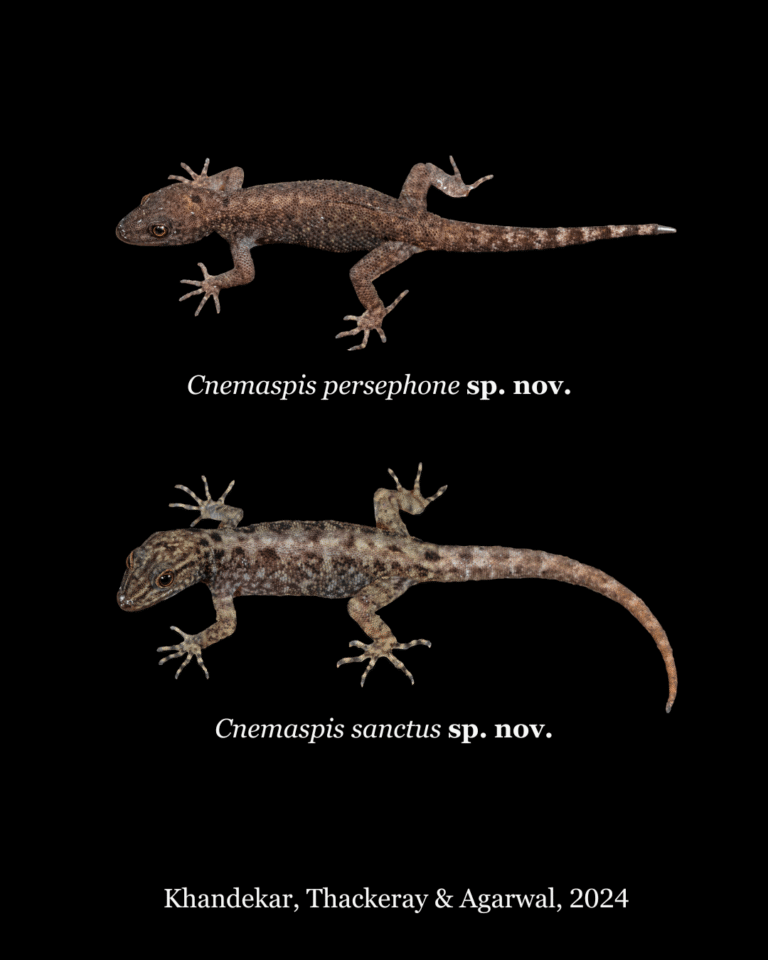
| 72 | Lizard | Gekkonidae | Cnemaspis persephone | Anaimalai ground-dwelling dwarf gecko | KHANDEKAR, THACKERAY & AGARWAL | 2024 | Zootaxa | Coimbatore | Tamil Nadu | India | Named for Persephone, the Queen of the Underworld and Goddess of spring in Ancient Greek mythology and religion, who spent half the year in the Underworld and the other half above ground. This is an allusion to the natural history of the new species, only found in the soil under rocks and logs or at the base of vegetation; though presumably emerging at night at least at some time of the year. The specific epithet is treated as a noun in apposition. | Here | Here |
| 73 | Lizard | Gekkonidae | Cnemaspis sanctus | Holy dwarf gecko | KHANDEKAR, THACKERAY & AGARWAL | 2024 | Zootaxa | Kanyakumari | Tamil Nadu | India | The specific epithet is the Latin noun sanctus, one who is holy or saintly, used in apposition (hence invariable) and alludes to the fact that the type locality has both a temple and a church close together. | Here | Here |
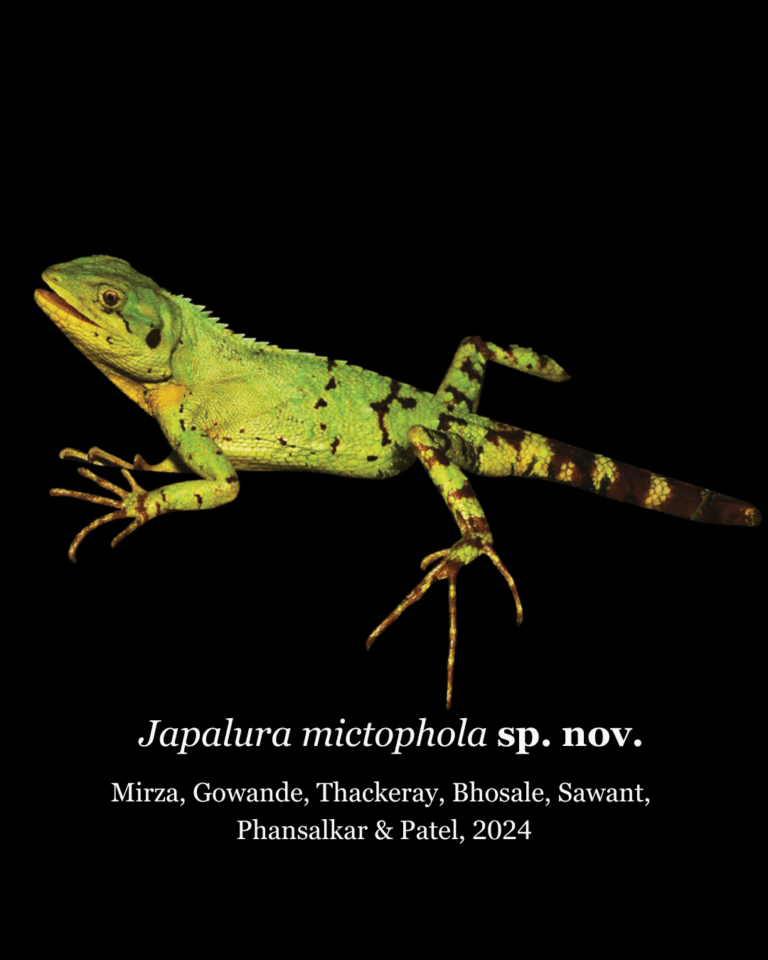
| 74 | Lizard | Agamidae | Japalura mictophola | MIRZA, GOWANDE, THACKERAY, BHOSALE, SAWANT, PHANSALAKAR, PATEL | 2024 | Taprobanica | West Kameng | Arunachal Pradesh | India | The specific epithet is a combination of two words, the Greek word miktós ‘μικτός’ meaning mixed, and the word phola (=scales) referring to the mixed (heterogeneous) scales on the dorsum of the species. | Here | Here | |
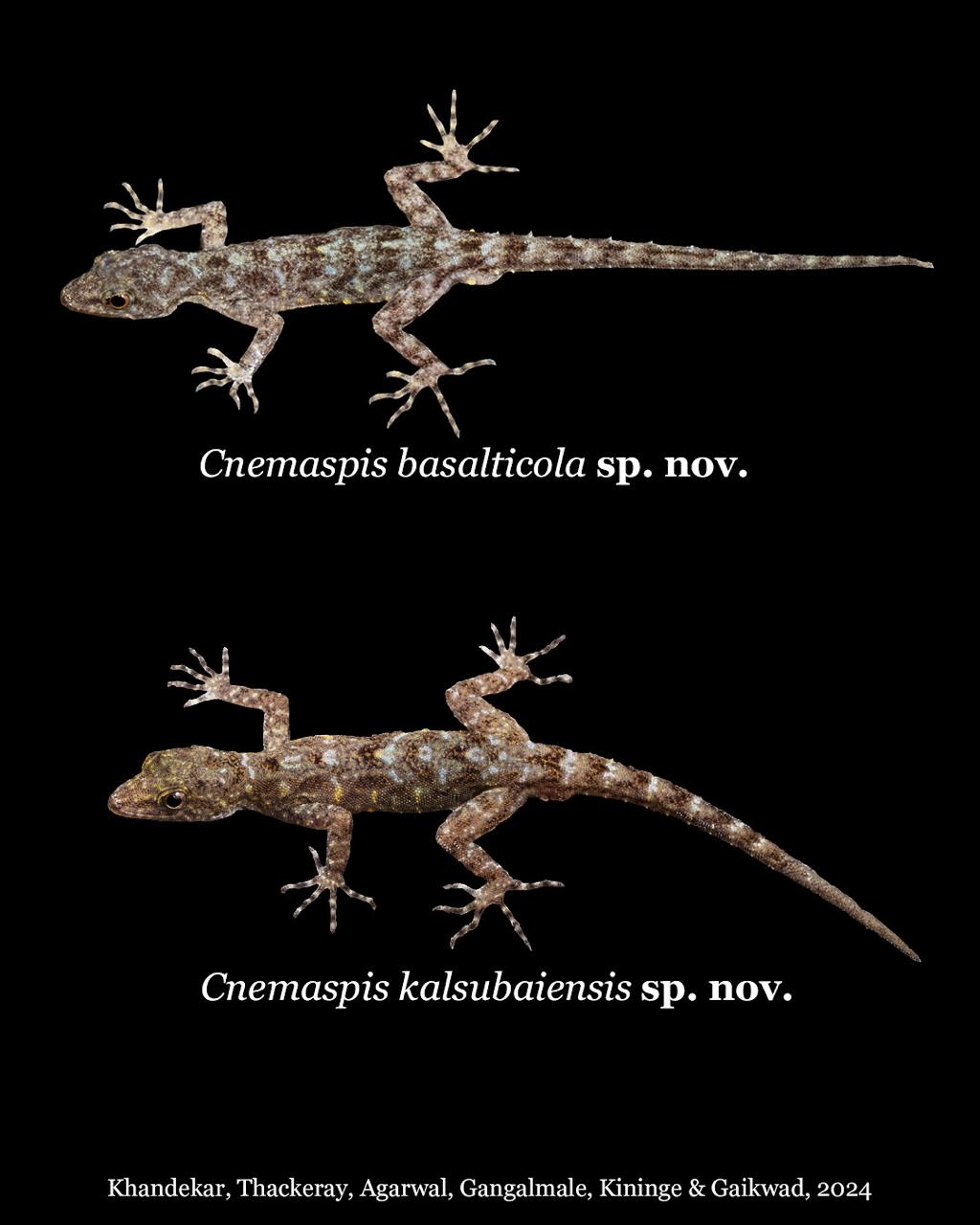
| 75 | Lizard | Gekkonidae | Cnemaspis kalasubaiensis | Kalasubai dwarf gecko | KHANDEKAR, THACKERAY, AGARWAL, GANGALMALE, KININGE & GAIKWAD | 2024 | Zootaxa | Ahemdnagar | Maharashtra | India | The specific epithet is a toponym for the type locality of the new species, Kalsubai in Ahmednagar District, Maharashtra, the highest peak of the State at 1646 m asl. | Here | Here |
| 76 | Lizard | Gekkonidae | Cnemaspis basalticola | Basaltic dwarf gecko or Ratangad dwarf gecko | KHANDEKAR, THACKERAY, AGARWAL, GANGALMALE, KININGE & GAIKWAD | 2024 | Zootaxa | Ahemdnagar | Maharashtra | India | The specific epithet is an adjective formed from the Latin “basaltes” for basalt and the suffix “-cola”, meaning inhabitant or dweller, as the species inhabits basalt rock formations. | Here | Here |
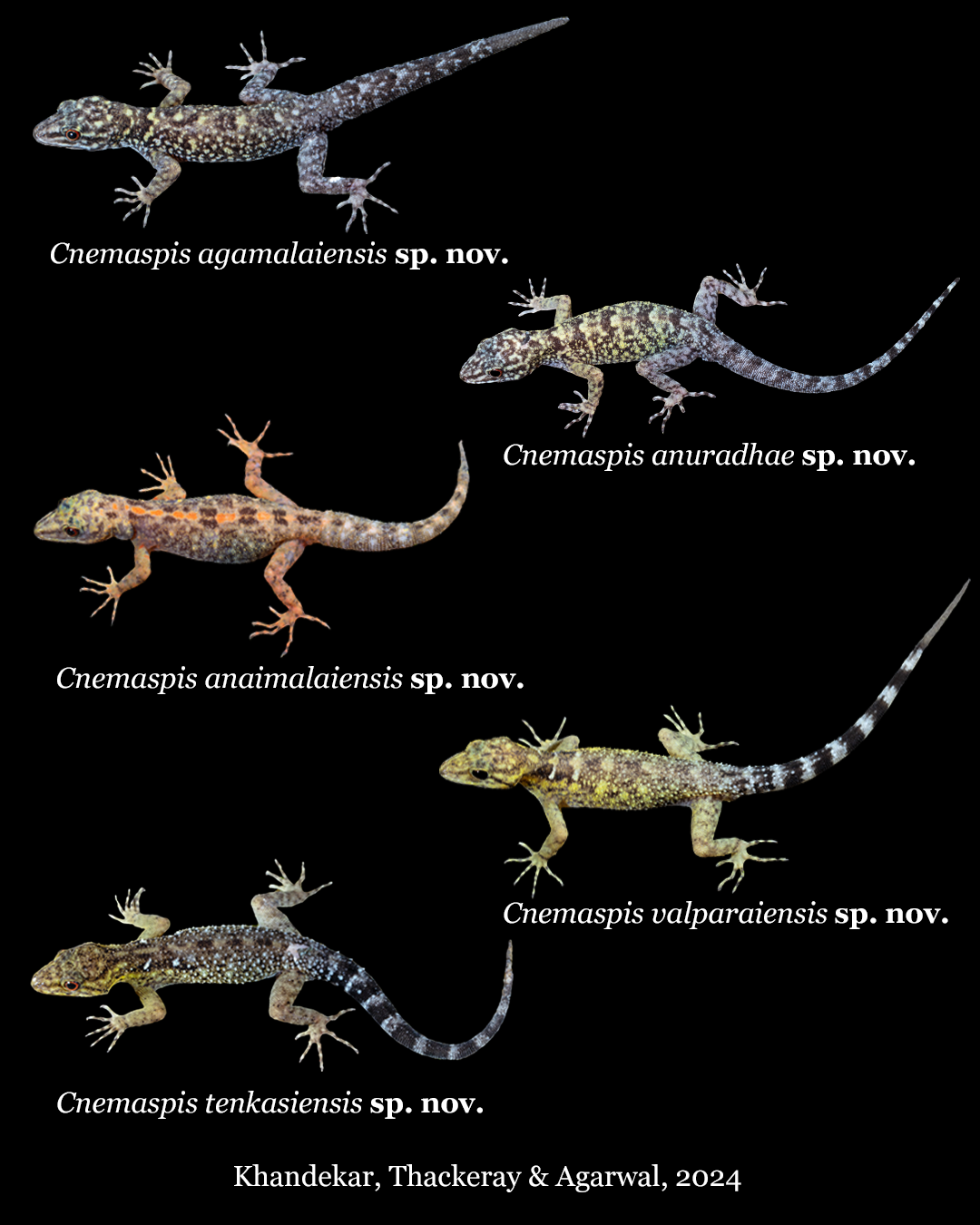
| 77 | Lizard | Gekkonidae | Cnemaspis agamalaiensis | Agamalai dwarf gecko | KHANDEKAR, THACKERAY & AGARWAL | 2024 | Zootaxa | Theni | Tamil Nadu | India | The specific epithet is a toponym for the Agamalai Hills in Theni District of Tamil Nadu, the type and only known locality for this species. | Here | Here |
| 78 | Lizard | Gekkonidae | Cnemaspis anaimalaiensis | Anaimalai rock-dwelling dwarf gecko | KHANDEKAR, THACKERAY & AGARWAL | 2024 | Zootaxa | Coimbatore | Tamil Nadu | India | The specific epithet is a toponym for the Anaimalai Hills, the mountainous landscape that contains the type locality of the new species. | Here | Here |
| 79 | Lizard | Gekkonidae | Cnemaspis anuradhae | Anuradha's dwarf gecko or Dindigul dwarf gecko | KHANDEKAR, THACKERAY & AGARWAL | 2024 | Zootaxa | Dindigul | Tamil Nadu | India | The specific epithet is a latinized eponym, honouring Anuradha Batabyal for her contributions to studies of behavioural ecology, colour physiology and cognition in Indian lizards, and for constant support and encouragement to the first author (AK). | Here | Here |
| 80 | Lizard | Gekkonidae | Cnemaspis valparaiensis | Valparai dwarf gecko | KHANDEKAR, THACKERAY & AGARWAL | 2024 | Zootaxa | Coimbatore | Tamil Nadu | India | The specific epithet is a toponym for the Valparai Plateau in Coimbatore District of Tamil Nadu, which includes the type and only known locality for this species. | Here | Here |
| 81 | Lizard | Gekkonidae | Cnemaspis tenkasiensis | Tenkasi dwarf gecko | KHANDEKAR, THACKERAY & AGARWAL | 2024 | Zootaxa | Tenkasi | Tamil Nadu | India | The specific epithet is a toponym for the Tenkasi District of Tamil Nadu, in which the type locality (Ayanadu Estate) of the new species is located. | Here | Here |
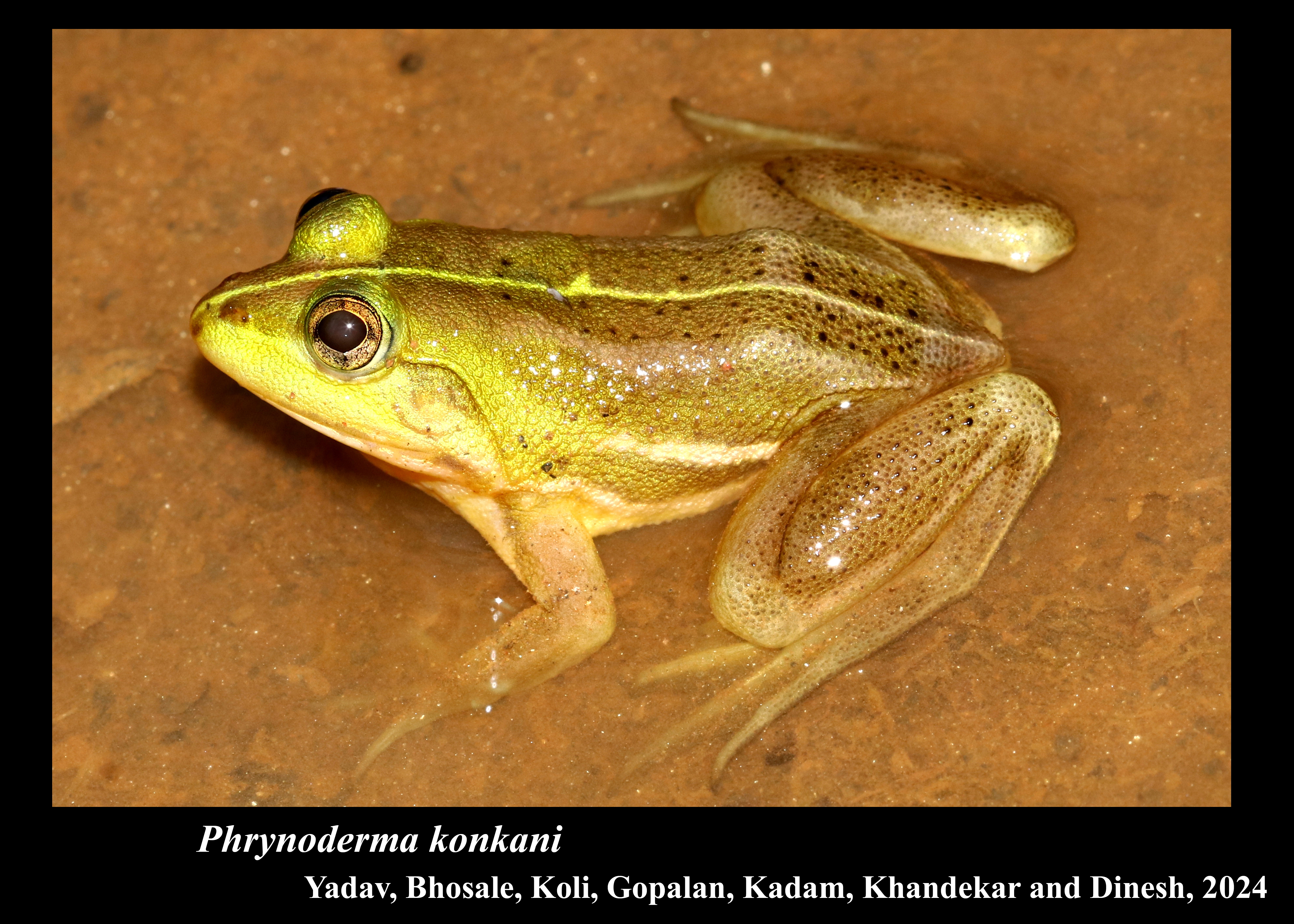
| 82 | Frog | Dicroglossidae | Phrynoderma konkani | Konkan pond frog | YADAV, BHOSALE, KOLI, GOPALAN, KADAM, KHANDEKAR & DINESH | 2024 | Journal of Asia-Pacific Biodiversity | Sindhudurg | Maharashtra | India | The specific epithet is a toponym for the “Konkan” a name given to the coastal region in which new species is found, ‘Konkani’ is derived from the Marathi language. The species epithet is treated as a noun in opposition to the genus name. | Here | Here |
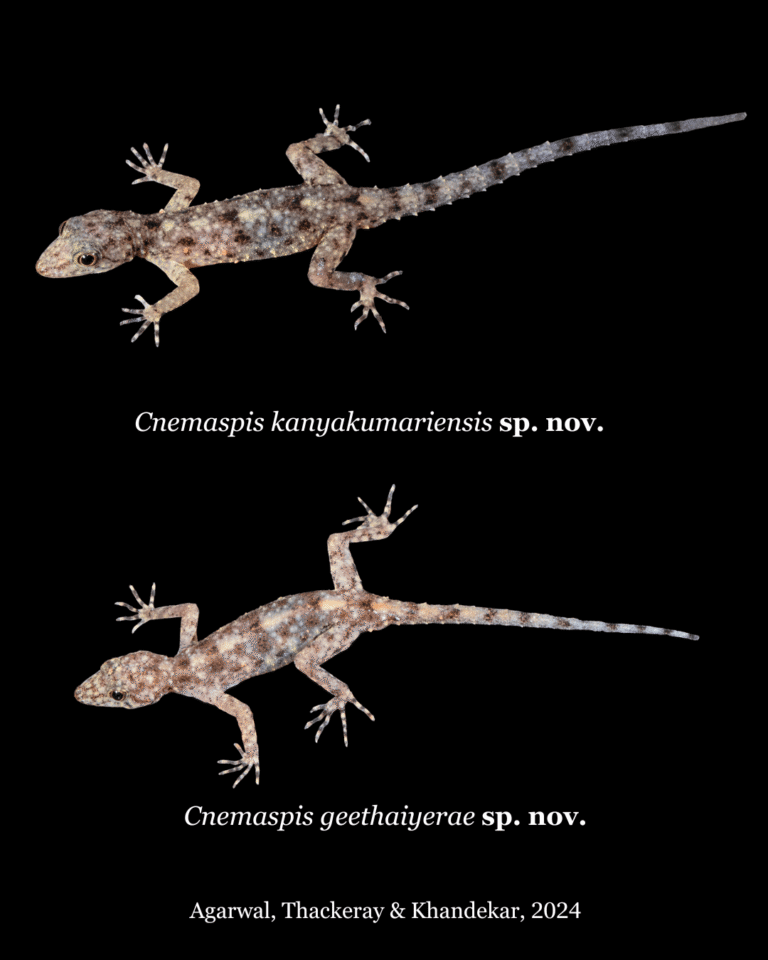
| 83 | Lizard | Gekkonidae | Cnemaspis kanyakumariensis | Kanyakumari dwarf gecko | AGARWAL, THACKERAY & KHANDEKAR | 2024 | Journal of Natural History | Kanyakumari | Tamil Nadu | India | The specific epithet is a toponym for Kanyakumari District of Tamil Nadu State, to which the new species is endemic | Here | Here |
| 84 | Lizard | Gekkonidae | Cnemaspis geethaiyerae | Geetha Iyer's dwarf gecko | AGARWAL, THACKERAY & KHANDEKAR | 2024 | Journal of Natural History | Kanyakumari | Tamil Nadu | India | The specific epithet is a latinised eponym honouring Dr Geetha Iyer, entomologist and former biology teacher at Rishi Valley School, Andhra Pradesh, India, for her contributions as a teacher – instrumental in helping many children develop and sustain an interest in nature (including IA in particular), and for her help with our survey work in Kanyakumari District. | Here | Here |
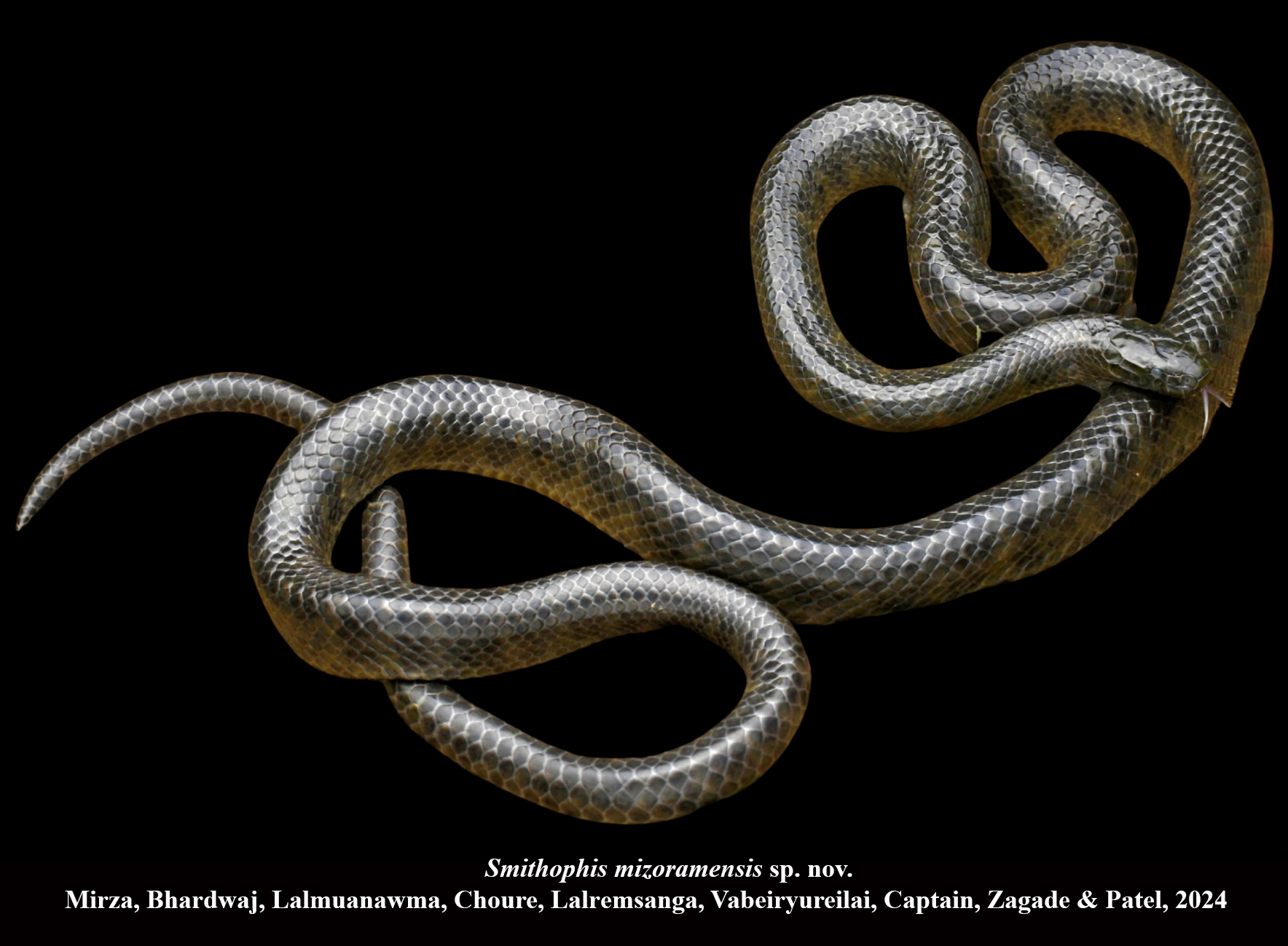
| 85 | Snake | Colubridae | Smithophis mizoramensis | Mizo Brook Snake | MIRZA, BHARDWAJ, LALMUANAWMA,CHOURE, LALREMSANGA, VABEIRYUREILAI, CAPTAIN, ZAGADE & PATEL | 2024 | diversity | Saitual | Mizorom | India | The specific epithet refers to the Indian state of Mizoram, where the new species was discovered, and that has yielded many notable herpetological discoveries. | Here | Here |
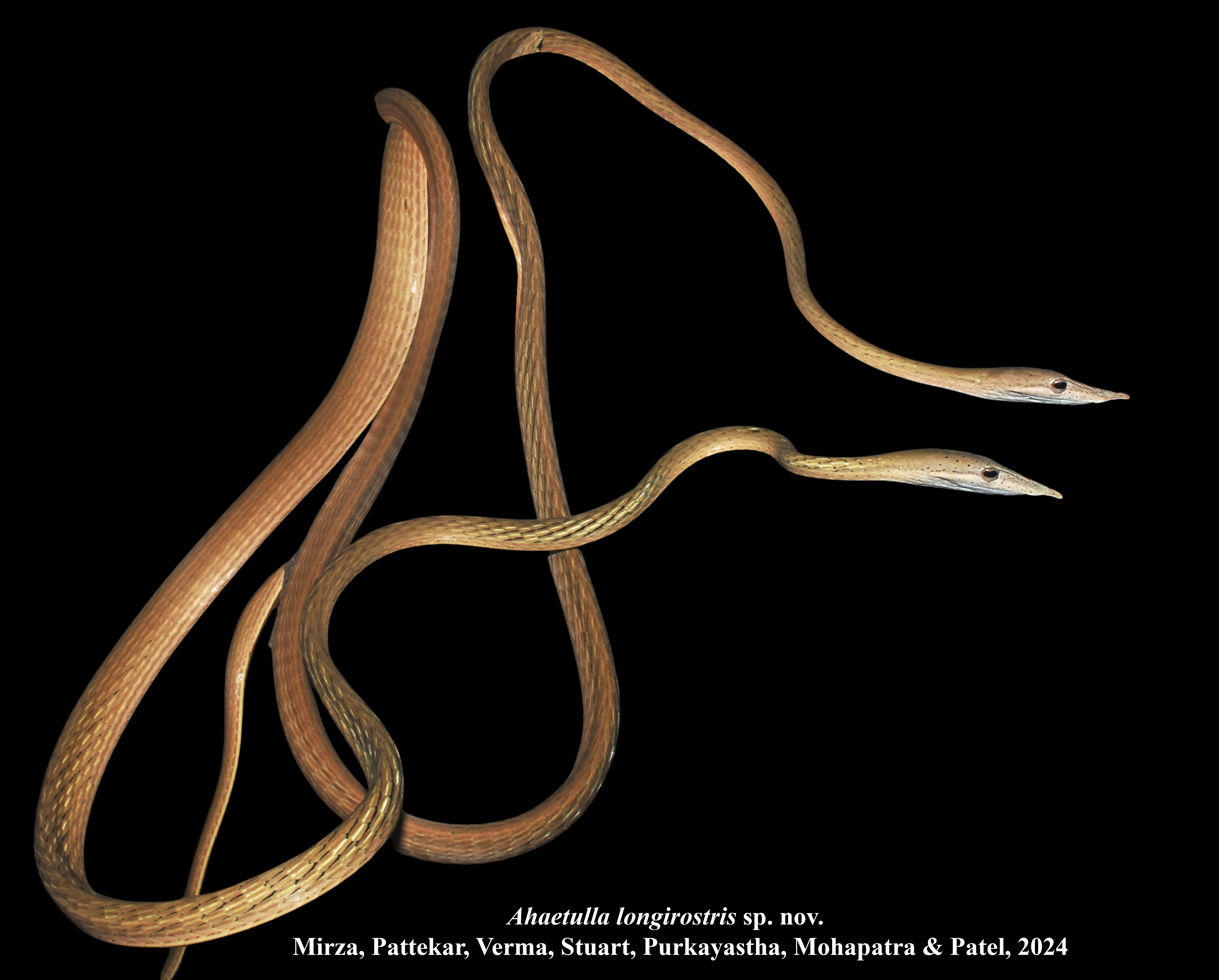
| 86 | Snake | Colubridae | Ahaetulla longirostris | MIRZA, PATTEKAR, VERMA, STUART, PURKAYASTHA, MOHAPATRA & PATEL | 2024 | Journal of Asia-Pacific Biodiversity | Bettiah | Bihar | India | The specific epithet is taken from longus (L.) for long and rostrum (L.) for snout in reference to the very long rostral appendage. | Here | Here | |
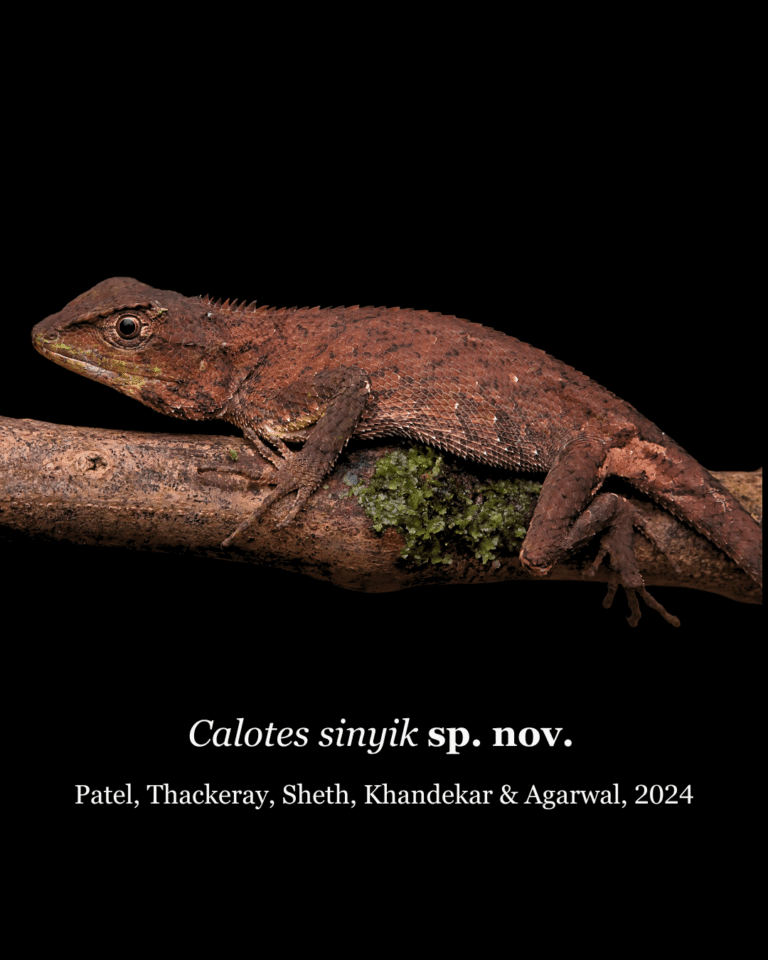
| 87 | Lizard | Agamidae | Calotes sinyik | Sinyik or Subansiri dragon lizard | PATEL, THACKERAY, SHETH, KHANDEKAR & AGARWAL | 2024 | Zootaxa | Upper Subansiri | Arunachal Pradesh | India | The specific epithet is the local name of the Subansiri River in the Tagin language, used as a noun in apposition. The Tagin are one of the major tribes of Arunachal Pradesh and mainly inhabit Upper Subansiri District. Suggested common name is Sinyik or Subansiri dragon lizard. Agamids are commonly referred to as /sopin/ in Tagin. | Here | Here |
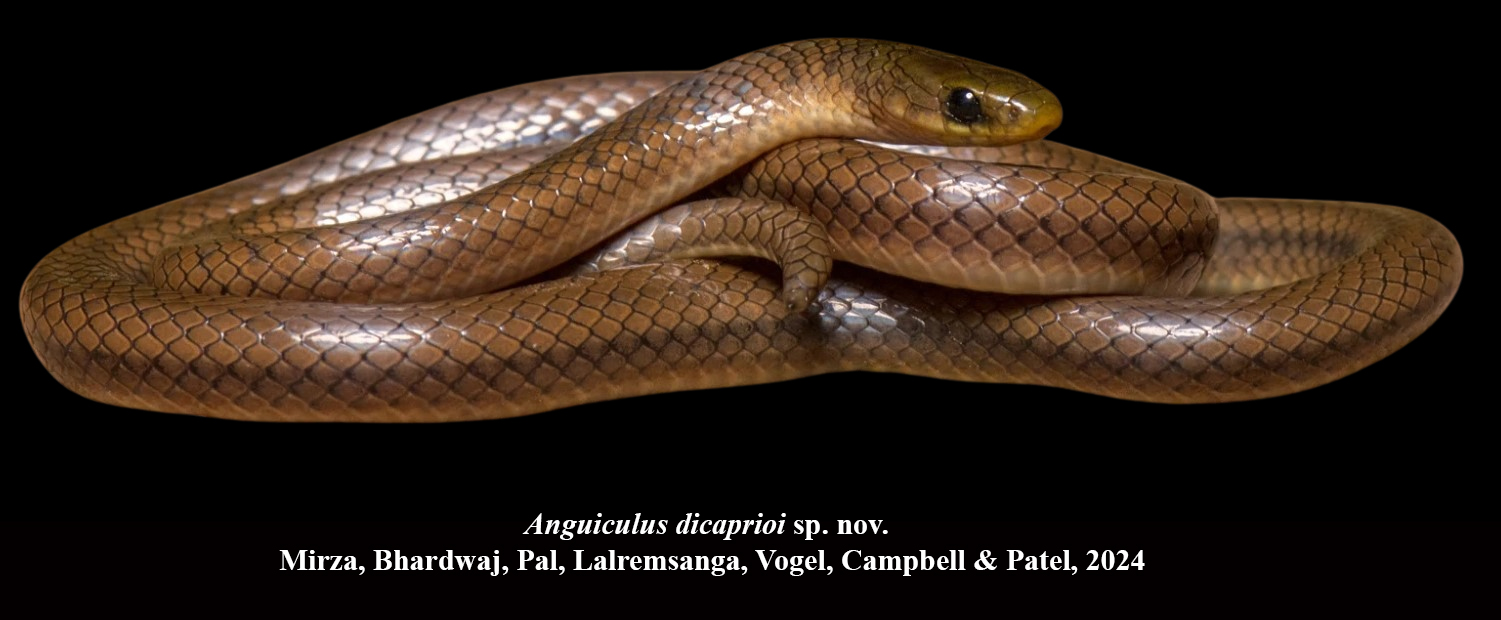
| 88 | Snake | Colubridae | Anguiculus dicaprioi | DiCaprio’s Himalayan snake’. | MIRZA, BHARDWAJ, PAL, LALREMSANGA, VOGEL, CAMPBELL & PATEL | 2024 | Scientific reports | Chamba District | Himachal Pradesh | India | The specific epithet “dicaprioi” is a patronym honouring Leonardo DiCaprio, an American actor, film producer, and environmentalist who has been actively involved in creating awareness about global climate change, increased biodiversity loss, and human health issues through pollution. In addition to this, he has made funds available for field conservation activities and research | Here | Here |
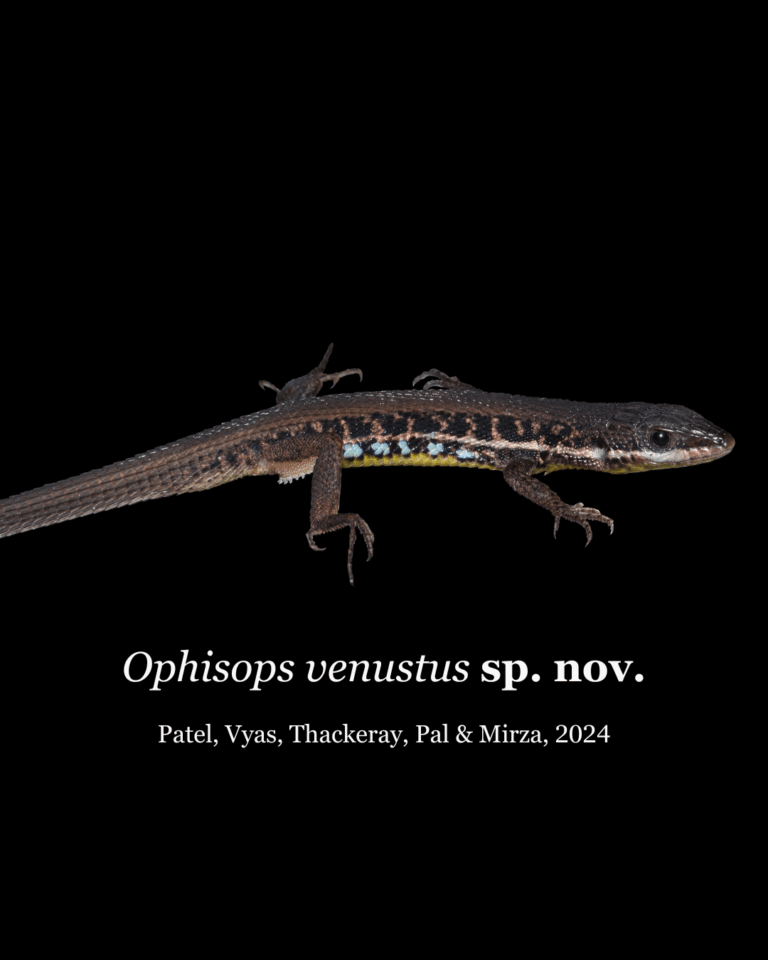
| 89 | Lizard | Lacertidae | Ophisops venustus | PATEL, VYAS, THACKERAY, PAL & MIRZA | 2024 | Taprobanica | Dang | Gujarat | India | The specific epithet ‘venustus’ is a Latin first/second-declension adjective in the nominative singular given in masculine, which means ‘charming / elegant / beautiful’ refers to its elegant body colouration in life. Suggested English name is charming lacerta or charming snake-eye. | Here | Here | |
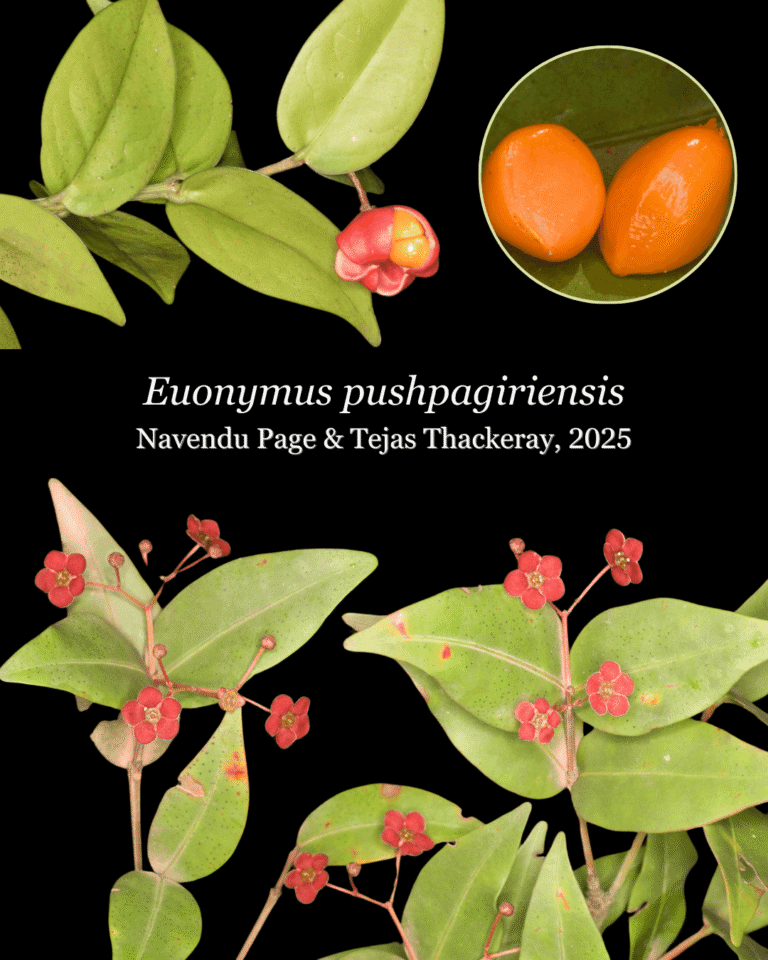
| 90 | Plant | Celastraceae | Euonymus pushpagiriensis | PAGE & THACKERAY | 2025 | Phytokeys | Kodagu | Karnataka | India | The specific epithet refers to the type locality of species – Pushpagiri which is the name of the second highest peak in Kodagu District and the fourth highest peak in the State of Karnataka and also the name of the Wildlife Sanctuary in which the peak the located | Here | Here | |
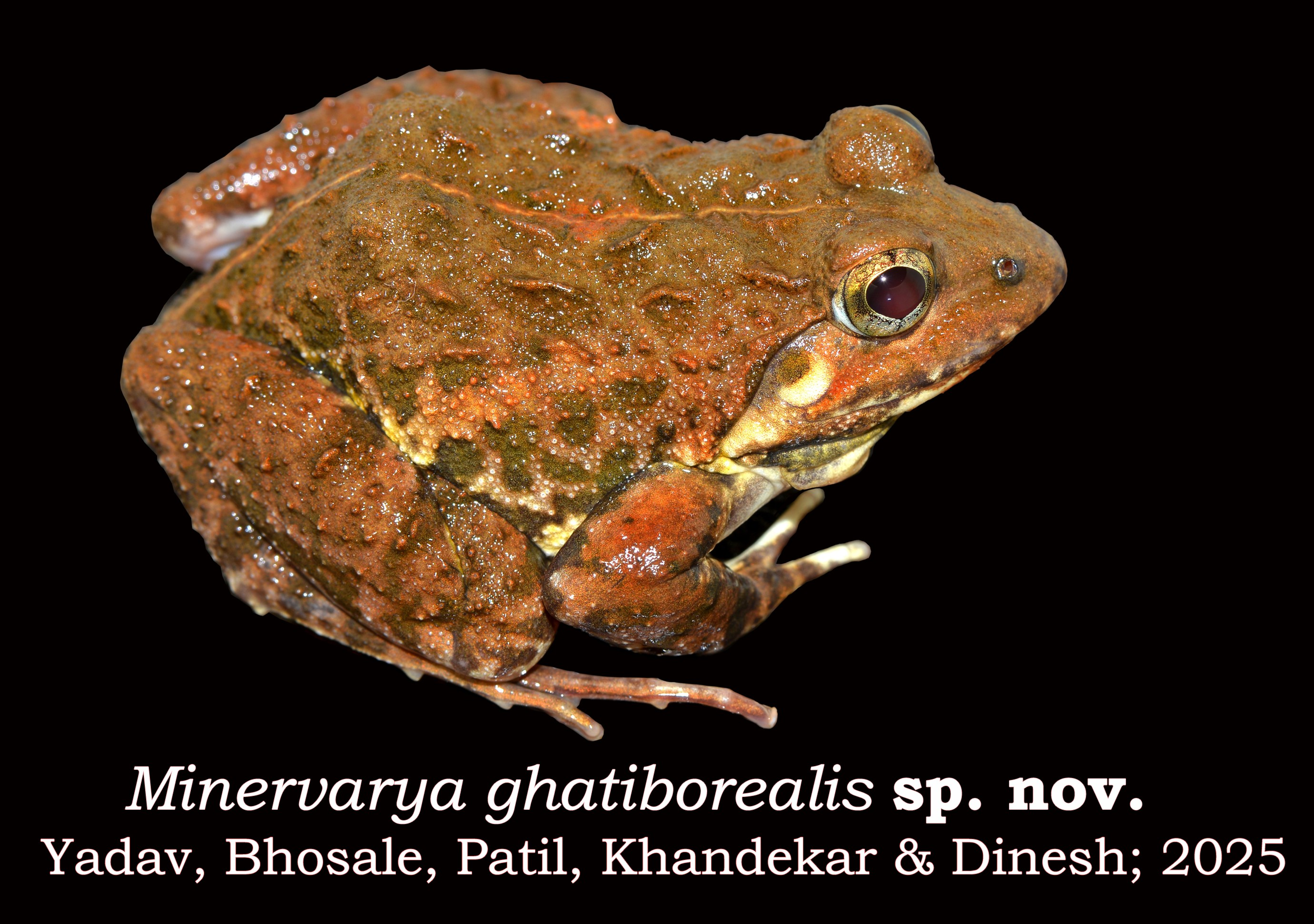
| 91 | Frog | Dicroglossidae | Minervarya ghatiborealis | Mahabaleshwar cricket frog | YADAV, BHOSALE, PATIL, KHANDEKAR & DINESH | 2025 | Zootaxa | Satara | Maharashtra | India | The specific epithet is used as a noun in apposition and is a combination of two words, ‘ghati’ derived from Sanskrit, which refers to ‘mountain pass’ and the word ‘borealis’, from Latin meaning ‘pertaining to the north.’ | Here | Here |
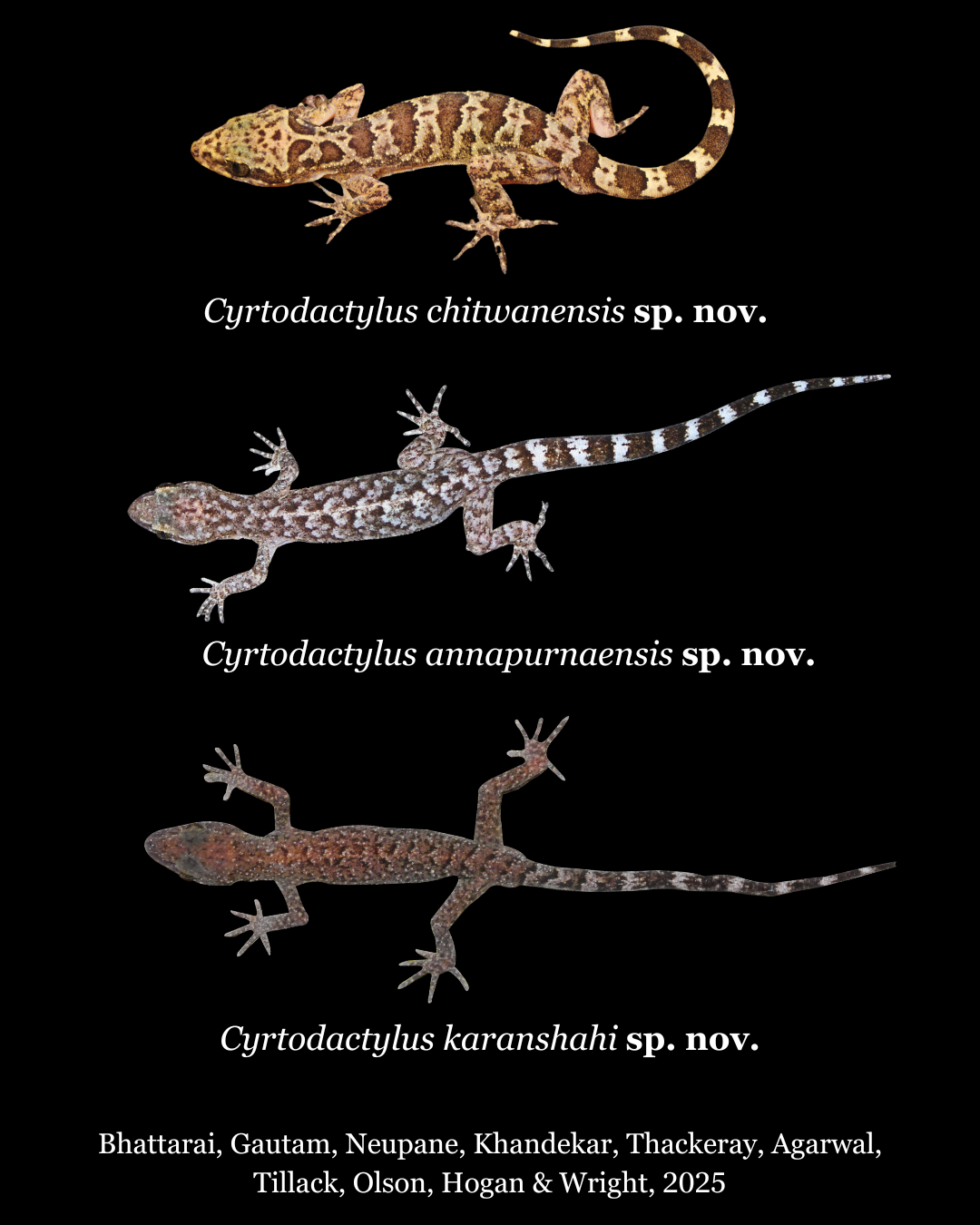
| 92 | Lizard | Gekkonidae | Cyrtodactylus chitwanensis | Chitwan bent-toed gecko. | BHATTARAI, GAUTAM, NEUPANE, KHANDEKAR, THACKERAY, AGARWAL, TILLACK, OLSON, HOGAN & WRIGHT | 2025 | Zootaxa | Tanahun | Nepal | Nepal | The specific epithet is a toponym for the distributional range of the new species, which includes localities in Chitwan District and the Barandabhar Corridor Forest, a part of the Chitwan-Annapurna Landscape connecting to Chitwan National Park (CNP) in the south. CNP is the first protected area in Nepal and one of the major strongholds of the greater one-horned rhinoceros and gharial. | Here | Here |
| 93 | Lizard | Gekkonidae | Cyrtodactylus annapurnaensis | ACAP bent-toed gecko | BHATTARAI, GAUTAM, NEUPANE, KHANDEKAR, THACKERAY, AGARWAL, TILLACK, OLSON, HOGAN & WRIGHT | 2025 | Zootaxa | Kaski | Nepal | Nepal | The specific epithet is a toponym for the Annapurna Range and the Annapurna Conservation Area Project (ACAP), within which the type locality falls | Here | Here |
| 94 | Lizard | Gekkonidae | Cyrtodactylus karanshahi | Karan’s bent-toed gecko | BHATTARAI, GAUTAM, NEUPANE, KHANDEKAR, THACKERAY, AGARWAL, TILLACK, OLSON, HOGAN & WRIGHT | 2025 | Zootaxa | Gorkha | Nepal | Nepal | The specific epithet is a patronym in honor of Prof Karan Bahadur Shah (b. 1954), for his remarkable contributions to the ecology, taxonomy and socioeconomics of the vertebrate fauna and in particular the herpetofauna of his home country, Nepal, in a career spanning over 40 years. He also led the feasibility study of the area for the formal establishment of the Manaslu Conservation Area Project (MCAP). | Here | Here |
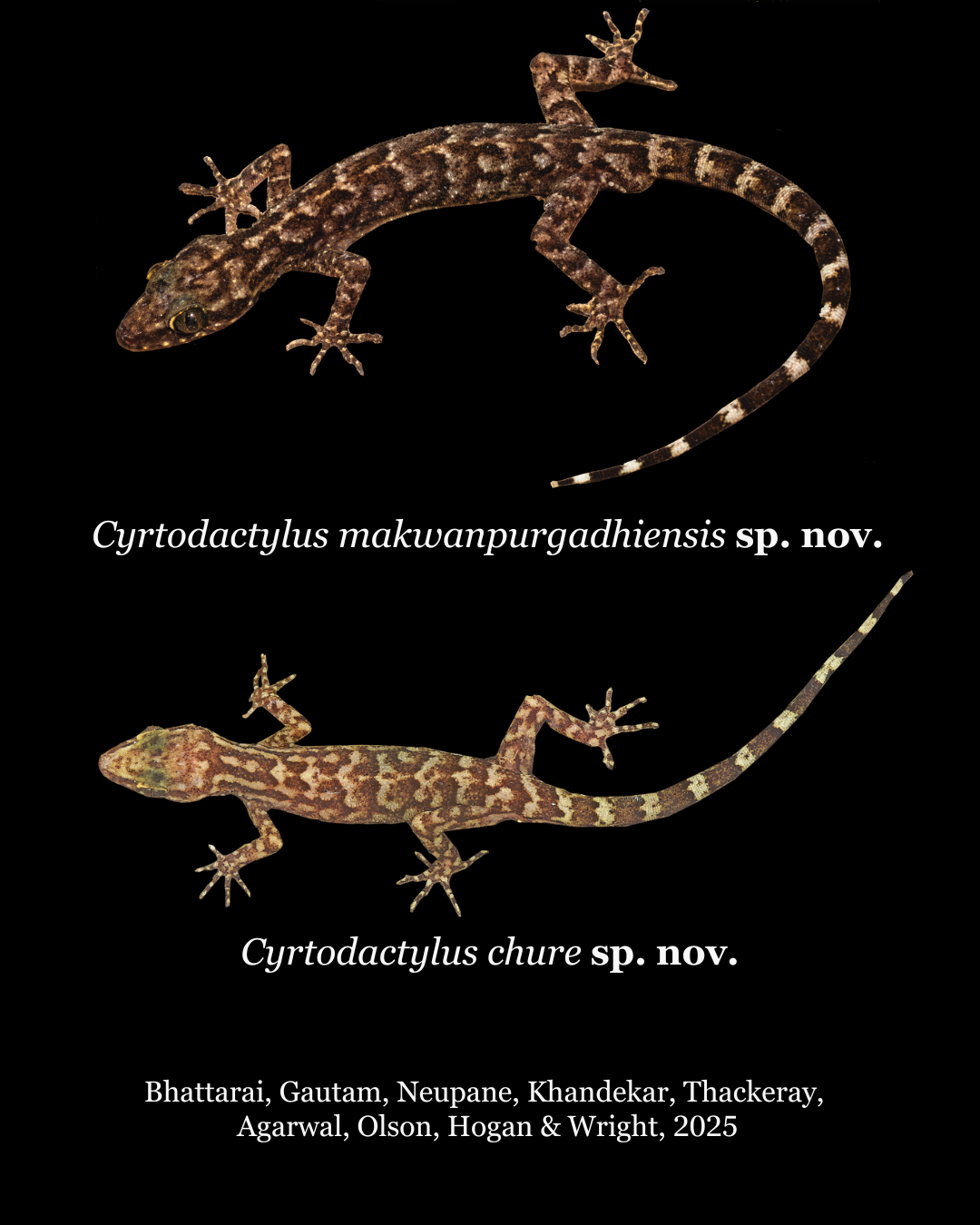
| 95 | Lizard | Gekkonidae | Cyrtodactylus makwanpurgadhiensis | Makwanpurgadhi bent toed gecko | BHATTARAI, GAUTAM, NEUPANE, KHANDEKAR, THACKERAY, AGARWAL, TILLACK, OLSON, HOGAN & WRIGHT | 2025 | Zookeys | Makwanpur | Nepal | Nepal | The specific epithet is a toponym for Makwanpurgadhi (Gadhi = Fort), which is ~17 km north-east of Hetauda town, Makwanpur District in Bagmati Province. | Here | Here |
| 96 | Lizard | Gekkonidae | Cyrtodactylus chure | Chure bent toed gecko | BHATTARAI, GAUTAM, NEUPANE, KHANDEKAR, THACKERAY, AGARWAL, TILLACK, OLSON, HOGAN & WRIGHT | 2025 | Zookeys | Sindhuli | Nepal | Nepal | The specific epithet, Chure (ch-oo-ray), is the Nepali word for the Siwalik Mountain range, within which the type locality lies, and is used as a noun in apposition. | Here | Here |
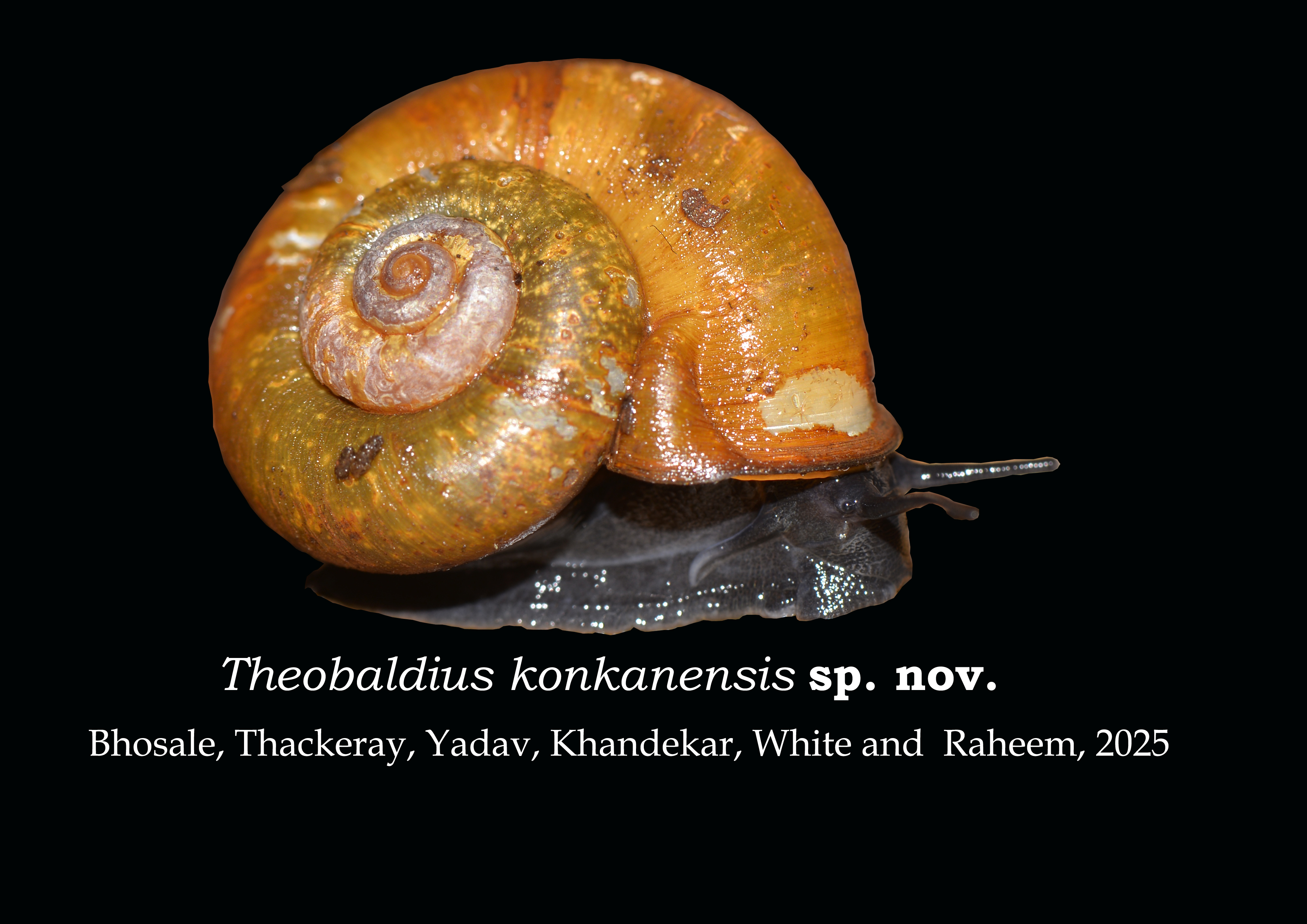
| 97 | Snail | Cyclophoridae | Theobaldius? konkanensis | BHOSALE, THACKERAY, YADAV, KHANDEKAR, WHITE & RAHEEM | 2025 | Molluscan Research | Ratnagiri | Maharashtra | India | The specific epithet is a toponym referring to South India’s Konkan region (coastal regions of the states of Goa, Maharashtra and Karnataka), where the species is distributed. | Here | Here | |
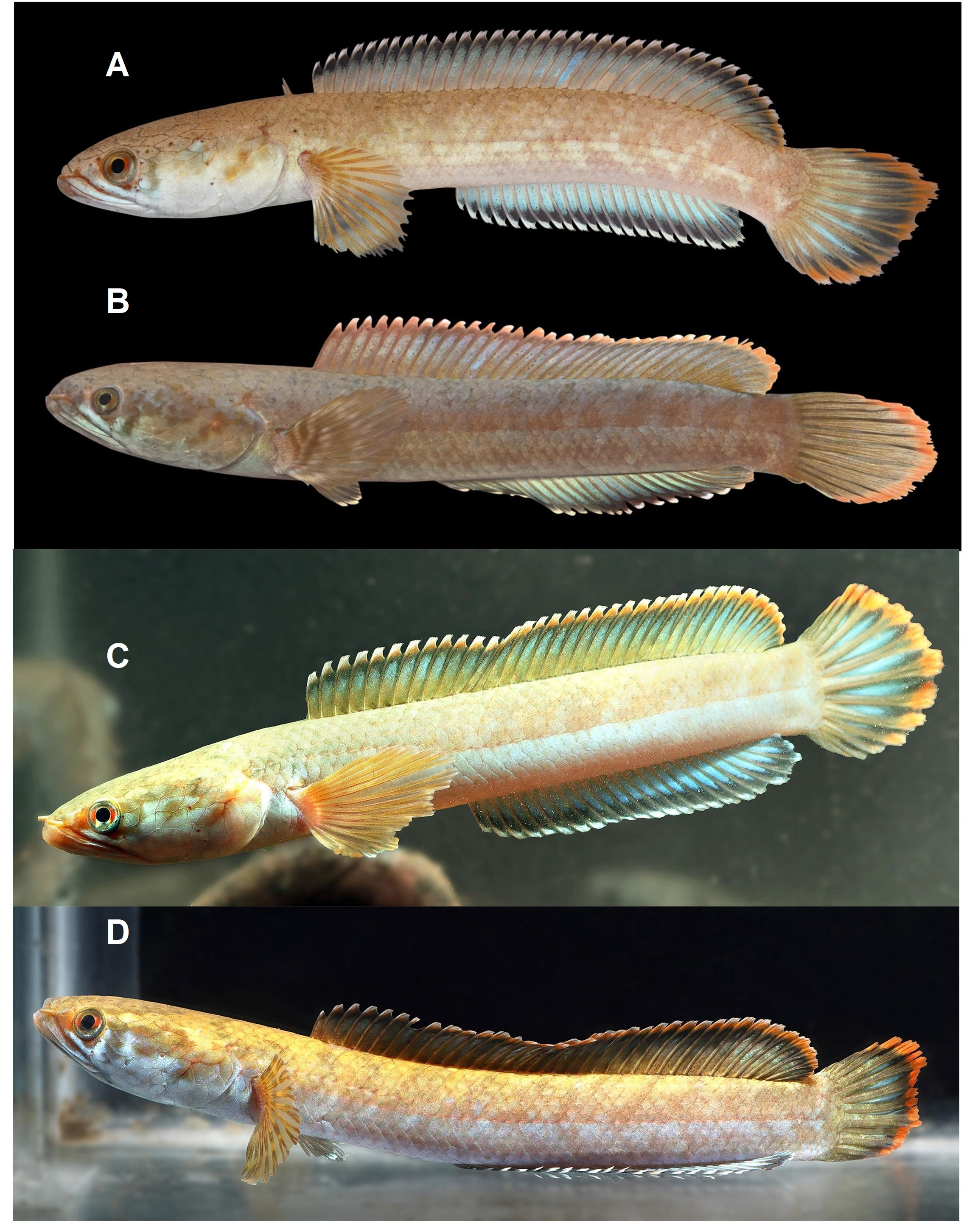
| 98 | Fish | Channidae | Channa nachi | Farham’s snakehead | PRAVEENRAJ, MOULITHARAN, PAVAN-KUMAR, NAVEEN THACKERAY, RAMESHORI & GURUMAYUM | 2025 | Zootaxa | South Garo hills | Meghalaya | India | The specific epithet nachi is the local vernacular name for the species in Garo language spoken by the Garo tribes of Meghalaya. It is used as a noun in apposition | Here | Here |
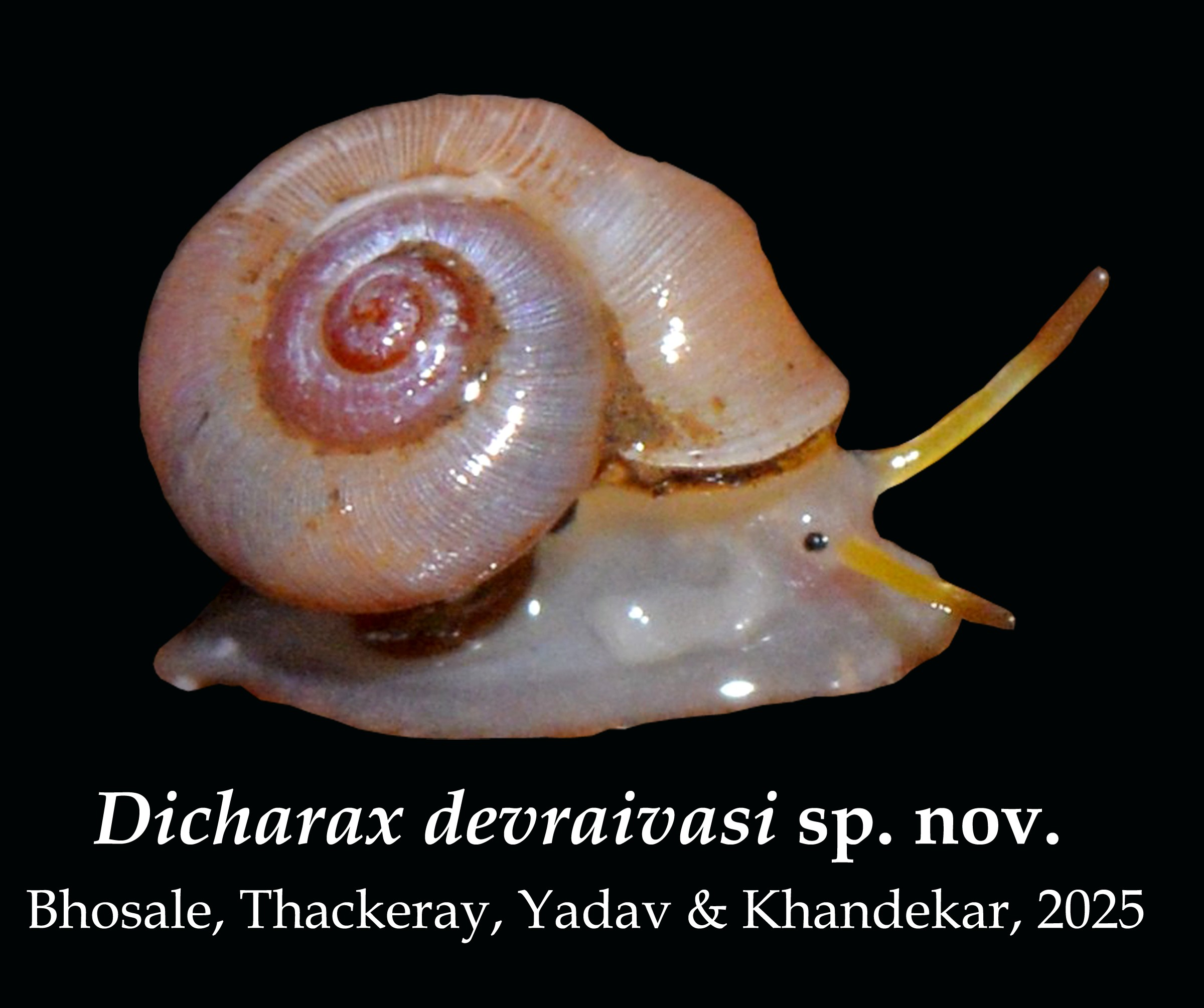
| 99 | Snail | Cyclophoridae | Dicharax devraivasi | Devrai micro-snail | BHOSALE, THACKERAY, YADAV & KHANDEKAR | 2025 | Journal of Conchology | Kolhapur | Maharashtra | India | The specific epithet is used as a noun in apposition. It is derived from the Marathi word “devrai”, meaning “sacred grove”, and Sanskrit word “vasi”, meaning “inhabitant of ”, as the new species has so far only been reported from multiple sacred grove forests in Kolhapur District, northern Western Ghats of Maharashtra. | Here | Here |
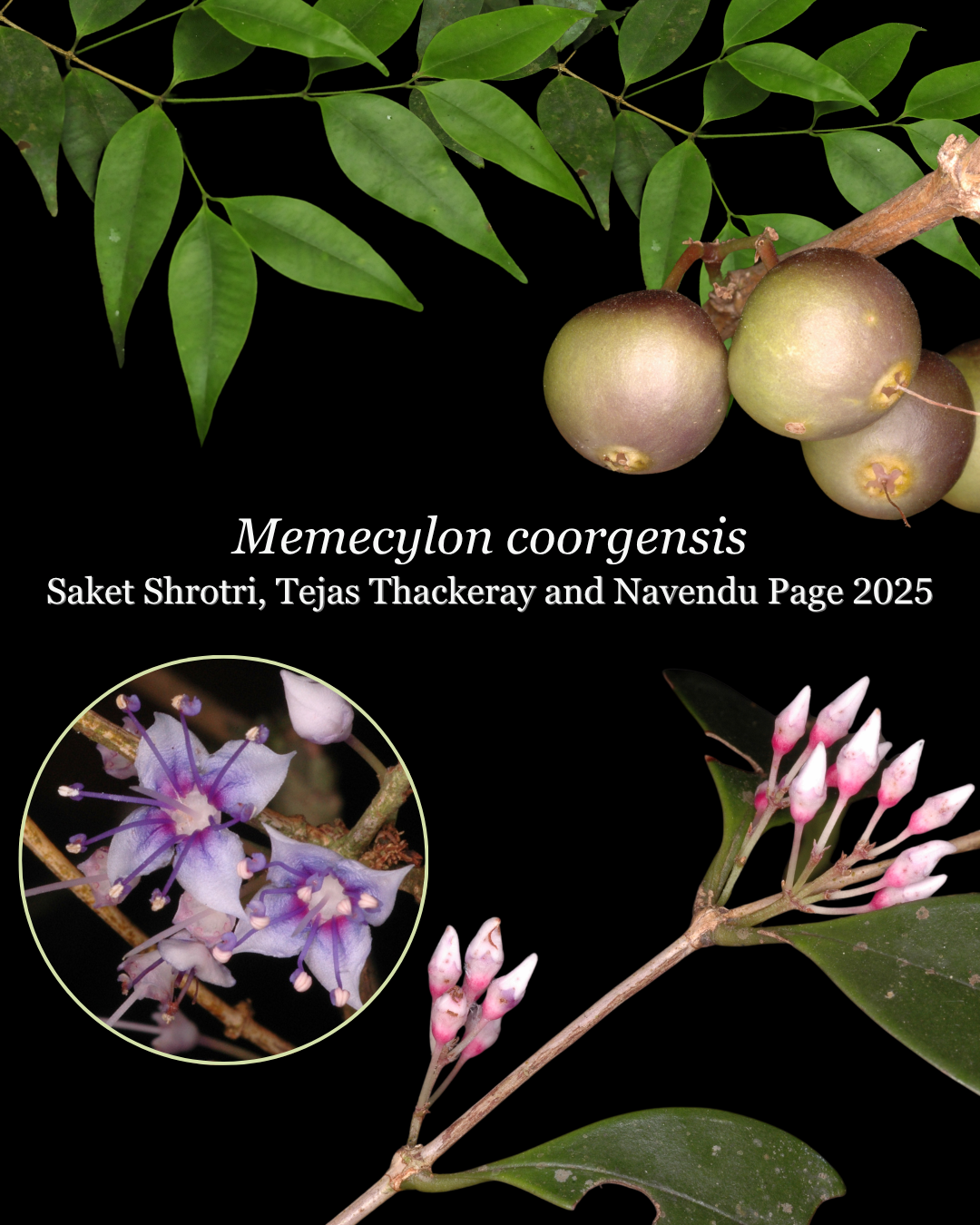
| 100 | Plant | Melastomataceae | Memecylon coorgensis | - | SHROTRI, THACKERAY & PAGE | 2025 | Edinburgh Journal of Botany | Kodagu | Karnataka | India | The specific epithet refers to the Coorg (Kodagu) district of the state of Karnataka, where the species is described from and hitherto geographically restricted to | Here | Here |
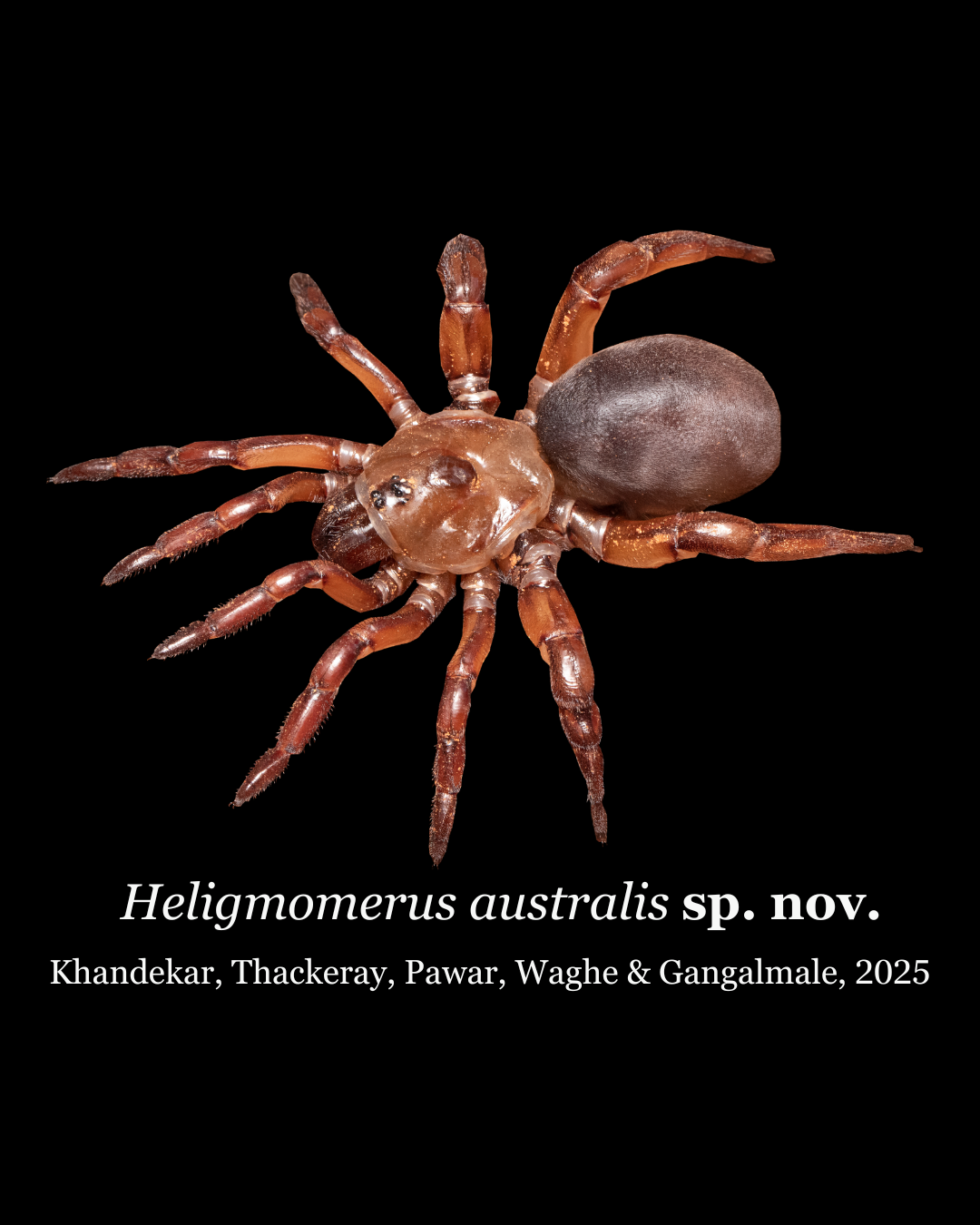
| 101 | Spider | Idiopidae | Heligmomerus australis | KHANDEKAR, THACKERAY, PAWAR, WAGHE & GANGALMALE | 2025 | Taprobanica | Tirunelveli | Tamil Nadu | India | The specific epithet is a noun in apposition and comes from the Latin austra for south, referring to the type locality of the new species, which is currently the southernmost known locality for the genus Heligmomerus on the Indian peninsula. | Here | Here | |
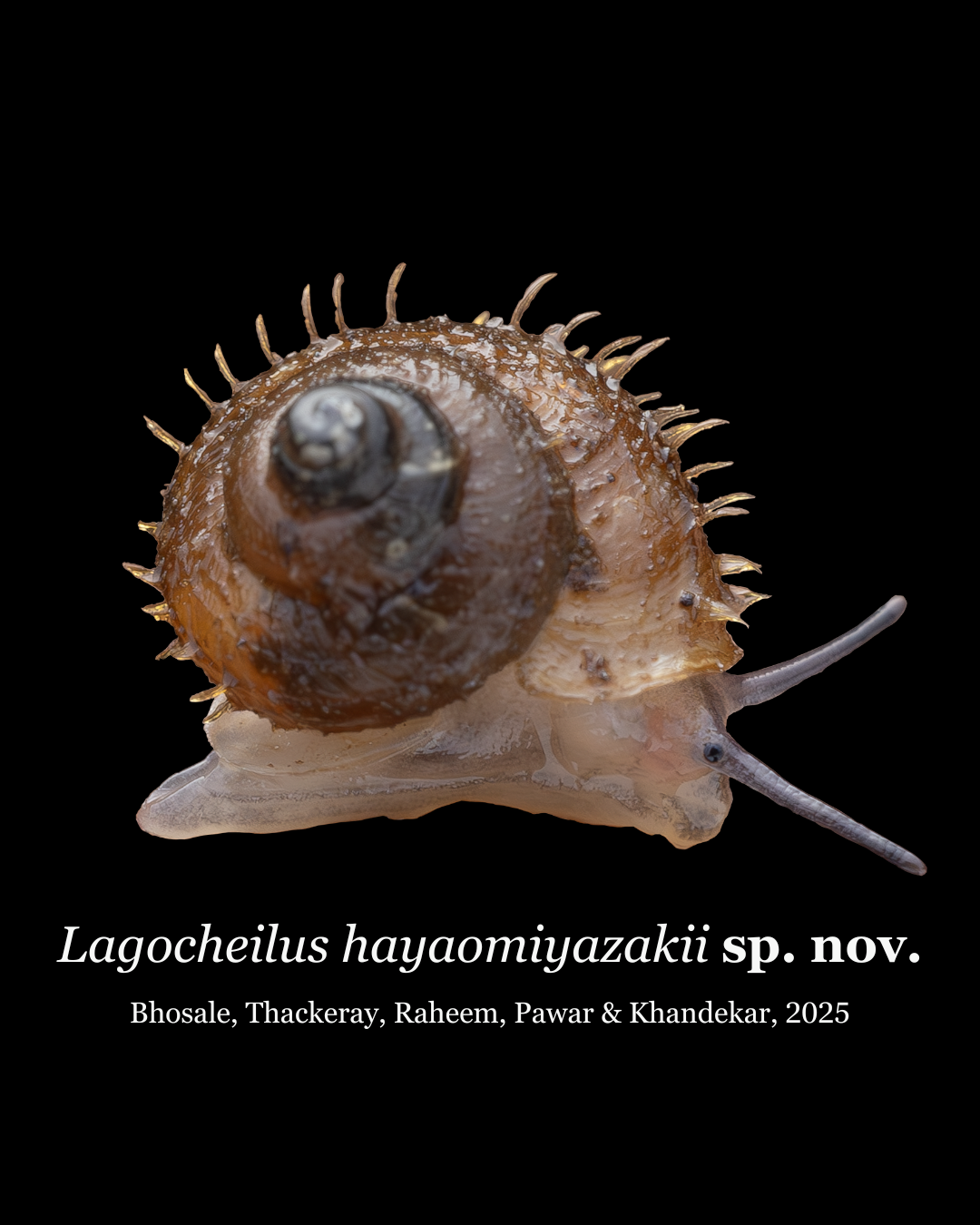
| 102 | Snail | Cyclophoridae) | Lagocheilus hayaomiyazakii | Tilari hairy snail | BHOSALE, THACKERAY, RAHEEM, PAWAR & KHANDEKAR | 2025 | Journal of Conchology | Kolhapur | Maharashtra | India | The specific epithet is a Latinised patronym honouring Hayao Miyazaki (b. 1941), a renowned Japanese animator, filmmaker, and co-founder of Studio Ghibli; the new species is named after him in recognition of his contribution to animation films. | Here | Here |
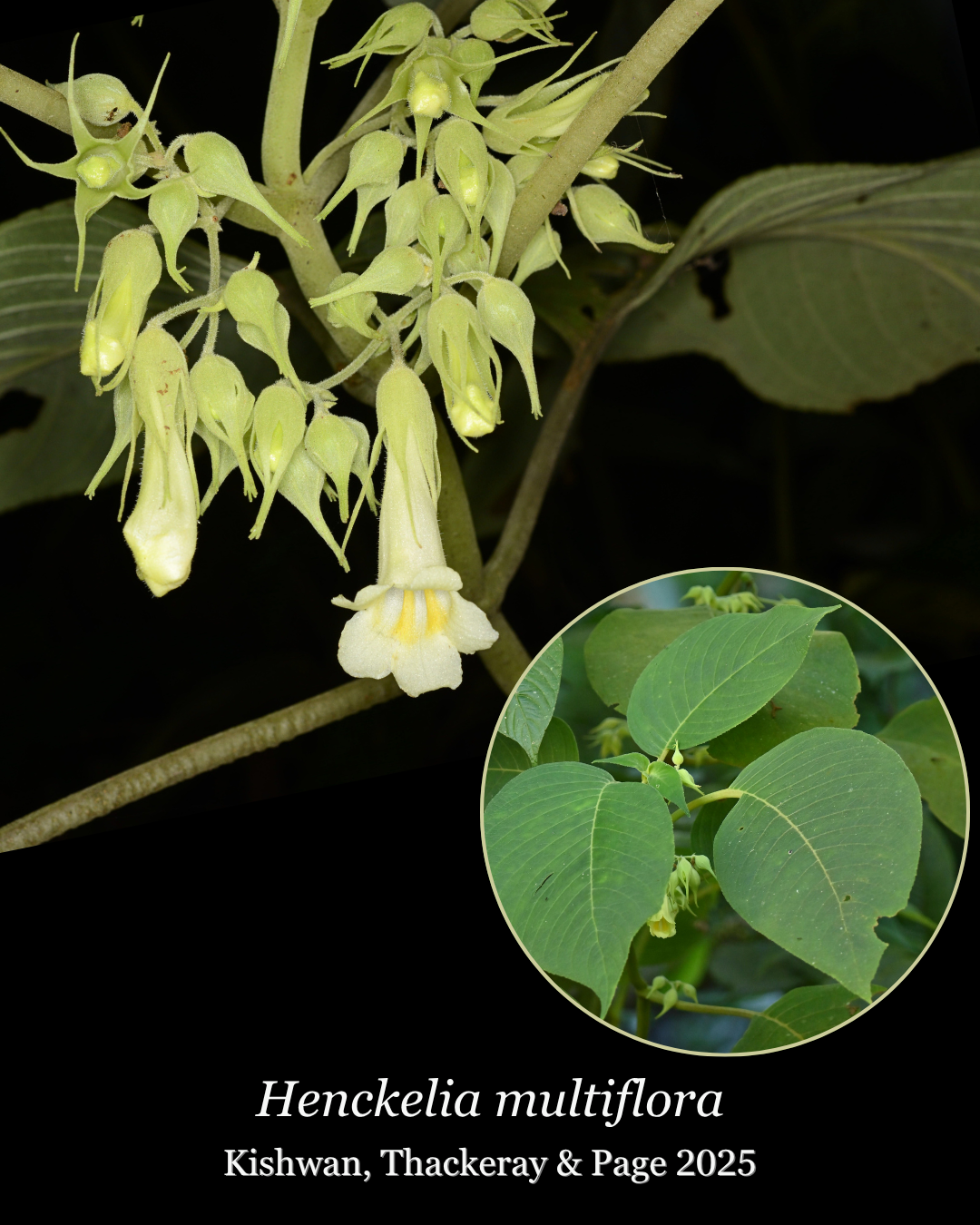
| 103 | Plant | Gesneriaceae | Henckelia multiflora | KISHWAN, THACKERAY & PAGE | 2025 | Edinburgh Journal of Botany | Siang District | Arunachal Pradesh | India | The specific epithet refers to its many-flowered inflorescence, which is one of the diagnostic features of this species | Here | Here | |
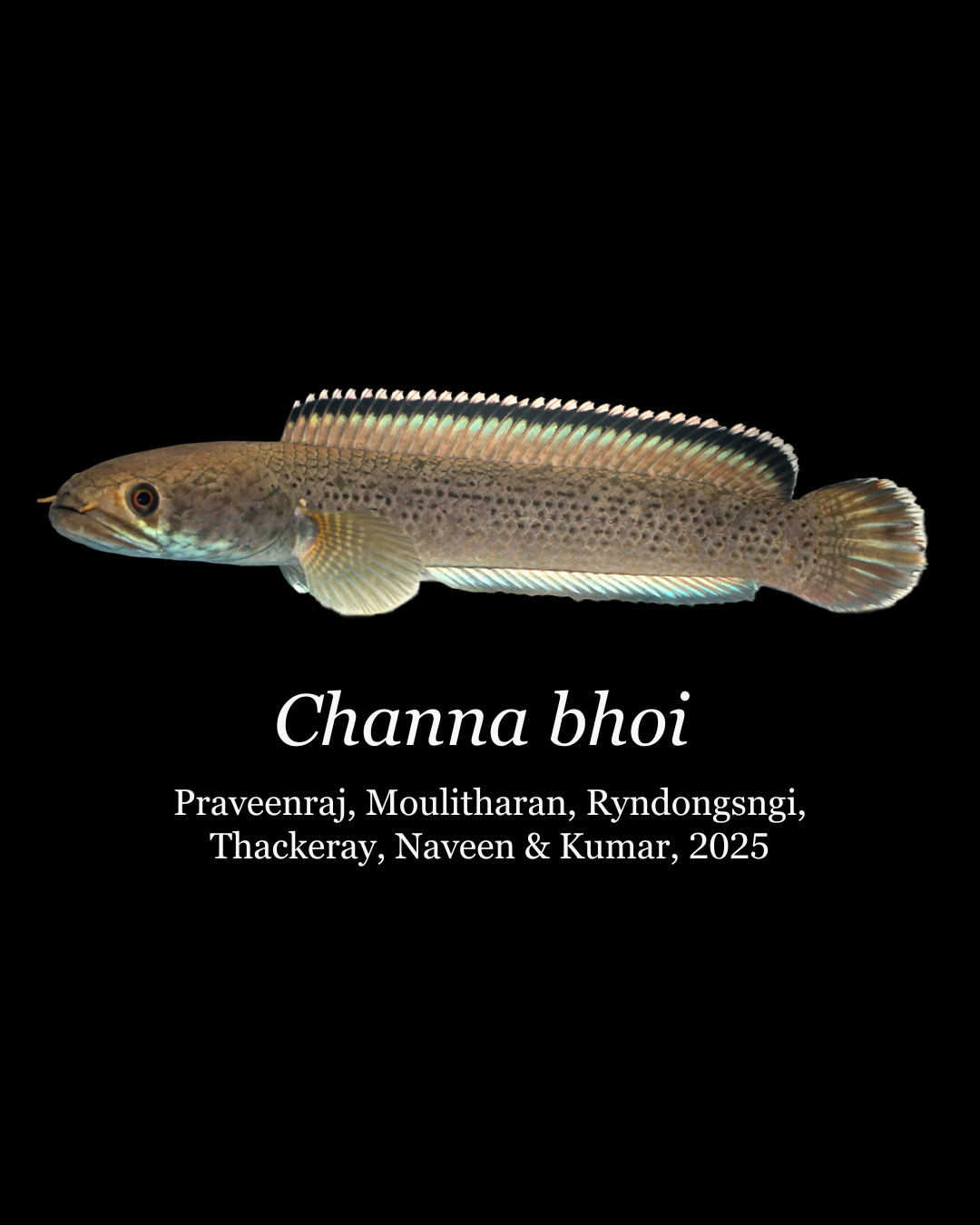
| 104 | Fish | Channidae | Channa bhoi | PRAVEENRAJ, MOULITHARAN, RYNDONGSNGI, THACKERAY, NAVEEN & KUMAR | 2025 | Ichthyology & Herpetology | Ri-Bhoi district | Meghalaya | India | The specific epithet bhoi is named after the Bhois people, who are the indigenous sub-group of the main Khasi Tribe of Meghalaya, and inhabitants of the Ri-Bhoi district where the new species was collected. It is used as a noun in apposition. | Here | Here | |
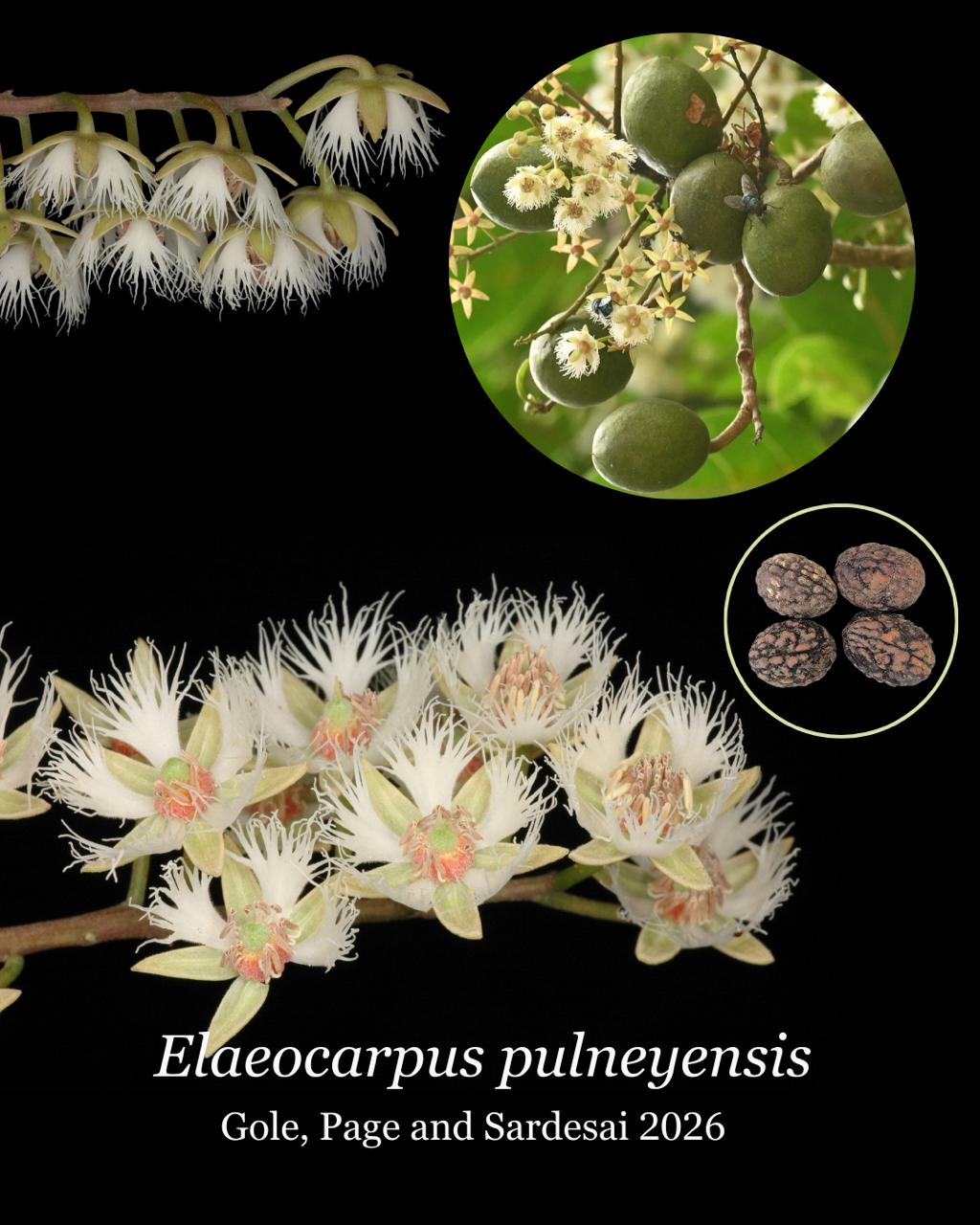
| 105 | Plant | Elaeocarpaceae | Elaeocarpus pulneyensis | GOLE, PAGE & SARADESAI | 2026 | Edinburgh Journal of Botany | Dindigul district | Tamil Nadu | India | The specific epithet pulneyensis is derived from the type locality, Pulney Hills, situated in peninsular India. | Here | Here | |
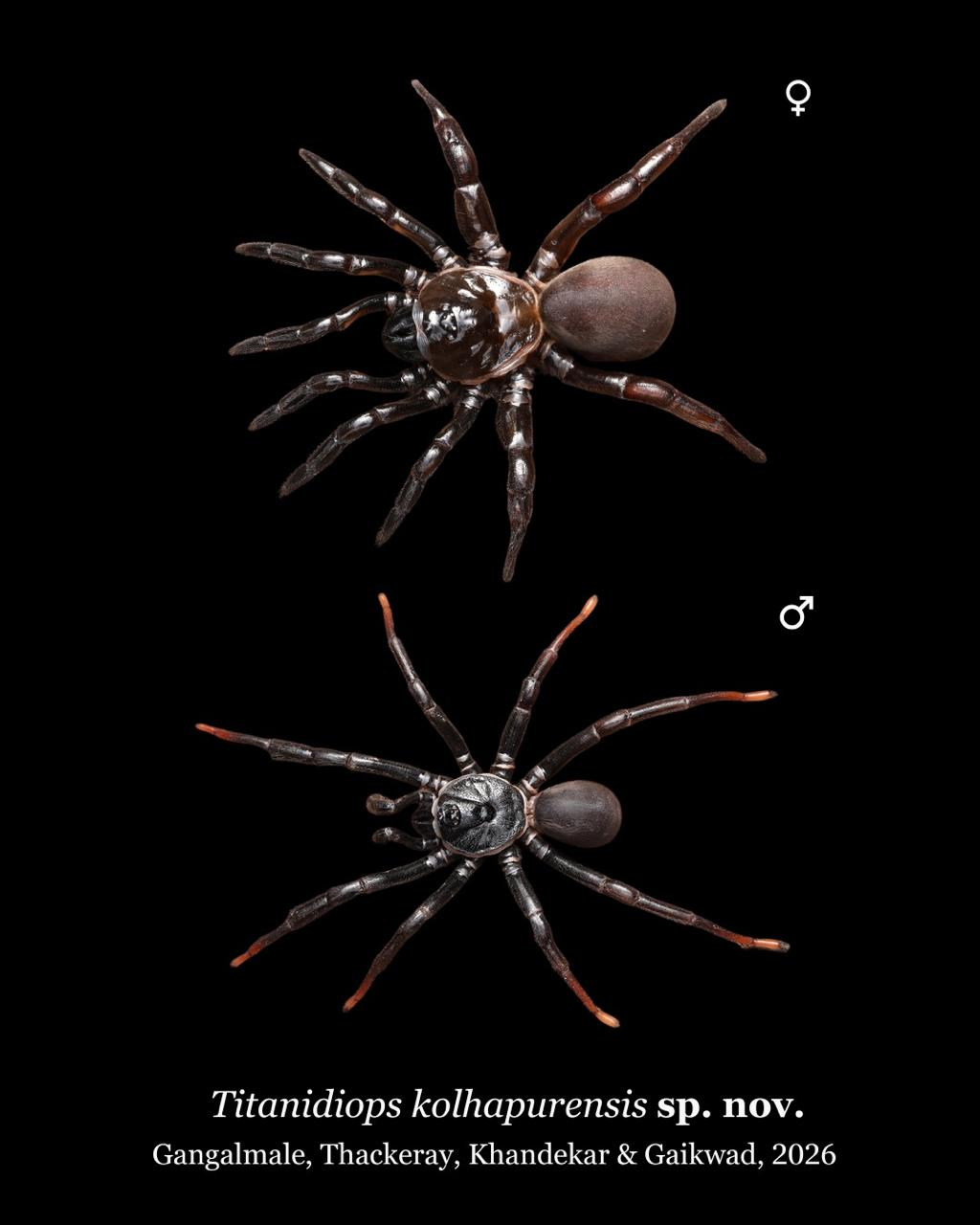
| 106 | Spider | Idiopidae | Titanidiops kolhapurensis | Kolhapur trapdoor spider | GANGALMALE, THACKERAY, KHANDEKAR & GAIKWAD | 2026 | Journal of Natural History | Kolhapur | Maharashtra | India | The specific epithet is a toponym referring to Kolhapur City in Western Maharashtra, from the outskirts of which the type series of the new species was collected. | Here | Here |
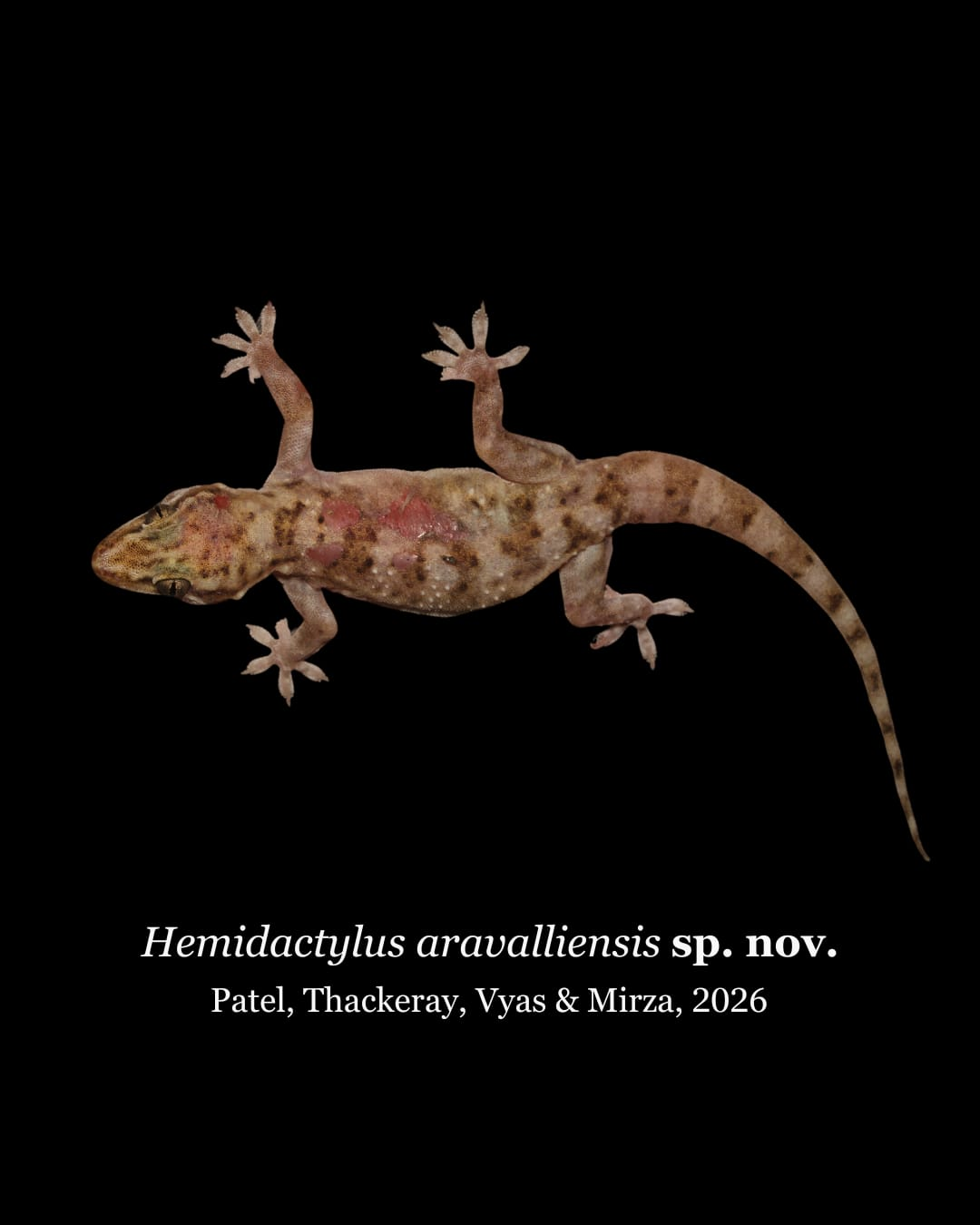
| 107 | Lizard | Gekkonidae | Hemidactylus aravalliensis | Aravalli leaf-toed gecko | PATEL, THACKERAY, VYAS & MIRZA | 2026 | Zootaxa | Banaskantha | Gujarat | India | The specific epithet is a toponym for the Aravalli Hill ranges from where the new species was collected. | Here | Here |
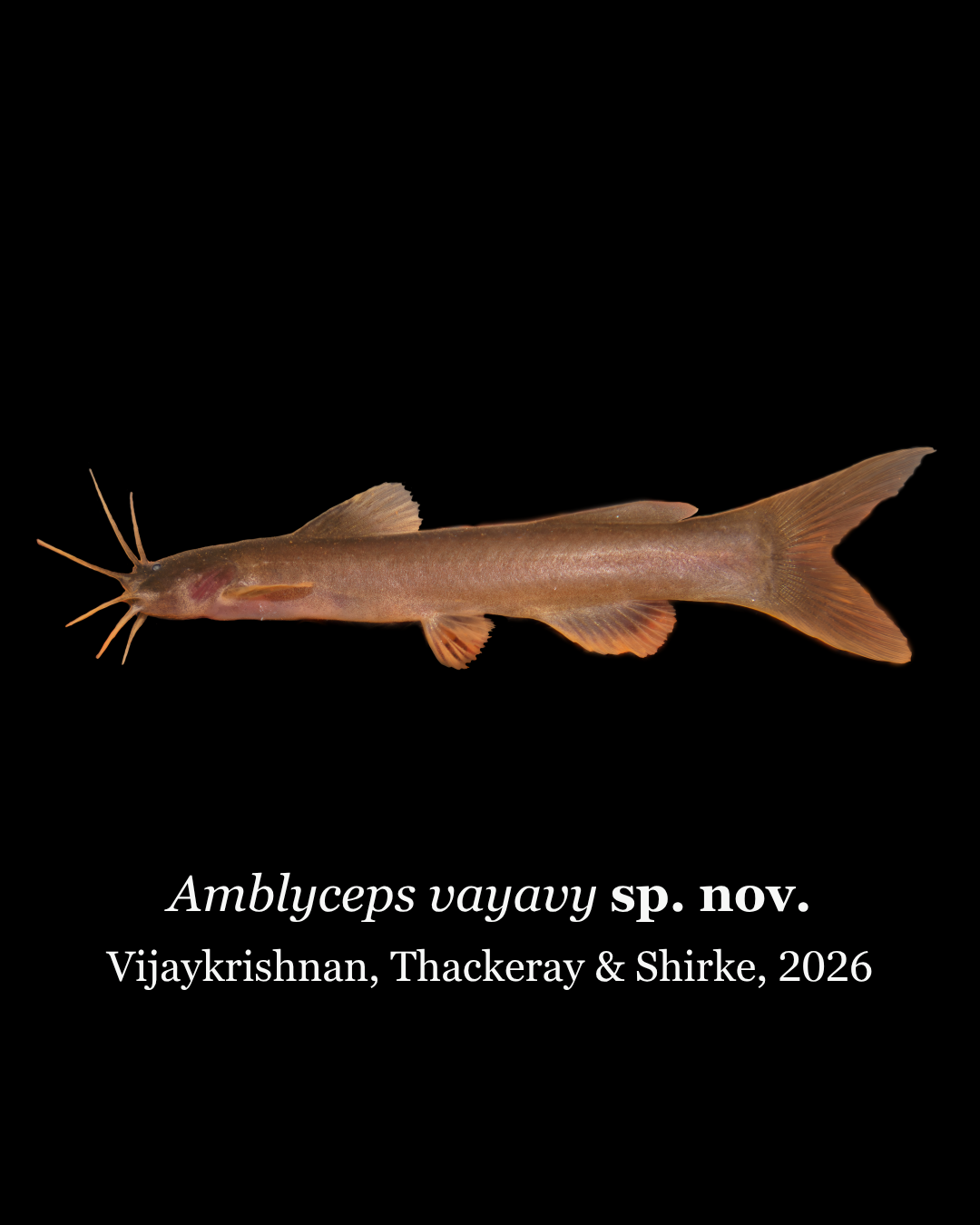
| 108 | Fish | Amblycipitidae | Amblyceps vayavy | VIJAYKRISHNAN, THACKERAY & SHIRKE | 2026 | Zootaxa | South Goa | Goa | India | The specific name vayavy (pronounced vah-yhav-yah) is derived from Konkani (the official language of the state of Goa), and Marathi (the official language of the state of Maharashtra), both meaning northwest, in reference to the type locality and the additional collection location in the northern part of the Western Ghats. | Here | Here | |
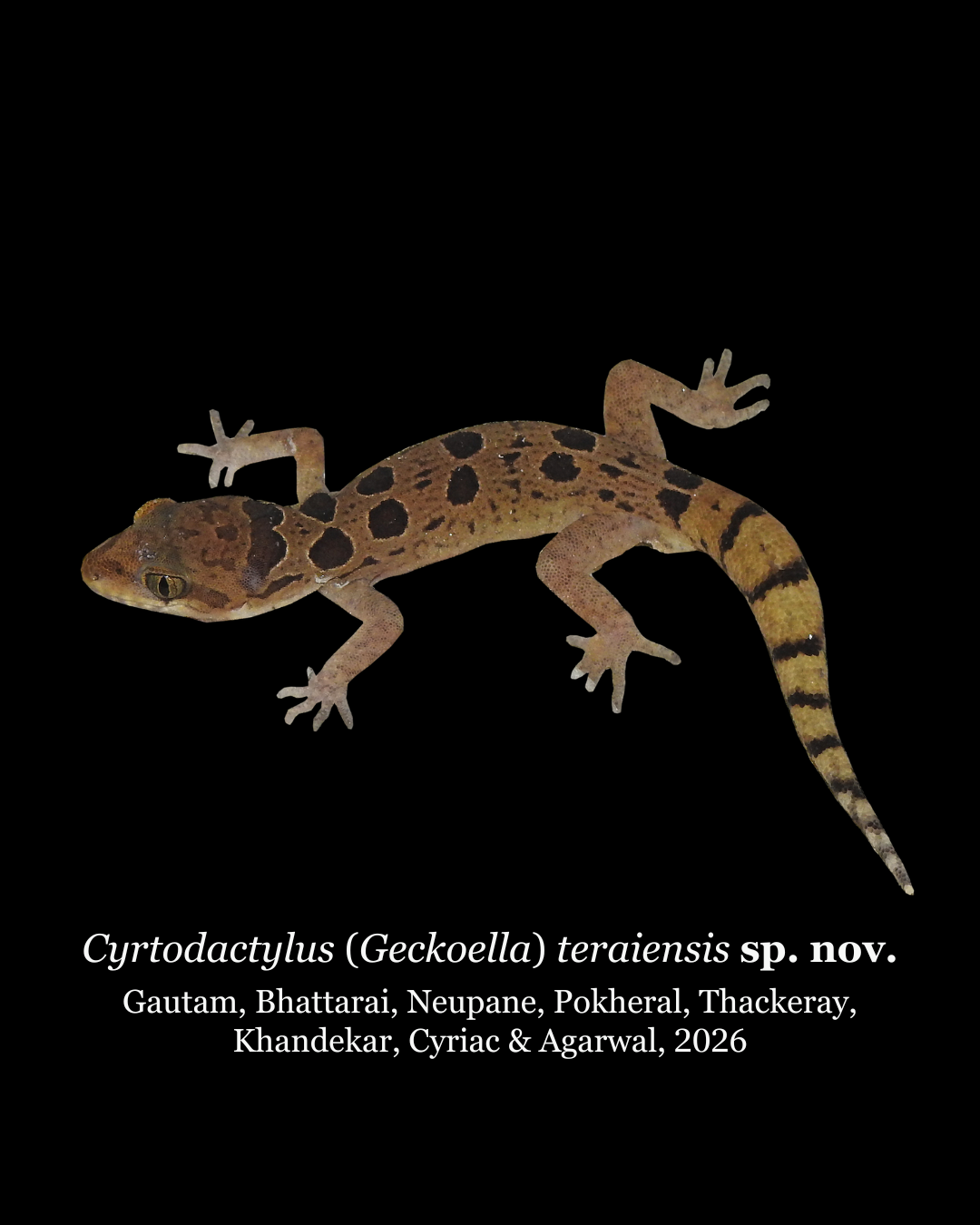
| 109 | Lizard | Gekkonidae | Cyrtodactylus teraiensis | Terai clouded Geckoella | GAUTAM, BHATTARAI, NEUPANE, POKHERAL, THACKERAY, KHANDEKAR, CYRIAC, AGARWAL | 2026 | Zookeys | Morang | Nepal | Nepal | The specific epithet is a toponym for the Terai, a unique lowland habitat in southern Nepal and north India, bordered by the Siwalik Range in the north and the Indo-Gangetic Plains to the south | Here | Here |
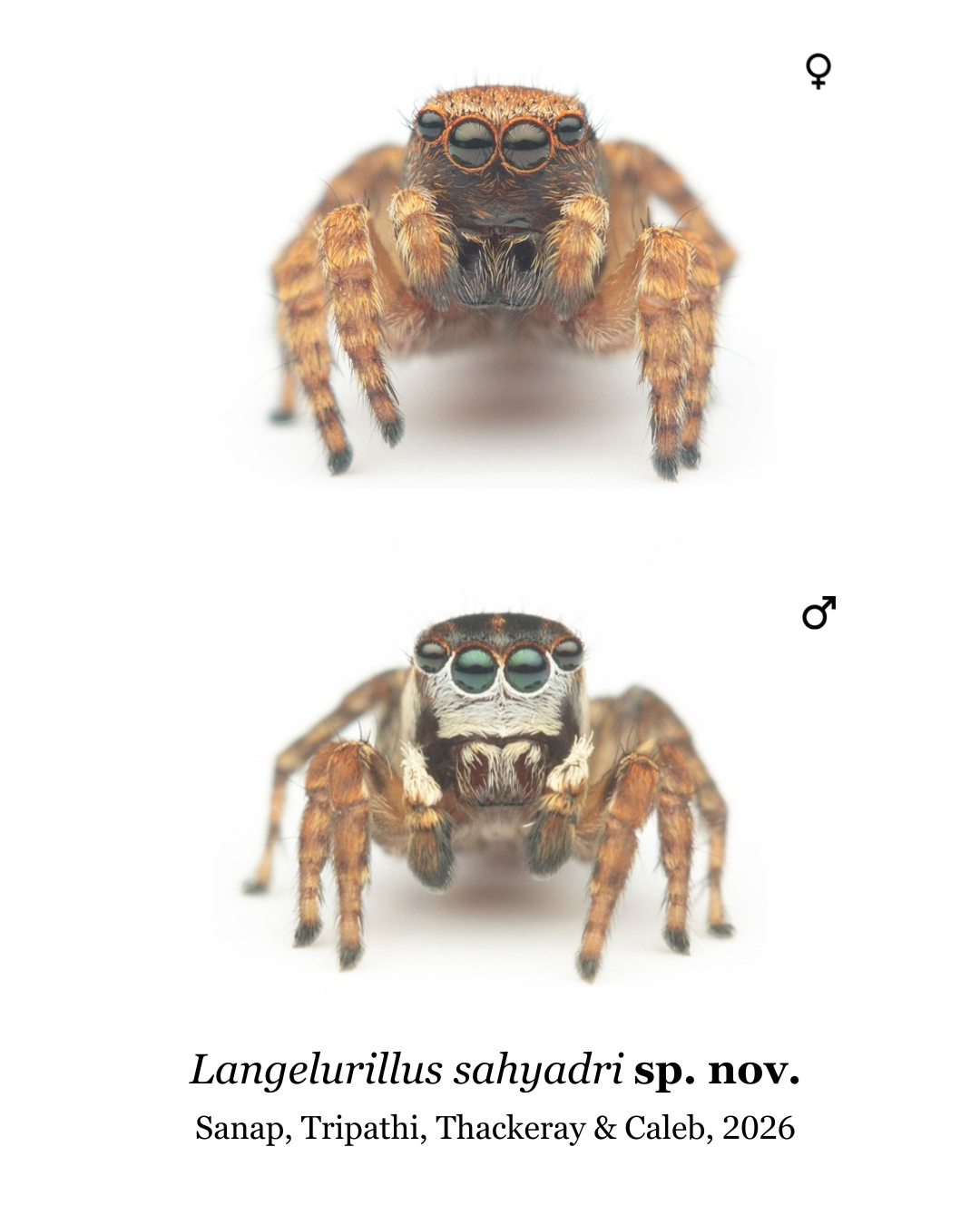
| 110 | Spider | Salticidae | Langelurillus sahyadri | SANAP, TRIPATHI, CALEB, KOLI, KOLI, INTODIA & THACKERAY | 2026 | Zootaxa | Satara | Maharashtra | India | The specific epithet ‘sahyadri’ is derived from the Sahyadri hill ranges of the Western Ghats, which include the type locality, and is treated as a noun in apposition | Here | Here | |
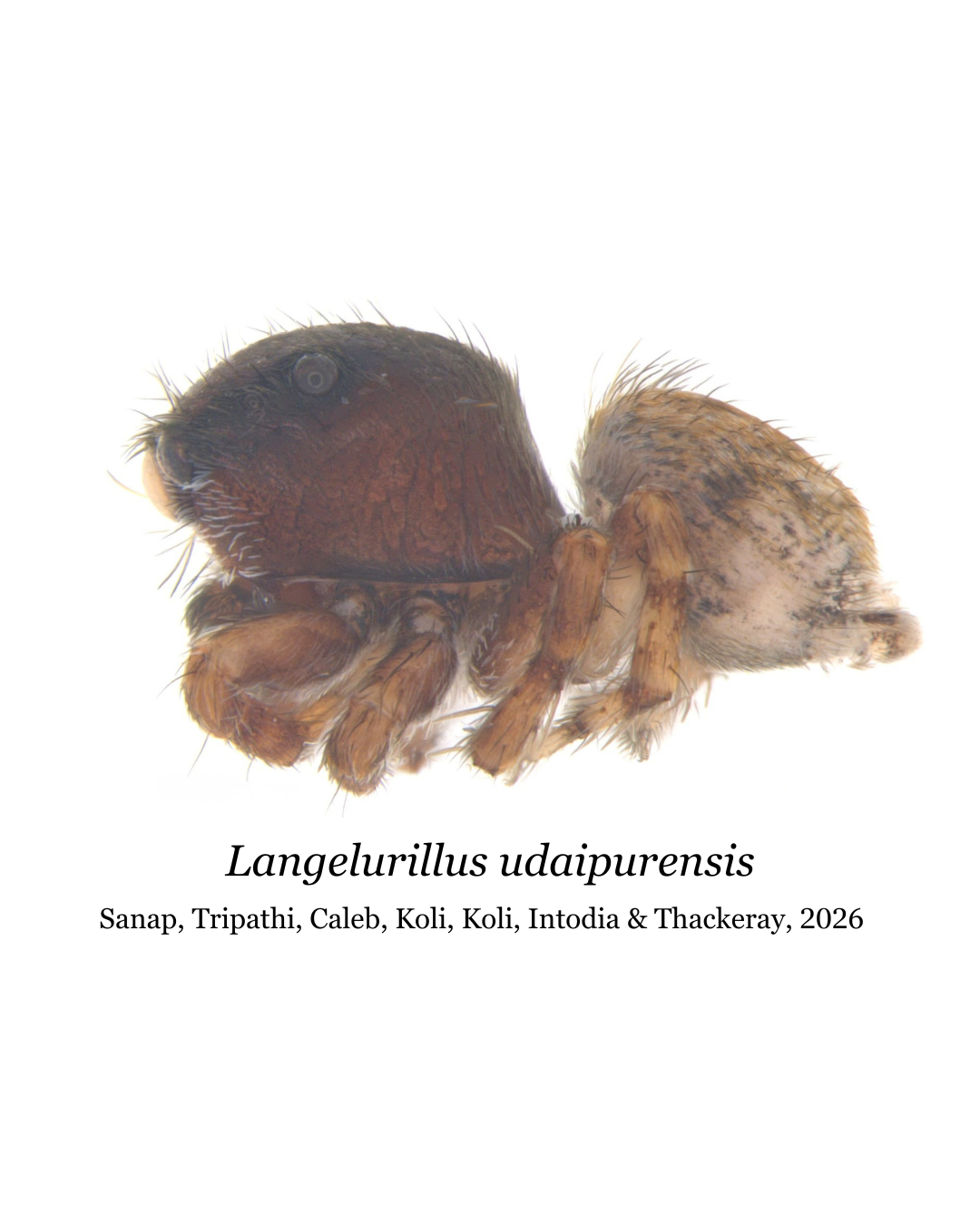
| 111 | Spider | Salticidae | Langelurillus udaipurensis | SANAP, TRIPATHI, CALEB, KOLI, KOLI, INTODIA & THACKERAY | 2026 | Zootaxa | Rajasthan | India | The specific epithet udaipurensis is a noun in apposition and derived from “Udaipur,” the district from which the species was collected. | Here | Here | ||
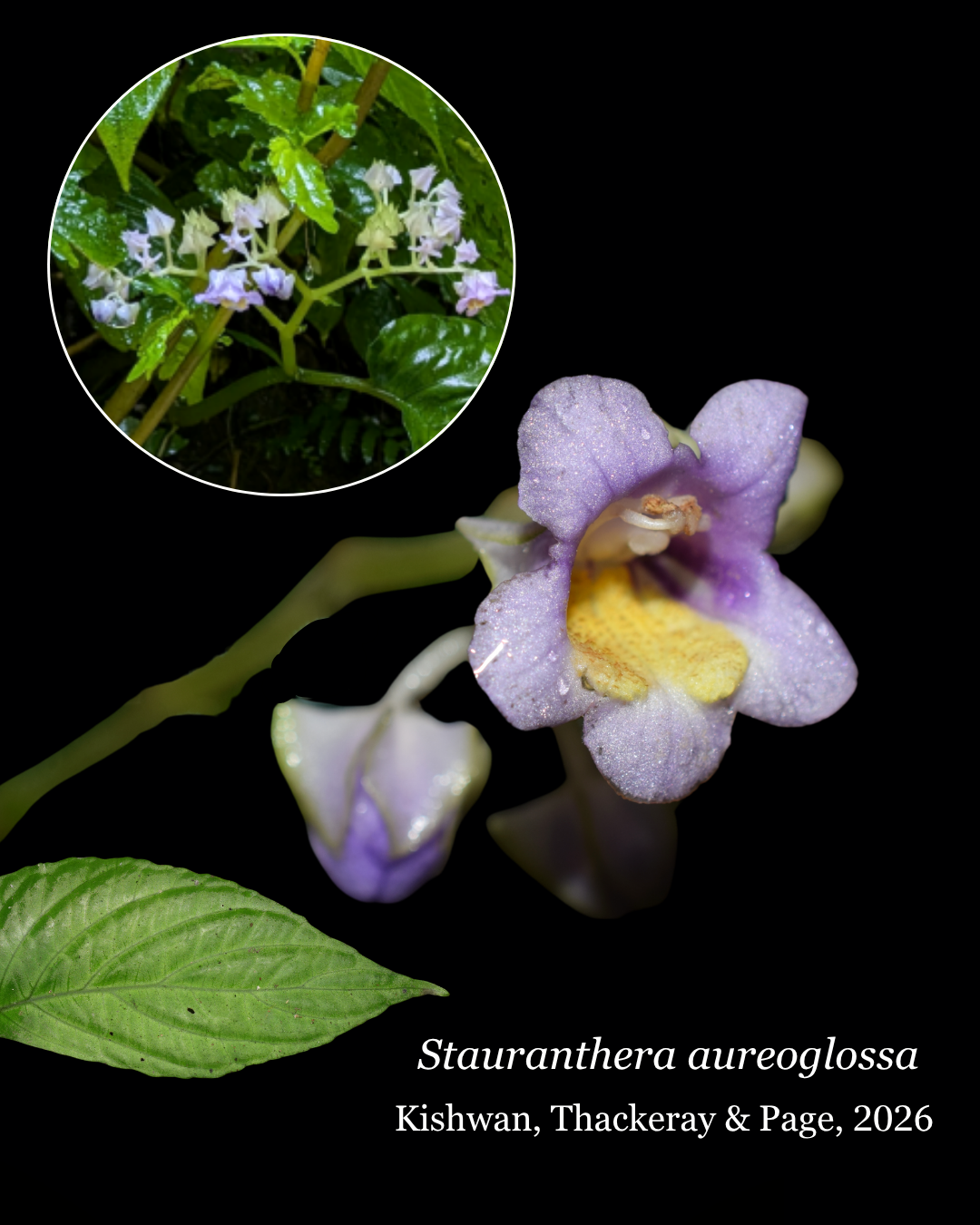
| 112 | Plant | Gesneriaceae | Stauranthera aureoglossa | KISHWAN, THACKERAY & PAGE | 2026 | Feddes Repertorium | Upper Subansiri | Arunachal Pradesh | India | The specific epithet ‘aureoglossa’ refers to the conspicuous golden-yellow tongue-like appendage on the ventral lobe of the corolla. | Here | Here | |
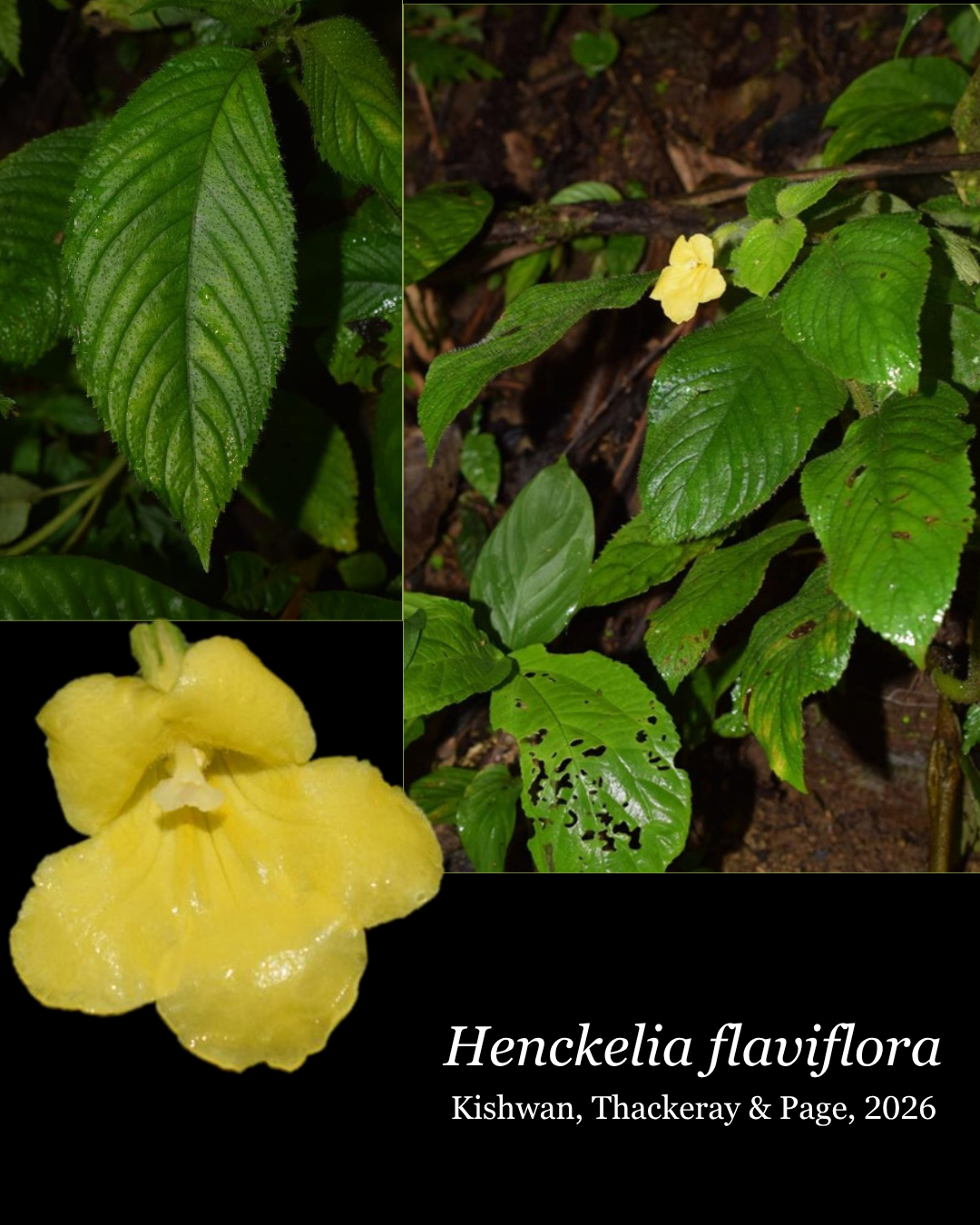
| 113 | Plant | Gesneriaceae | Henckelia flaviflora | KISHWAN, THACKERAY & PAGE | 2026 | Taiwania | Kamle | Arunachal Pradesh | India | The species epithet flaviflora refers to the yellow-flower | Here | Here | |
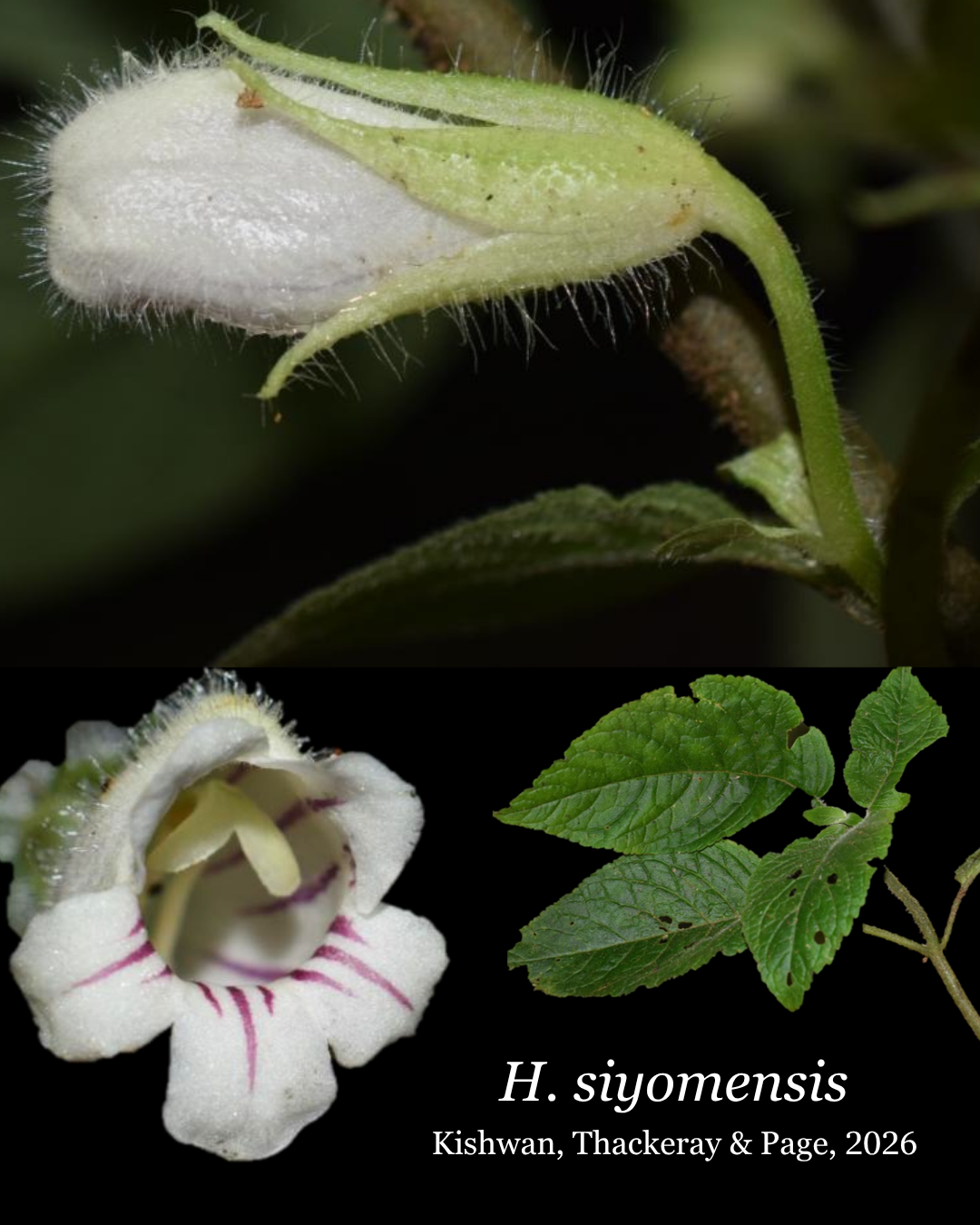
| 114 | Plant | Gesneriaceae | Henckelia siyomensis | KISHWAN, THACKERAY & PAGE | 2026 | Taiwania | Shi-Yomi | Arunachal Pradesh | India | The species epithet refers to the Siyom river valley (Shi-Yomi District), from where the species is collected | Here | Here | |
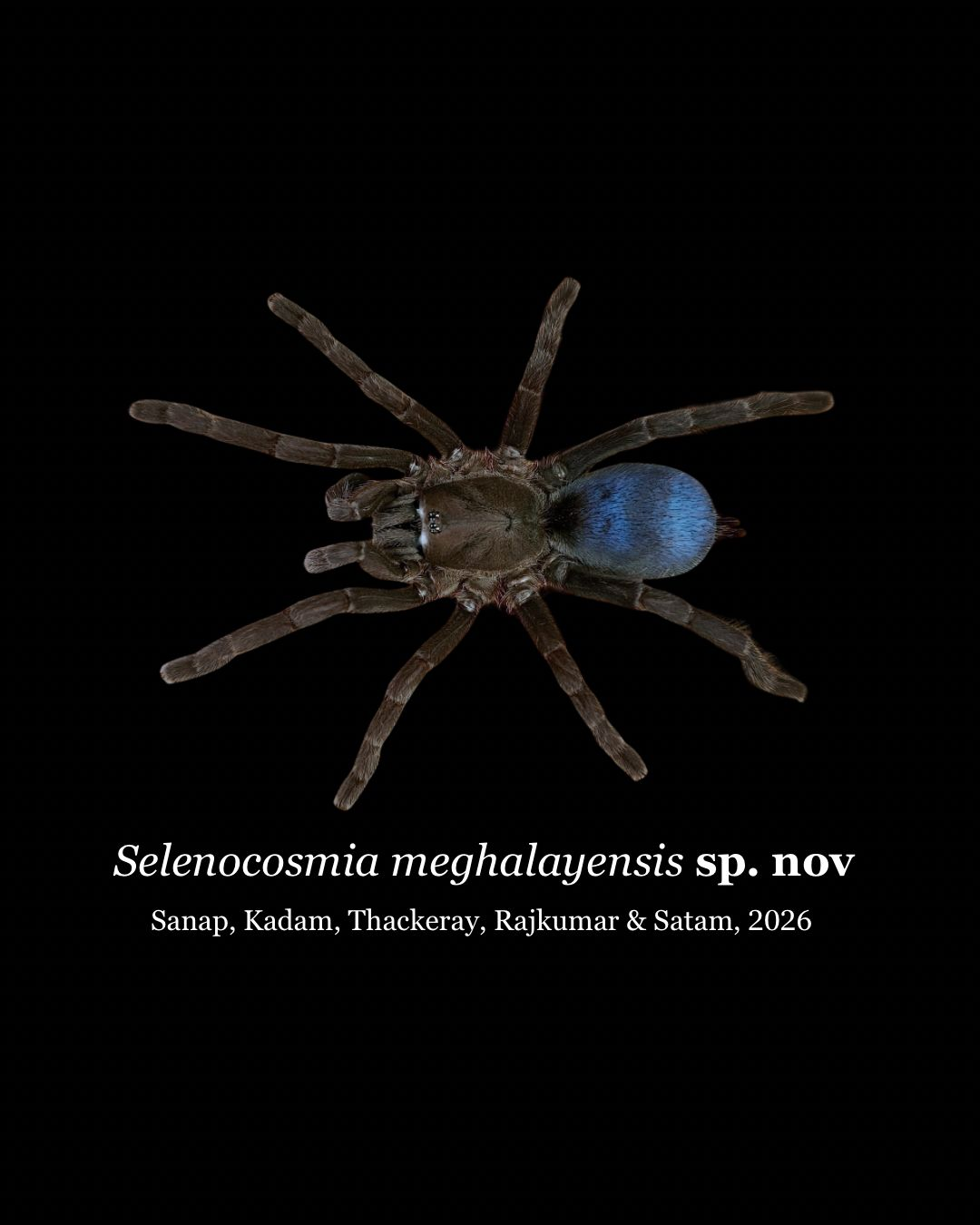
| 115 | Spider | Theraphosidae | Selenocosmia meghalayensis | SANAP, KADAM, THACKERAY, RAJKUMAR & SATAM | 2026 | Faunitxys | East Khasi Hills | Meghalaya | India | The specific epithet is a noun in apposition referring to Meghalaya, the Indian state from which the new species was collected. | Here | Here | |
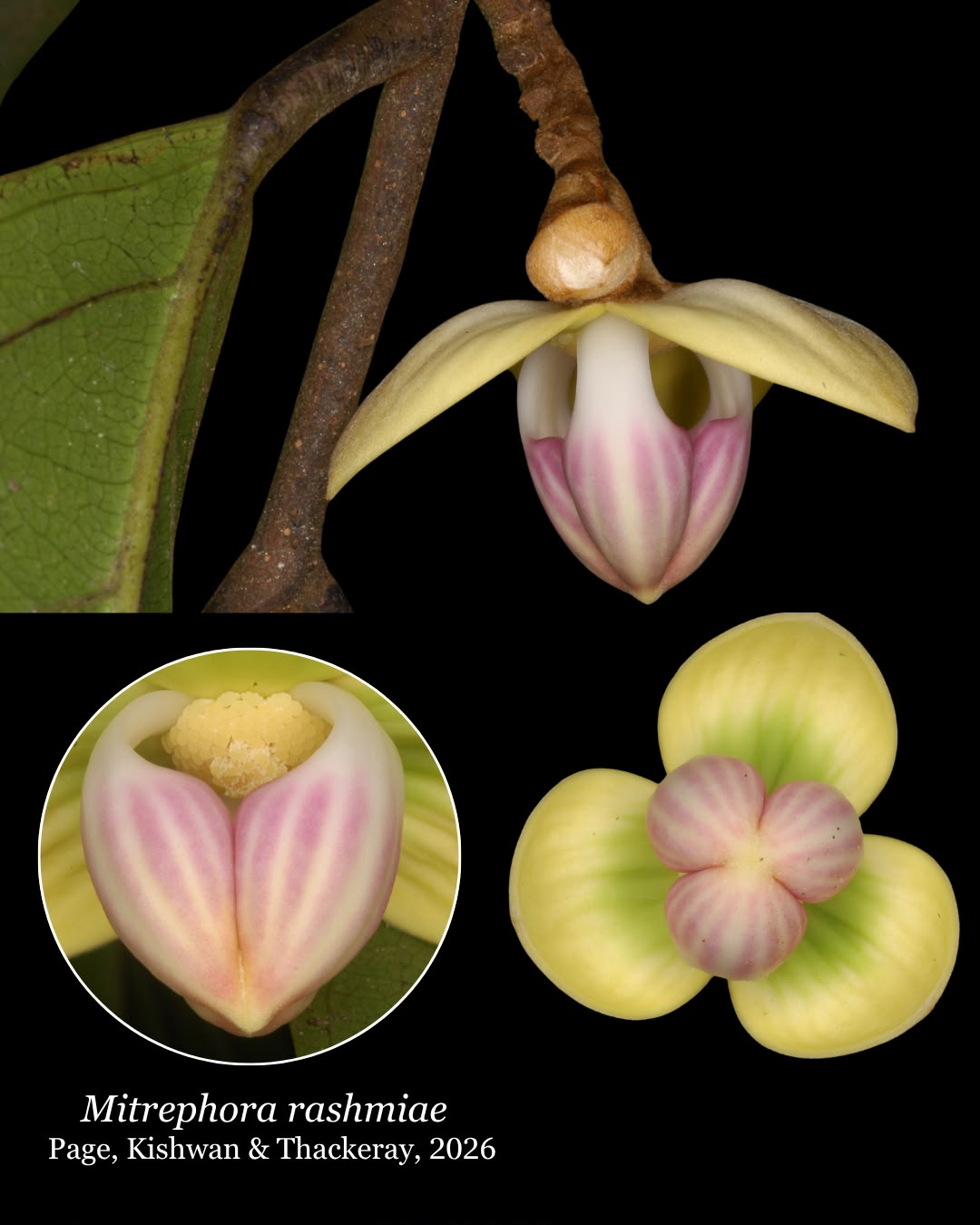
| 116 | Plant | Annonaceae | Mitrephora rashmiae | PAGE, KISHWAN & THACKERAY | 2026 | Feddes Repertorium | Upper Subansiri | Arunachal Pradesh | India | The species epithet “rashmiae” is a matronymic, honoring Rashmi Thackeray, mother of the third author. It is dedicated to her for nurturing the author's childhood curiosity for the natural world and fostering a lifelong passion in taxonomy, as well as for her support in the establishment and growth of the Thackeray Wildlife Foundation. | Here | Here | |
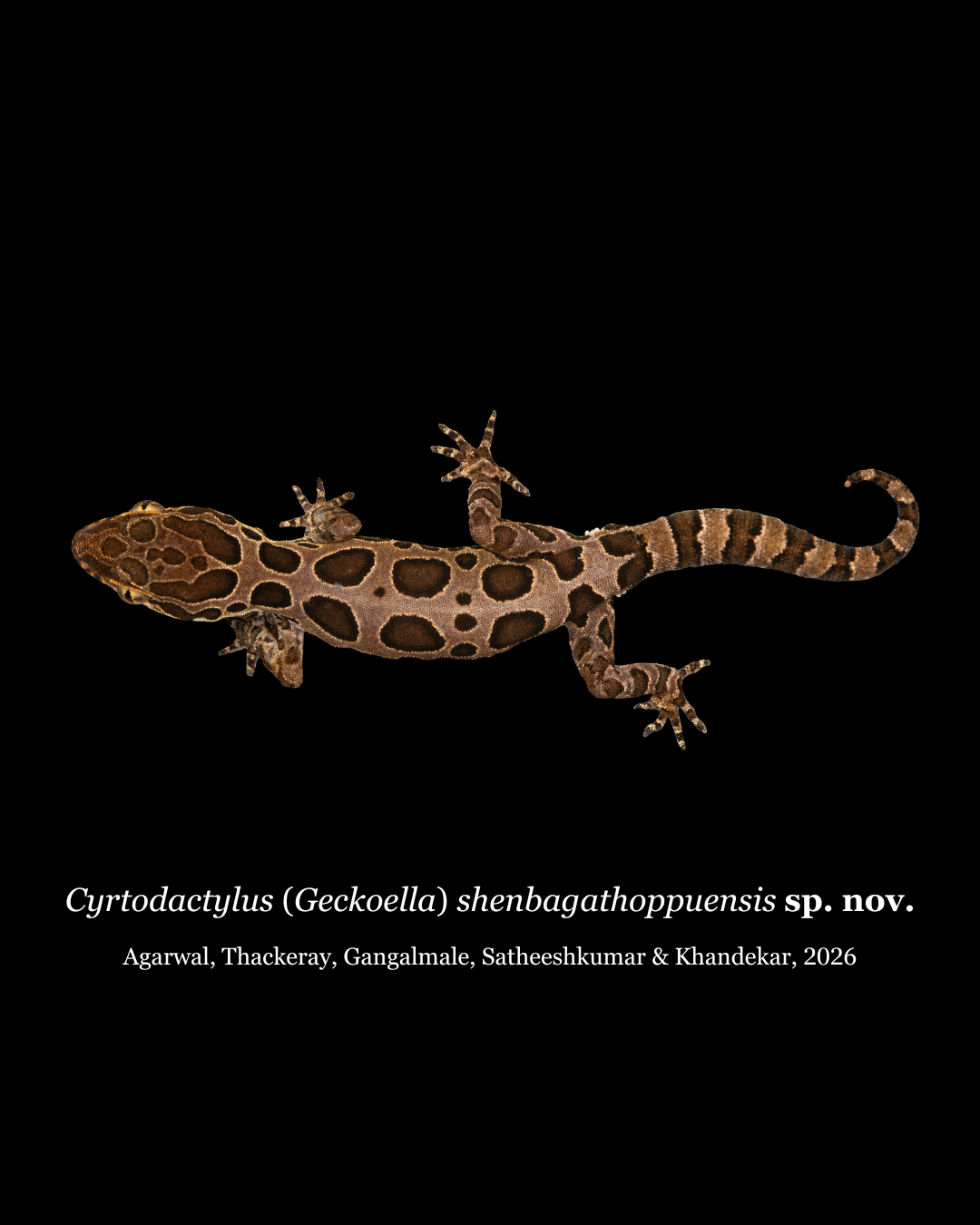
| 117 | Lizard | Gekkonidae | Cyrtodactylus (Geckoella) shenbagathoppuensis | Shenbagathoppu Geckoella. | AGARWAL, THACKERAY, GANGALMALE, SATHEESHKUMAR & KHANDEKAR | 2026 | Vertebrate Zoology | Virudhunagar | Tamil Nadu | India | The specific epithet is a toponym for the type locality of the new species, Shenbagathoppu, in Srivilliputhur-Megamalai Tiger Reserve, Virudhnagar District, Tamil Nadu. The Tamil name means Shenbaga = champaca [= Magnolia champaca (Linnaeus)] and Thoppu = grove | Here | Here |
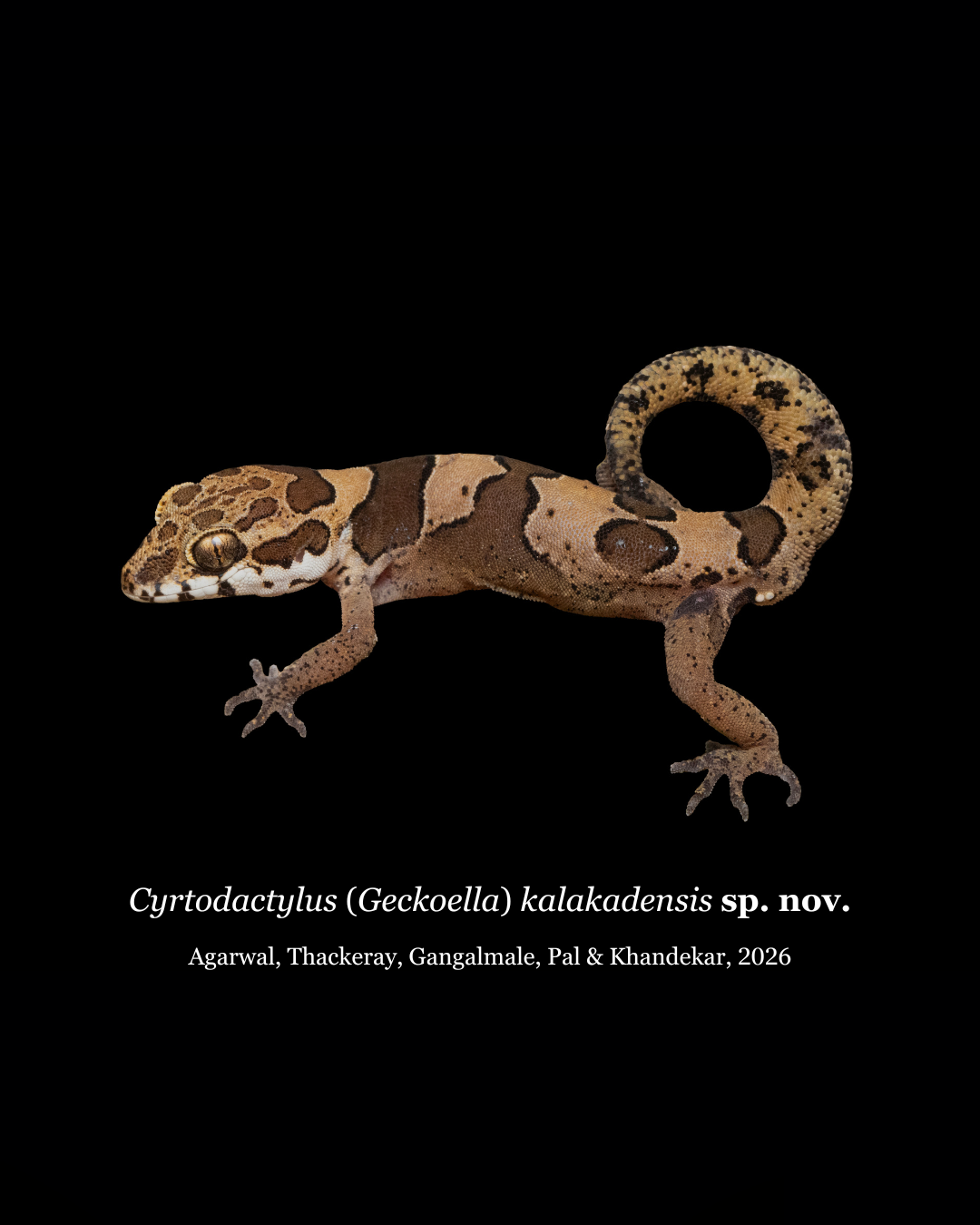
| 118 | Lizard | Gekkonidae | Cyrtodactylus (Geckoella) kalakadensis | Kalakad or KMTR Geckoella | AGARWAL, THACKERAY, GANGALMALE, PAL & KHANDEKAR | 2026 | Vertebrate Zoology | Tirunelveli | Tamil Nadu | India | The specific epithet is a toponym for the type and other known localities of the new species, in Kalakad Forest Range, KMTR (Kalakad-Mundanthurai Tiger Reserve), Tirunelveli District, Tamil Nadu | Here | Here |
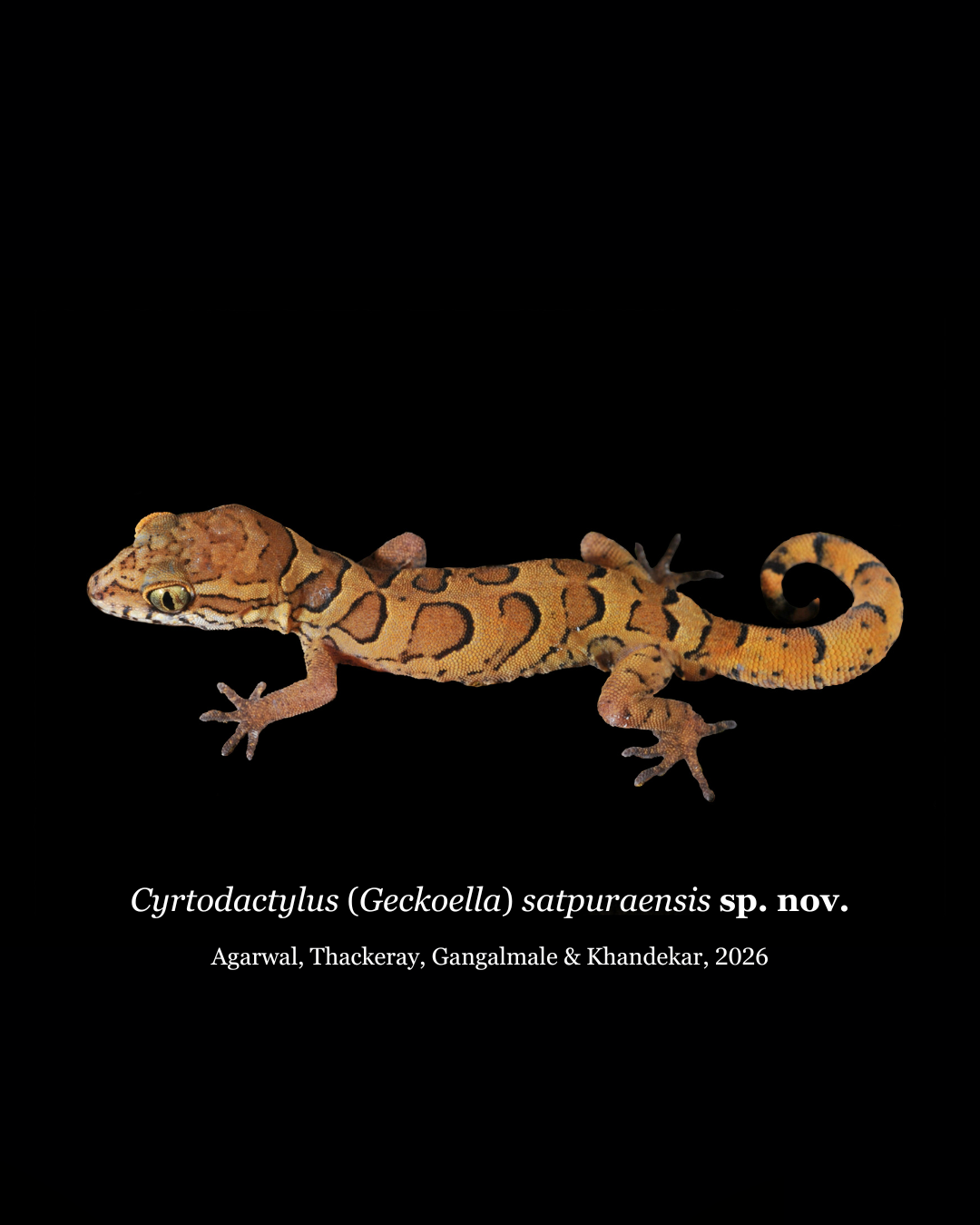
| 119 | Lizard | Gekkonidae | Cyrtodactylus (Geckoella) satpuraensis | Satpura Geckoella | AGARWAL, THACKERAY, GANGALMALE & KHANDEKAR | 2026 | Vertebrate Zoology | Gadchiroli | Maharashtra | India | The specific epithet is a toponym for the Satpura mountain range across which the new species is distributed. | Here | Here |
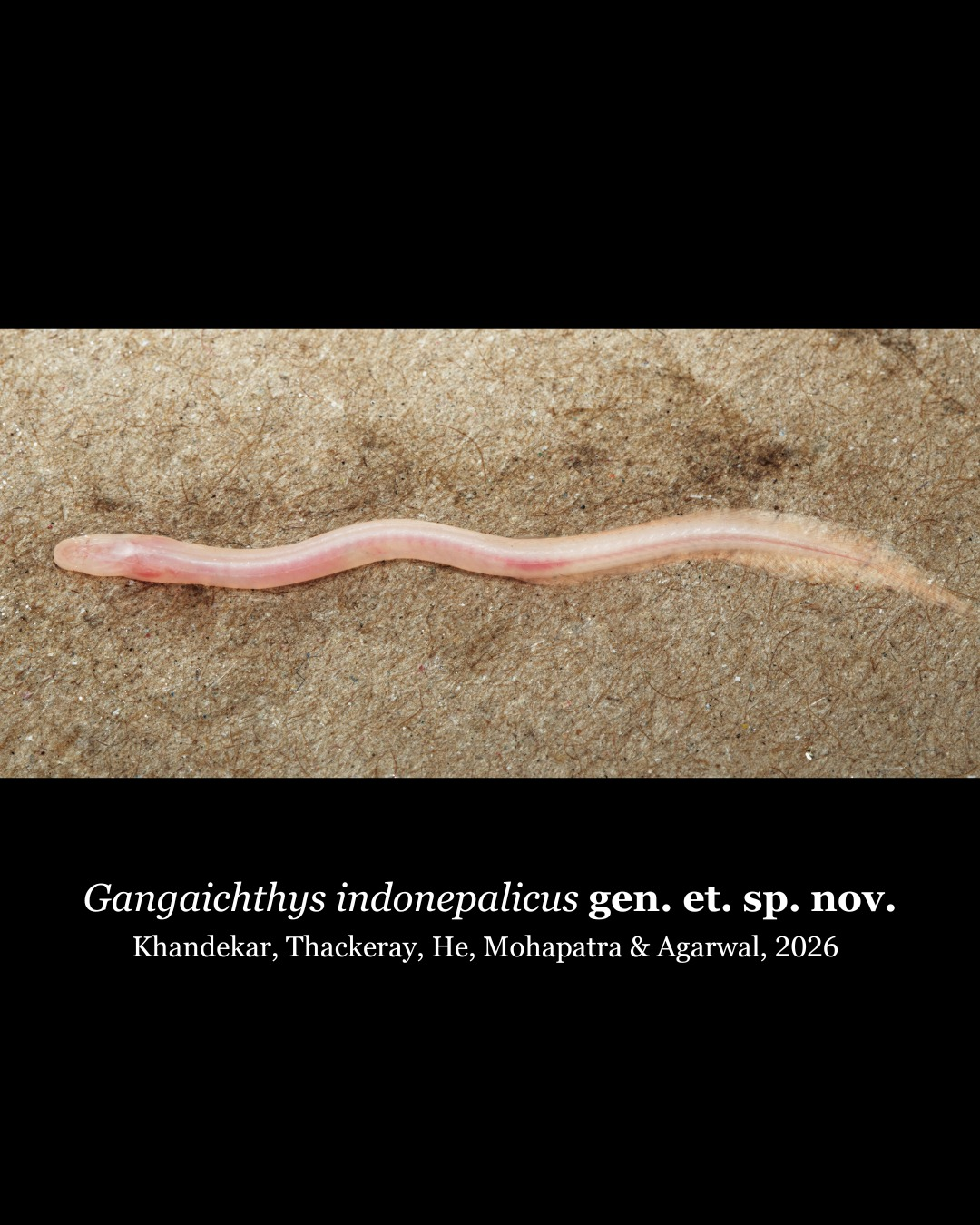
| 120 | Fish | Chaudhuriidae | Gangaichthys indonepalicus | Indonepalese blind earthworm eel | KHANDEKAR, THACKERAY, HE, MOHAPATRA & AGARWAL | 2026 | Zookeys | Pashchim Champaran District | Bihar | India | The specific epithet is a toponym formed from India and Nepal, reflecting the distribution of the species in the Indo-Nepal border region | Here | Here |
| Sr. No. | Taxa | Family | Scientific Name | Common Name | Authority | Year | Journal | Type Locality | District | State | Country | Etymology | DOI Number | Posters |
|---|---|---|---|---|---|---|---|---|---|---|---|---|---|---|
| 1 | Lizard | Gekkonidae | Hemiphyllodactylus nilgiriensis | Nilgiris slender gecko | AGARWAL, BAUER, PAL, SRIKANTHAN & KHANDEKAR | 2020 | Zootaxa | Mulli view point, Kilkunda | The Nilgiris | Tamil Nadu | India | The specific epithet is a toponym for the Nilgiri mountain range or Nilgiris, to which the new species is restricted | Here | N.A TWF-001.webp |
| 2 | Lizard | Gekkonidae | Hemiphyllodactylus peninsularis | KMTR slender gecko | AGARWAL, BAUER, PAL, SRIKANTHAN & KHANDEKAR | 2020 | Zootaxa | Sengaltheri, Kalakad Mundanthurai Tiger Reserve | Tirunelveli | Tamil Nadu | India | The specific epithet comes from the Latin paene (almost) and insula (island), reflecting the isolated nature of the montane type locality of the new species at the southern extreme of the Indian peninsula. | Here | N.A TWF-001.webp |
| 3 | Lizard | Gekkonidae | Cyrtodactylus urbanus | Urban bent-toed gecko | PURKAYASTHA, DAS, BOHIRA, BAUER & AGARWAL | 2020 | Zootaxa | Basistha, Guwahati | Kamrup metropolitan | Assam | India | The specific epithet is an adjective meaning of or belonging to a city and reflects the urban habitat of the species, through which we also wish to highlight the importance of urban biodiversity. We propose Urban bent-toed gecko as common name for the gecko. | Here | Here |
| 4 | Lizard | Gekkonidae | Cnemaspis bangara | Golden striped dwarf gecko | AGARWAL, THACKERAY, PAL, & KHANDEKAR | 2020 | Journal of Zoological Systematics and Evolutionary Research | near Aadima theatre, Paparajanahalli village, near Kolar | Kolar | Karnataka | India | The specific epithet is the Kannada word for gold, used as a noun in apposition. The name is given for the yellow tail tip of the species and that the type locality of the species is just 27 km straight-line distance from the largest gold mine in India, Kolar Gold Fields. | Here | Here |
| 5 | Lizard | Gekkonidae | Cnemaspis graniticola | Granite dwarf gecko | AGARWAL, THACKERAY, PAL, & KHANDEKAR | 2020 | Journal of Zoological Systematics and Evolutionary Research | Horsley Hills | Chittoor | Andhra Pradesh | India | The species is named for the granite rock formations to which it appears restricted | Here | Here |
| 6 | Lizard | Gekkonidae | Cnemaspis yelagiriensis | Yelagiri dwarf gecko | AGARWAL, THACKERAY, PAL, & KHANDEKAR | 2020 | Journal of Zoological Systematics and Evolutionary Research | Yelagiri Hills | Vellore | Tamil Nadu | India | The specific epithet is a toponym for Yelagiri hills in Vellore District of Tamil Nadu, the type and only known locality for this species. | Here | Here |
| 7 | Lizard | Gekkonidae | Cnemaspis magnifica | Magnificent dwarf gecko | KHANDEKAR, THACKERAY, PAL, & AGARWAL | 2020 | Zootaxa | Mookanana resort, Yadekumari village , Sakleshpur | Hassan | Karnataka | India | The epithet is derived from the Latin magnifico (=magnificent) and is given to this striking species for its large size and conspicuous colour pattern. | Here | Here |
| 8 | Lizard | Gekkonidae | Cnemaspis avasabinae | Nellore dwarf gecko | AGARWAL, BAUER & KHANDEKAR | 2020 | Zootaxa | near Penchalakina | Nellore | Andhra Pradesh | India | The specific epithet “avasabinae” honors Ava Sabin of the Sabin family, philanthropic supporters of herpetofaunal conservation. | Here | N.A TWF-005.webp |
| 9 | Lizard | Gekkonidae | Hemidactylus rishivalleyensis | Rishi Valley brookiish gecko | AGARWAL, THACKERAY & KHANDEKAR | 2020 | Zootaxa | CaveRock Hill, Rishi Valley School | Chittoor | Andhra Pradesh | India | The specific epithet is a toponym for the Rishi Valley, the type and only known locality for the new species. | Here | Here |
| 10 | Lizard | Gekkonidae | Cnemaspis rishivalleyensis | Rishi Valley dwarf gecko | AGARWAL, THACKERAY & KHANDEKAR | 2020 | Zootaxa | CaveRock Hill, Rishi Valley School | Chittoor | Andhra Pradesh | India | The specific epithet is a toponym for the Rishi Valley, the type and only known locality for the new species. | Here | Here |
| 11 | Lizard | Gekkonidae | Cnemaspis stellapulvis | Stardust dwarf gecko | KHANDEKAR, THACKERAY & AGARWAL | 2020 | Zootaxa | Isolated granite hill near Yadiyur | Mandya | Karnataka | India | The specific epithet is an adjective formed by the combination of the Latin words stella and pulvis meaning stardust, an allusion to the prominent grey spots on the dorsum of the new species. | Here | Here |
| 12 | Lizard | Gekkonidae | Hemidactylus sirumalaiensis | Sirumalai rock gecko | KHANDEKAR, THACKERAY, PAWAR, & AGARWAL | 2020 | Zootaxa | Sirumalai massif | Dindigul | Tamil Nadu | India | The specific epithet is a toponym for the type locality of the species. | Here | Here |
| 13 | Lizard | Gekkonidae | Hemiphyllodactylus minimus | Ganjam rock gecko | MOHAPATRA, KHANDEKAR, DUTTA, MAHAPATRA, & AGARWAL | 2020 | Zootaxa | Jhadeswar Shiva Temple, Humma | Ganjam | Odisha | India | The specific epithet is the Latin word for smallest as this is the smallest known species of the genus Hemiphyllodactylus. | Here | N.A TWF-009.webp |
| 15 | Lizard | Gekkonidae | Hemidactylus hannahsabinae | CERIACO, AGARWAL, MARQUES & BAUER | 2020 | Zootaxa | Pavalange, Luando Natural Reserve, | Bié Province | Angola | The specific epithet hannahsabinae honors Hannah Sabin of the Sabin family, philanthropic supporters of herpetofaunal conservation | Here | N.A TWF-011.webp | ||
| 16 | Lizard | Gekkonidae | Hemidactylus vernayi | CERIACO, AGARWAL, MARQUES & BAUER | 2020 | Zootaxa | Lobito, | Benguela Province | Angola | The specific epithet “vernayi”, formed in the genitive singular and is masculine, is given in honor of Arthur Stannard Vernay (1877–1960), English-born American explorer and philanthropist who funded and organized the Vernay Angolan Expedition for the American Museum of Natural History, where the type series were collected. Vernay also supported the Vernay-Lang Kalahari Expedition for the Transvaal Museum, on which the herpetologist V.F. FitzSimons (1901–1975) made important reptile discoveries. We propose the Portuguese common name of “Osga de Vernay”, and the English common name of “Vernay’s Tropical Gecko”. | Here | N.A TWF-011.webp | ||
| 17 | Lizard | Gekkonidae | Hemidactylus xericolus | Nalgonda yellow- tailed brookish gecko | LAJMI, GIRI, SINGH & AGARWAL | 2020 | Zootaxa | near Marrigudda | Nalgonda | Telangana | India | The specific epithet is a masculine adjective derived from the Greek xeros (= dry) and the Latincola (= inhabitant of) and is descriptive of the arid, scrub habitats that the new species and many other endemic Indian Hemidactylus inhabit. The name also seeks to bring attention to the neglected and biodiverse Indian dry zone. | Here | Here |
| 18 | Lizard | Gekkonidae | Hemidactylus flavicaudus | Mahabubnagar yellow- tailed brookish gecko | LAJMI, GIRI, SINGH & AGARWAL | 2020 | Zootaxa | near Guddeguda village | Mahabubnagar | Telangana | India | The specific epithet is an adjective derived from the Latin flavus (= yellow) and cauda (= tail), for the yellow tail of the new species. | Here | Here |
| 20 | Lizard | Gekkonidae | Cnemaspis schalleri | Schaller's Sakleshpur dwarf gecko | KHANDEKAR, THACKERAY & AGARWAL | 2021 | Zootaxa | Mookanana resort, Yadekumari village , Sakleshpur | Hassan | Karnataka | India | The specific epithet is a patronym honouring George Beals Schaller, for his contributions to conservation, field research and science. Dr. Schaller has worked across a diversity of landscapes, but his early work was in the grasslands of Kanha, Madhya Pradesh, India and he continues to work on large mammals in the Indian subcontinent. | Here | Here |
| 21 | Lizard | Gekkonidae | Hemidactylus gramineus | CERIACO, BAUER, KUSAMBA, AGARWAL & GREENBAUM | 2021 | Journal of Herpetology | near bank of Lumene River, | Bombo-Lumene Reserve | Kinshasa Province | Congo (DRC) | The specific epithet ‘‘gramineus’’ refers to thegrassy type of habitat from which the species was collected in the DRC and the Republic of the Congo (Fig. 5) and is applied here as an adjective in the genitive singular. We propose the French common name of ‘‘Gecko de l’herbe’’ and the English common name of ‘‘grass-dwelling tropical gecko.’ | Here | N.A TWF-016.webp | |
| 22 | Lizard | Gekkonidae | Cnemaspis krishnagiriensis | Krishnagiri dwarf gecko | AGARWAL, THACKERAY & KHANDEKAR | 2021 | Zootaxa | near Krishnagiri fort | Krishnagiri | Tamil Nadu | India | The specific epithet is a toponym for Krishnagiri in Krishnagiri District of Tamil Nadu, the type and only known locality for this species. | Here | Here |
| 23 | Lizard | Gekkonidae | Cnemaspis uttaraghati | Harishchandragad dwarf gecko | KHANDEKAR, THACKERAY & AGARWAL | 2021 | Zootaxa | Harishchandragad | Ahmednagar | Maharashtra | India | The specific epithet is used as a noun in apposition and is derived from the Sanskrit ‘uttara’ for north and ‘ghat’ for mountains, as this mountain locality represents the currently known northern limit of Cnemaspis distribution in the Western Ghats. | Here | Here |
| 26 | Lizard | Gekkonidae | Hemidactylus tamhiniensis | Tamhini giant rock gecko or basalt giant rock gecko | KHANDEKAR, THACKERAY & AGARWAL | 2021 | Zootaxa | Tamhini Ghat | Raigad | Maharashtra | India | The specific epithet is a toponym for Tamhini Ghat in Pune and Raigad Districts of Maharashtra, the type and currently only known locality for this species. | Here | Here |
| 27 | Lizard | Gekkonidae | Hemiphyllodactylus goaensis | Goan slender gecko | KHANDEKAR, PARMAR, SAWANT & AGARWAL | 2021 | Zootaxa | Goa university | North Goa | Goa | India | The specific epithet is a toponym for Goa state, to which the new species is currently restricted to. | Here | Here |
| 35 | Lizard | Gekkonidae | Cyrtodactylus kamengensis | MIRZA, BHOSALE, THACKERAY, PHANSALKAR, SAWANT, GOWANDE & PATEL | 2022 | Herpetozoa | Shergaon | West Kameng | Arunachal Pradesh | India | The specific epithet refers to the Kameng River in western Arunachal Pradesh close to which the new species was discovered. | Here | Here | |
| 36 | Lizard | Gekkonidae | Cnemaspis tigris | Tiger-striped dwarf gecko | KHANDEKAR, THACKERAY & AGARWAL | 2022 | Vertebrate Zoology | Kaiwara | Chickballapur | Karnataka | India | The specific epithet is the Latin tigris (tiger), treated here as a noun in apposition, referencing the tiger-like colour pattern in males of the new species with a strongly banded dorsum suffused with yellow. | Here | Here |
| 37 | Lizard | Gekkonidae | Cnemaspis sakleshpurensis | Sakleshpur dwarf gecko | KHANDEKAR, THACKERAY & AGARWAL | 2022 | Vertebrate Zoology | Mookanana resort, Yadekumari village , Sakleshpur | Hassan | Karnataka | India | The specific epithet is a toponym for Sakleshpur in Hassan district of Karnataka, the place where the species is currently known from. | Here | Here |
| 38 | Lizard | Gekkonidae | Cnemaspis vijayae | Vijaya's Coorg dwarf gecko | KHANDEKAR, THACKERAY & AGARWAL | 2022 | Vertebrate Zoology | Honey Valley resort | Kodagu | Karnataka | India | The specific epithet is a Latinized eponym in honour of India’s first women herpetologist, Late Jagannathan Vijaya (1959–1987) for her inspiring contribution towards ecology of rare Indian turtles. | Here | Here |
| 41 | Lizard | Gekkonidae | Cnemaspis azhagu | Thirukurungudi dwarf gecko | KHANDEKAR, THACKERAY & AGARWAL | 2022 | Vertebrate Zoology | Thirukurungudi range, KMTR | Tirunelveli | Tamil Nadu | India | The specific epithet, azhagu (a-lha-gu, also sometimes transliterated as alaku), is the Tamil word for beauty (அழகு) and is used as a noun in apposition for this beautiful new species. | Here | Here |
| 42 | Lizard | Gekkonidae | Cnemaspis mundanthuraiensis | Mundanthurai dwarf gecko | KHANDEKAR, THACKERAY & AGARWAL | 2022 | Vertebrate Zoology | Papanasam RF, Mundanthurai range, KMTR | Tirunelveli | Tamil Nadu | India | The specific epithet is a toponym for the Mundanthurai forest range of Kalakad-Mundanthurai Tiger Reserve in Tirunelveli district of Tamil Nadu, the type and currently only known locality for this species. | Here | Here |
| 43 | Lizard | Gekkonidae | Cnemaspis kalakadensis | Kalakad dwarf gecko | KHANDEKAR, THACKERAY & AGARWAL | 2022 | Vertebrate Zoology | Sengaltheri, Kalakadu RF, KMTR | Tirunelveli | Tamil Nadu | India | The specific epithet is a toponym for the Kalakad forest range of Kalakad-Mundanthurai Tiger Reserve in Tirunelveli district of Tamil Nadu, the type and currently only known locality for this species. | Here | Here |
| 46 | Lizard | Gekkonidae | Cnemaspis salimalii | Salim Ali's dwarf gecko | AGARWAL, THACKERAY & KHANDEKAR | 2022 | Vertebrate Zoology | Nallathambi resort, Semmedu, Kolli hills | Namakkal | Tamil Nadu | India | The specific epithet is a patronym honouring the eminent ornithologist Dr. Salim Ali (1896–1987) for his immense contributions to field research and conservation in India. | Here | Here |
| 47 | Lizard | Gekkonidae | Cnemaspis agayagangai | Agayagangai dwarf gecko | AGARWAL, THACKERAY & KHANDEKAR | 2022 | Vertebrate Zoology | near Agaya Gangai waterfall, Kolli hills | Namakkal | Tamil Nadu | India | The specific epithet is for the type locality of the new species, the Agaya Gangai Waterfalls, and is used as a noun in apposition. | Here | Here |
| 48 | Lizard | Gekkonidae | Cnemaspis fantastica | Fantastic dwarf gecko | AGARWAL, THACKERAY & KHANDEKAR | 2022 | Vertebrate Zoology | near Tree view point, Kolli Hills, Solakkadu | Namakkal | Tamil Nadu | India | The specific epithet is derived from the Greek phantastikós, alluding to the spectacular colouration of the new species. | Here | Here |
| 49 | Lizard | Gekkonidae | Cnemaspis pachaimalaiensis | Pachaimalai dwarf gecko | AGARWAL, THACKERAY & KHANDEKAR | 2022 | Vertebrate Zoology | near Mangalam waterfalls, Pachaimalai hills | Trichy | Tamil Nadu | India | The specific epithet is a toponym for the Pachaimalai hills in Trichy district of Tamil Nadu, the type and currently only known locality for this species. | Here | Here |
| 50 | Lizard | Gekkonidae | Cnemaspis rudhira | Scarlet dwarf gecko | AGARWAL, THACKERAY & KHANDEKAR | 2022 | Vertebrate Zoology | near Sri Salaipaarai Muniappan Temple, Yercaud in Shevaroy hill range | Salem | Tamil Nadu | India | The specific epithet is from the Sanskrit rudhira which means blood, alluding to the blood-red colouration of this beautiful species, and is used as a noun in apposition. | Here | Here |
| 51 | Lizard | Gekkonidae | Cyrtopodion vindhya | - | PATEL, THACKERAY, MIRZA, VYAS | 2023 | Zootaxa | Udhal Mahuda | Dahod | Gujarat | India | The specific epithet is a noun in apposition for the Vindhya hill ranges from where the new species was collected. | Here | Here |
| 52 | Lizard | Gekkonidae | Cyrtodactylus chengodumalaensis | Chengodumala geckoella | AGARWAL, UMESH, DAS, BAUER & KHANDEKAR | 2023 | Journal of Herpetology | Kumargiri Estate | Malappuram | Tamil Nadu | India | The specific epithet is a toponym referring to Chengodumala, a midland hillock where the new species was found in great abundance and some of the type series came from.Chengodumala is under threat from extensive illegal quarrying. We suggest the common names of Chengodumala Geckoella or Coastal Kerala Geckoella. | Here | Here |
| 53 | Lizard | Gekkonidae | Hemidactylus quartziticolus | Quartzite /Thoothukudi brookiish gecko | KHANDEKAR, THACKERAY, MARIAPPAN, GANGALMALE, WAGHE, PAWAR & AGARWAL | 2023 | Vertebrate Zoology | near Jeya Parvathi Amman Kovil, Vallanadu Reserve Forest, Manakkarai | Thoothukudi | Tamil Nadu | India | The specific epithet is a combination of the German noun “quartz” + the Latin suffix -ite (used to denote rocks and minerals) and the Latin suffix -cola that means inhabitant or dweller of, referring to the quartzite rock formations the new species inhabits | Here | Here |
| 54 | Lizard | Gekkonidae | Cyrtodactylus irulaorum | Irula geckoella | AGARWAL, THACKERAY & KHANDEKAR | 2023 | Vertebrate Zoology | a farm near Vallam Reserve Forest | Kancheepuram | Tamil Nadu | India | The specific epithet is a patronym in honour of the Irula tribe, an indigenous Dravidian group who are expert snake trackers and catchers. Romulus Whitaker, whose farm the type series was collected at, has worked closely with the Irulas for decades and helped them set up a venom extraction cooperative in 1978. The Irula Snake Catchers’ Industrial Cooperative Society is the largest contributor to antivenom production in India | Here | Here |
| 55 | Lizard | Gekkonidae | Cyrtodactylus relictus | Relict geckoella | AGARWAL, THACKERAY & KHANDEKAR | 2023 | Vertebrate Zoology | near Ubbalamadagu waterfalls, Kambakkam Durg | Tirupati | Andhra Pradesh | India | The specific epithet is from the Latin relictus; which refers to an organism or species that has survived from an earlier period with different environmental conditions. Peninsular India was covered by wet forests and has gradually become more arid since at least the Miocene (Morley 2007; Patnaik et al. 2012; Pound et al. 2012). This is apt for the new species as it is known only from small areas of relatively cool, closed canopy habitats in a matrix of otherwise warm and open habitats. | Here | Here |
| 56 | Lizard | Gekkonidae | Hemidactylus paucifasciatus | Few banded rock gecko | MOHAPATRA, AGARWAL, MOHALIK, DUTTA & KHANDEKAR | 2023 | Zootaxa | Gadachandi Temple, Anandapur | Keonjhar | Odisha | India | The species epithet is derived from a combination of the Latin adjectives pauci (English: few) and fasciatus (English: banded), referring to the lesser number of dorsal bands in this species. | Here | Here |
| 57 | Snake | Colubridae | Sahyadriophis uttarghati | PATEL, THACKERAY, CAMPBELL & MIRZA | 2023 | Taxonomy | Amboli | Sindhudurg | Maharashtra | India | The specific epithet is a combination of two Sanskrit words: ‘uttara’ for north and ‘ghati’ meaning dweller of the mountains/Ghats. The combination refers to the northern distribution of the new species. | Here | Here | |
| 58 | Lizard | Gekkonidae | Cnemaspis pakkamalaiensis | Pakkamalai dwarf gecko | KHANDEKAR, THACKERAY, KALAIMANI & AGARWAL | 2023 | Vertebrate Zoology | Pakkamalai Reserve Forest, Gingee Hills | Villipuram | Tamil Nadu | India | The specific epithet is a toponym for Pakkamalai, Gingee Hills in Viluppuram district of Tamil Nadu state, the type and only known locality for this species. | Here | Here |
| 59 | Lizard | Gekkonidae | Cnemaspis cavernicola | Cave-dwelling dwarf gecko | KHANDEKAR, THACKERAY, KALAIMANI & AGARWAL | 2023 | Vertebrate Zoology | Pakkamalai Reserve Forest, Gingee Hills | Villipuram | Tamil Nadu | India | The specific epithet is an adjective formed from the Latin “caverna’ for cave and “cola” meaning inhabitant or dweller, as the species is only known to occur in caves and crevices below large granite boulders. | Here | Here |
| 61 | Lizard | Scincidae | Dravidoseps gingeeensis | Gingee leaf-litter skink | AGARWAL, THACKERAY & KHANDEKAR | 2024 | Vertebrate Zoology | Pakkamalai Reserve Forest, Gingee Hills | Villipuram | Tamil Nadu | India | The specific epithet is a toponym for the Gingee Hills in Villupuram District of Tamil Nadu State, the type locality of the new species. | Here | Here |
| 62 | Lizard | Scincidae | Dravidoseps jawadhuensis | Jawadhu leaf-litter skink | AGARWAL, THACKERAY & KHANDEKAR | 2024 | Vertebrate Zoology | near Beeman falls, Jawadhu Hills | Vellore | Tamil Nadu | India | The specific epithet is a toponym for the Jawadhu Hills in Vellore District of Tamil Nadu State, the type and currently only known locality for the new species. | Here | Here |
| 63 | Lizard | Scincidae | Dravidoseps kalakadensis | KMTR leaf-litter skink | AGARWAL, THACKERAY & KHANDEKAR | 2024 | Vertebrate Zoology | near Wood House, Talayani road, Kalakadu Reserve Forest, Kalakad-Mundanthurai Tiger Reserve | Thirunelveli | Tamil Nadu | India | The specific epithet is a toponym for Kalakad in Kalakad-Mundanthurai Tiger Reserve (KMTR), Tirunelveli District of Tamil Nadu State, the type locality of the new species. | Here | Here |
| 64 | Lizard | Scincidae | Dravidoseps srivilliputhurensis | SMTR leaf-litter skink | AGARWAL, THACKERAY & KHANDEKAR | 2024 | Vertebrate Zoology | near Ayyanar Kovil Falls, Srivilliputhur-Meghamalai Tiger Reserve | Virudhunagar | Tamil Nadu | India | The specific epithet is a toponym for Srivilliputhur in Srivilliputhur-Megamalai Tiger Reserve (SMTR), Virudhunagar District of Tamil Nadu State, the type locality of the new species. | Here | Here |
| 65 | Lizard | Scincidae | Dravidoseps tamilnaduensis | Tamilnadu leaf-litter skink | AGARWAL, THACKERAY & KHANDEKAR | 2024 | Vertebrate Zoology | near Kambur, Pachaimalai Hills | Tiruchirappalli | Tamil Nadu | India | The specific epithet is a toponym for Tamil Nadu State to which the new species is endemic. | Here | Here |
| 66 | Lizard | Gekkonidae | Cnemaspis barkiensis | Barki dwarf gecko | KHANDEKAR, GAIKWAD, THACKERAY, GANGALMALE & AGARWAL | 2024 | Zootaxa | Barki Reserve Forest | Kolhapur | Maharashtra | India | The specific epithet is a toponym for Barki in Kolhapur District of Maharashtra, the type locality for this species. | Here | Here |
| 67 | Lizard | Gekkonidae | Cnemaspis chandoliensis | Chandoli dwarf gecko | KHANDEKAR, GAIKWAD, THACKERAY, GANGALMALE & AGARWAL | 2024 | Zootaxa | Chandel Range, Chandoli National Park in Sahyadri Tiger Reserve | Kolhapur | Maharashtra | India | The specific epithet is a toponym for Chandoli National Park in Sahyadri Tiger Reserve, Kolhapur District of Maharashtra, the type and only known locality for this species. | Here | Here |
| 68 | Lizard | Gekkonidae | Cnemaspis maharashtraensis | Maharashtra dwarf gecko | KHANDEKAR, GAIKWAD, THACKERAY, GANGALMALE & AGARWAL | 2024 | Zootaxa | Rundiv Range, Chandoli National Park in Sahyadri Tiger Reserve | Sangli | Maharashtra | India | The specific epithet is a toponym for Maharashtra State, India in which the type locality of the species is located. | Here | Here |
| 69 | Lizard | Gekkonidae | Cnemaspis sahyadriensis | Sahyadri dwarf gecko | KHANDEKAR, GAIKWAD, THACKERAY, GANGALMALE & AGARWAL | 2024 | Zootaxa | near Tanali Vetti Range, Chandoli National Park in Sahyadri Tiger Reserve | Sangli | Maharashtra | India | The specific epithet is a toponym for the type locality, located in Sahyadri Tiger Reserve. Sahyadri is also the local name for the Western Ghats. | Here | Here |
| 70 | Lizard | Gekkonidae | Cnemaspis vangoghi | Van Gogh's dwarf gecko | KHANDEKAR, THACKERAY & AGARWAL | 2024 | Zoo Keys | near Katha Ayyanar Kovil, Srivilliputhur- Meghamalai Tiger Reserve | Virudhunagar | Tamil Nadu | India | The specific epithet is a patronym for Dutch painter Vincent Van Gogh (1853–1890). The colouration of the new species is reminiscent of one of Van Gogh’s most iconic paintings, The Starry Night. Suggested common name is Van Gogh’s starry dwarf gecko. | Here | Here |
| 71 | Lizard | Gekkonidae | Cnemaspis sathuragiriensis | Sathuragiri dwarf gecko | KHANDEKAR, THACKERAY & AGARWAL | 2024 | Zoo Keys | near Sathuragiri entry point, Sathyragiri | Virudhunagar | Tamil Nadu | India | The specific epithet is a toponym for the type locality of the new species, Sathuragiri mountain in Srivilliputhur-Megamalai Tiger Reserve (SMTR), Virudhunagar District, Tamil Nadu. Suggested Common name is Sathuragiri dwarf gecko. | Here | Here |
| 72 | Lizard | Gekkonidae | Cnemaspis persephone | Anaimalai ground-dwelling dwarf gecko | KHANDEKAR, THACKERAY & AGARWAL | 2024 | Zootaxa | Karainshola,Anaimalai Tiger Reserve | Coimbatore | Tamil Nadu | India | Named for Persephone, the Queen of the Underworld and Goddess of spring in Ancient Greek mythology and religion, who spent half the year in the Underworld and the other half above ground. This is an allusion to the natural history of the new species, only found in the soil under rocks and logs or at the base of vegetation; though presumably emerging at night at least at some time of the year. The specific epithet is treated as a noun in apposition. | Here | Here |
| 73 | Lizard | Gekkonidae | Cnemaspis sanctus | Holy dwarf gecko | KHANDEKAR, THACKERAY & AGARWAL | 2024 | Zootaxa | near Kaalimala Durgadevi Temple, Pathukani | Kanyakumari | Tamil Nadu | India | The specific epithet is the Latin noun sanctus, one who is holy or saintly, used in apposition (hence invariable) and alludes to the fact that the type locality has both a temple and a church close together. | Here | Here |
| 74 | Lizard | Agamidae | Japalura mictophola | MIRZA, GOWANDE, THACKERAY, BHOSALE, SAWANT, PHANSALAKAR, PATEL | 2024 | Taprobanica | Bomdila | West Kameng | Arunachal Pradesh | India | The specific epithet is a combination of two words, the Greek word miktós ‘μικτός’ meaning mixed, and the word phola (=scales) referring to the mixed (heterogeneous) scales on the dorsum of the species. | Here | Here | |
| 75 | Lizard | Gekkonidae | Cnemaspis kalasubaiensis | Kalasubai dwarf gecko | KHANDEKAR, THACKERAY, AGARWAL, GANGALMALE, KININGE & GAIKWAD | 2024 | Zootaxa | Kalsubai Mountain | Ahemdnagar | Maharashtra | India | The specific epithet is a toponym for the type locality of the new species, Kalsubai in Ahmednagar District, Maharashtra, the highest peak of the State at 1646 m asl. | Here | Here |
| 76 | Lizard | Gekkonidae | Cnemaspis basalticola | Basaltic dwarf gecko or Ratangad dwarf gecko | KHANDEKAR, THACKERAY, AGARWAL, GANGALMALE, KININGE & GAIKWAD | 2024 | Zootaxa | Ratangad fort | Ahemdnagar | Maharashtra | India | The specific epithet is an adjective formed from the Latin “basaltes” for basalt and the suffix “-cola”, meaning inhabitant or dweller, as the species inhabits basalt rock formations. | Here | Here |
| 77 | Lizard | Gekkonidae | Cnemaspis agamalaiensis | Agamalai dwarf gecko | KHANDEKAR, THACKERAY & AGARWAL | 2024 | Zootaxa | Agamalai Hills | Theni | Tamil Nadu | India | The specific epithet is a toponym for the Agamalai Hills in Theni District of Tamil Nadu, the type and only known locality for this species. | Here | Here |
| 78 | Lizard | Gekkonidae | Cnemaspis anaimalaiensis | Anaimalai rock-dwelling dwarf gecko | KHANDEKAR, THACKERAY & AGARWAL | 2024 | Zootaxa | near Kamatchi Amman Temple, on Pollachi to Valparai Road, Anaimalai Tiger Reserve | Coimbatore | Tamil Nadu | India | The specific epithet is a toponym for the Anaimalai Hills, the mountainous landscape that contains the type locality of the new species. | Here | Here |
| 79 | Lizard | Gekkonidae | Cnemaspis anuradhae | Anuradha's dwarf gecko or Dindigul dwarf gecko | KHANDEKAR, THACKERAY & AGARWAL | 2024 | Zootaxa | near Sri Lakshmi Estate, Mangalamkombu in Palani Hills | Dindigul | Tamil Nadu | India | The specific epithet is a latinized eponym, honouring Anuradha Batabyal for her contributions to studies of behavioural ecology, colour physiology and cognition in Indian lizards, and for constant support and encouragement to the first author (AK). | Here | Here |
| 80 | Lizard | Gekkonidae | Cnemaspis valparaiensis | Valparai dwarf gecko | KHANDEKAR, THACKERAY & AGARWAL | 2024 | Zootaxa | near Kamatchi Amman Temple, on Pollachi to Valparai Road, Anaimalai Tiger Reserve | Coimbatore | Tamil Nadu | India | The specific epithet is a toponym for the Valparai Plateau in Coimbatore District of Tamil Nadu, which includes the type and only known locality for this species. | Here | Here |
| 81 | Lizard | Gekkonidae | Cnemaspis tenkasiensis | Tenkasi dwarf gecko | KHANDEKAR, THACKERAY & AGARWAL | 2024 | Zootaxa | near Ayanadu Estate, Mekkarai | Tenkasi | Tamil Nadu | India | The specific epithet is a toponym for the Tenkasi District of Tamil Nadu, in which the type locality (Ayanadu Estate) of the new species is located. | Here | Here |
| 83 | Lizard | Gekkonidae | Cnemaspis kanyakumariensis | Kanyakumari dwarf gecko | AGARWAL, THACKERAY & KHANDEKAR | 2024 | Journal of Natural History | Kadukkarai | Kanyakumari | Tamil Nadu | India | The specific epithet is a toponym for Kanyakumari District of Tamil Nadu State, to which the new species is endemic | Here | Here |
| 84 | Lizard | Gekkonidae | Cnemaspis geethaiyerae | Geetha Iyer's dwarf gecko | AGARWAL, THACKERAY & KHANDEKAR | 2024 | Journal of Natural History | near Aralvaimozhi | Kanyakumari | Tamil Nadu | India | The specific epithet is a latinised eponym honouring Dr Geetha Iyer, entomologist and former biology teacher at Rishi Valley School, Andhra Pradesh, India, for her contributions as a teacher – instrumental in helping many children develop and sustain an interest in nature (including IA in particular), and for her help with our survey work in Kanyakumari District. | Here | Here |
| 85 | Snake | Colubridae | Smithophis mizoramensis | Mizo Brook Snake | MIRZA, BHARDWAJ, LALMUANAWMA,CHOURE, LALREMSANGA, VABEIRYUREILAI, CAPTAIN, ZAGADE & PATEL | 2024 | diversity | under boulders in Rawkawn stream near Suangpuilawn village | Saitual | Mizorom | India | The specific epithet refers to the Indian state of Mizoram, where the new species was discovered, and that has yielded many notable herpetological discoveries. | Here | Here |
| 86 | Snake | Colubridae | Ahaetulla longirostris | MIRZA, PATTEKAR, VERMA, STUART, PURKAYASTHA, MOHAPATRA & PATEL | 2024 | Journal of Asia-Pacific Biodiversity | outskirts of Valmiki Tiger Reserve, West Champaran | Bettiah | Bihar | India | The specific epithet is taken from longus (L.) for long and rostrum (L.) for snout in reference to the very long rostral appendage. | Here | Here | |
| 87 | Lizard | Agamidae | Calotes sinyik | Sinyik or Subansiri dragon lizard | PATEL, THACKERAY, SHETH, KHANDEKAR & AGARWAL | 2024 | Zootaxa | from near Lingbuk Riamukh (28.26210°N, 94.15900°E; ca. 1270 m asl.) | Upper Subansiri | Arunachal Pradesh | India | The specific epithet is the local name of the Subansiri River in the Tagin language, used as a noun in apposition. The Tagin are one of the major tribes of Arunachal Pradesh and mainly inhabit Upper Subansiri District. Suggested common name is Sinyik or Subansiri dragon lizard. Agamids are commonly referred to as /sopin/ in Tagin. | Here | Here |
| 88 | Snake | Colubridae | Anguiculus dicaprioi | DiCaprio’s Himalayan snake’. | MIRZA, BHARDWAJ, PAL, LALREMSANGA, VOGEL, CAMPBELL & PATEL | 2024 | Scientific reports | near Thanei Kothi village, Churah Valley | Chamba District | Himachal Pradesh | India | The specific epithet “dicaprioi” is a patronym honouring Leonardo DiCaprio, an American actor, film producer, and environmentalist who has been actively involved in creating awareness about global climate change, increased biodiversity loss, and human health issues through pollution. In addition to this, he has made funds available for field conservation activities and research | Here | Here |
| 89 | Lizard | Lacertidae | Ophisops venustus | PATEL, VYAS, THACKERAY, PAL & MIRZA | 2024 | Taprobanica | forest patch near Dhulda | Dang | Gujarat | India | The specific epithet ‘venustus’ is a Latin first/second-declension adjective in the nominative singular given in masculine, which means ‘charming / elegant / beautiful’ refers to its elegant body colouration in life. Suggested English name is charming lacerta or charming snake-eye. | Here | Here | |
| 92 | Lizard | Gekkonidae | Cyrtodactylus chitwanensis | Chitwan bent-toed gecko. | BHATTARAI, GAUTAM, NEUPANE, KHANDEKAR, THACKERAY, AGARWAL, TILLACK, OLSON, HOGAN & WRIGHT | 2025 | Zootaxa | Bandipur | Tanahun | Nepal | Nepal | The specific epithet is a toponym for the distributional range of the new species, which includes localities in Chitwan District and the Barandabhar Corridor Forest, a part of the Chitwan-Annapurna Landscape connecting to Chitwan National Park (CNP) in the south. CNP is the first protected area in Nepal and one of the major strongholds of the greater one-horned rhinoceros and gharial. | Here | Here |
| 93 | Lizard | Gekkonidae | Cyrtodactylus annapurnaensis | ACAP bent-toed gecko | BHATTARAI, GAUTAM, NEUPANE, KHANDEKAR, THACKERAY, AGARWAL, TILLACK, OLSON, HOGAN & WRIGHT | 2025 | Zootaxa | Lwang | Kaski | Nepal | Nepal | The specific epithet is a toponym for the Annapurna Range and the Annapurna Conservation Area Project (ACAP), within which the type locality falls | Here | Here |
| 94 | Lizard | Gekkonidae | Cyrtodactylus karanshahi | Karan’s bent-toed gecko | BHATTARAI, GAUTAM, NEUPANE, KHANDEKAR, THACKERAY, AGARWAL, TILLACK, OLSON, HOGAN & WRIGHT | 2025 | Zootaxa | Philim to Chisapani | Gorkha | Nepal | Nepal | The specific epithet is a patronym in honor of Prof Karan Bahadur Shah (b. 1954), for his remarkable contributions to the ecology, taxonomy and socioeconomics of the vertebrate fauna and in particular the herpetofauna of his home country, Nepal, in a career spanning over 40 years. He also led the feasibility study of the area for the formal establishment of the Manaslu Conservation Area Project (MCAP). | Here | Here |
| 95 | Lizard | Gekkonidae | Cyrtodactylus makwanpurgadhiensis | Makwanpurgadhi bent toed gecko | BHATTARAI, GAUTAM, NEUPANE, KHANDEKAR, THACKERAY, AGARWAL, TILLACK, OLSON, HOGAN & WRIGHT | 2025 | Zookeys | Makwanpurgadhi Fort (27°24.799'N, 85°8.690'E) | Makwanpur | Nepal | Nepal | The specific epithet is a toponym for Makwanpurgadhi (Gadhi = Fort), which is ~17 km north-east of Hetauda town, Makwanpur District in Bagmati Province. | Here | Here |
| 96 | Lizard | Gekkonidae | Cyrtodactylus chure | Chure bent toed gecko | BHATTARAI, GAUTAM, NEUPANE, KHANDEKAR, THACKERAY, AGARWAL, TILLACK, OLSON, HOGAN & WRIGHT | 2025 | Zookeys | Hariharpurgadhi Fort (27°18.820'N, 85°29.223'E) | Sindhuli | Nepal | Nepal | The specific epithet, Chure (ch-oo-ray), is the Nepali word for the Siwalik Mountain range, within which the type locality lies, and is used as a noun in apposition. | Here | Here |
| 107 | Lizard | Gekkonidae | Hemidactylus aravalliensis | Aravalli leaf-toed gecko | PATEL, THACKERAY, VYAS & MIRZA | 2026 | Zootaxa | Vijayasar Mataji Temple, Dantiwada (24.34795°N 72.34350°E) | Banaskantha | Gujarat | India | The specific epithet is a toponym for the Aravalli Hill ranges from where the new species was collected. | Here | Here |
| 109 | Lizard | Gekkonidae | Cyrtodactylus teraiensis | Terai clouded Geckoella | GAUTAM, BHATTARAI, NEUPANE, POKHERAL, THACKERAY, KHANDEKAR, CYRIAC, AGARWAL | 2026 | Zookeys | Belbari Chisang Collaborative Forest (26.67993°N, 87.4743°E),Bhaunne | Morang | Nepal | Nepal | The specific epithet is a toponym for the Terai, a unique lowland habitat in southern Nepal and north India, bordered by the Siwalik Range in the north and the Indo-Gangetic Plains to the south | Here | Here |
| 117 | Lizard | Gekkonidae | Cyrtodactylus (Geckoella) shenbagathoppuensis | Shenbagathoppu Geckoella. | AGARWAL, THACKERAY, GANGALMALE, SATHEESHKUMAR & KHANDEKAR | 2026 | Vertebrate Zoology | Shenbagathoppu (9.5709°N, 77.5625°E) Srivilliputhur-Megamalai Tiger Reserve (SMTR) | Virudhunagar | Tamil Nadu | India | The specific epithet is a toponym for the type locality of the new species, Shenbagathoppu, in Srivilliputhur-Megamalai Tiger Reserve, Virudhnagar District, Tamil Nadu. The Tamil name means Shenbaga = champaca [= Magnolia champaca (Linnaeus)] and Thoppu = grove | Here | Here |
| 118 | Lizard | Gekkonidae | Cyrtodactylus (Geckoella) kalakadensis | Kalakad or KMTR Geckoella | AGARWAL, THACKERAY, GANGALMALE, PAL & KHANDEKAR | 2026 | Vertebrate Zoology | near Wood House (8.5220°N, 77.5040°E) Kalakad Range, Kalakad-Mundanthurai Tiger Reserve (KMTR) | Tirunelveli | Tamil Nadu | India | The specific epithet is a toponym for the type and other known localities of the new species, in Kalakad Forest Range, KMTR (Kalakad-Mundanthurai Tiger Reserve), Tirunelveli District, Tamil Nadu | Here | Here |
| 119 | Lizard | Gekkonidae | Cyrtodactylus (Geckoella) satpuraensis | Satpura Geckoella | AGARWAL, THACKERAY, GANGALMALE & KHANDEKAR | 2026 | Vertebrate Zoology | near Dongargaon (20.6323°N, 80.3651°E) | Gadchiroli | Maharashtra | India | The specific epithet is a toponym for the Satpura mountain range across which the new species is distributed. | Here | Here |
| Sr. No. | Family | Scientific Name | Authority | Year | Journal | Type Locality | District | State | Country | Etymology | DOI Number | Posters |
|---|---|---|---|---|---|---|---|---|---|---|---|---|
| 29 | Gecarcinucidae | Ghatiana durrelli | PATI & THACKERAY | 2021 | Zoosystema | Ramban trail, Koyna Wildlife Sanctuary | Satara | Maharashtra | India | The species name honours British naturalist, Gerald Malcolm Durrell for his in situ and ex situ conservation efforts. The specific epithet is thus conceived as a noun in the genitive singular. | Here | Here |
| 30 | Gecarcinucidae | Ghatiana rouxi | PATI & THACKERAY | 2021 | Zoosystema | Shirley Waterfall | Uttara Kannada | Karnataka | India | The species is named after the Swiss zoologist, Dr Jean Roux for his contributions on the study of crabs of the Western Ghats. The species name is conceived as a noun in the genitive singular. | Here | Here |
| 31 | Gecarcinucidae | Sahyadriana inopinata | PATI & THACKERAY | 2021 | Zoosystema | Dhobi waterfall, Mahabaleshwar | Satara | Maharashtra | India | The species name is an adjective in the Latin nominative singular meaning unexpected, referring to the unexpected discovery of the species from the type locality of a congener, i.e., S. triangulus (Pati & Sharma, 2014). | Here | Here |
| 32 | Gecarcinucidae | Sahyadriana keshari | PATI & THACKERAY | 2021 | Zoosystema | Bramhagiri, near Trimbak | Nashik | Maharashtra | India | The species name, derived from the Marathi language for orange coloured, refers to live colouration of the crab. The name is used as a Latin noun in apposition. | Here | Here |
| 33 | Gecarcinucidae | Sahyadriana tamhini | PATI & THACKERAY | 2021 | Zoosystema | Tamhini Ghat | Pune | Maharashtra | India | The species is named after the type locality, Tamhini Ghat, a hotspot for wildlife in Maharashtra that hosts rich biodiversity and many endemic species, including that of the freshwater crabs. The species name is used as a Latin noun in apposition. | Here | Here |
| 45 | Gecarcinucidae | Ghatiana dvivarna | PATI, THACKERAY, BAJANTRI, HEGDE | 2022 | Nauplius | Bare | Uttara Kannada | Karnataka | India | The specific epithet, dvivarna, is derived from the Sanskrit for ‘bicolor’, referring to the crab’s colour in life, which mainly consists of two colours (white and red-violet). The name is conceived here as a noun in apposition. | Here | Here |
| 60 | Gecarcinucidae | Ghatiana sanguinolenta | PATI, THACKERAY & PAWAR | 2023 | Zootaxa | Ballekoppa village | Sirsi | Karnataka | India | The specific epithet, ‘sanguinolenta’ meaning blood-red, is a Latin adjective in the nominative singular, which alludes to the crab's colour in life. | Here | Here |
| Sr. No. | Family | Scientific Name | Common Name | Authority | Year | Journal | Type Locality | District | State | Country | Etymology | DOI Number | Posters |
|---|---|---|---|---|---|---|---|---|---|---|---|---|---|
| 14 | Nemacheilidae | Schistura hiranyakeshi | hiranyakeshi loach | PRAVEENRAJ, THACKERAY & BALASUBRAMANIAN | 2020 | aqua, International Journal of Ichthyology | a temple pond fed by natural spring from an laterite cave system, Hiranyakeshi River, Amboli | Sindhudurg | Maharashtra | India | The species is named after the Hiranyakeshi River in Sindhudurg District of Maharashtra. The epithet “hiranyakeshi” in Sanskrit means ‘golden hair’, also alludes to the golden-yellow coloration and stripes on the body of adult specimens | N.A | Here |
| 19 | Channidae | Channa aristonie | PRAVEENRAJ, THACKERAY, SINGH, UMA, MOULITHARAN & MUKHIM | 2020 | Copeia | streams at Puriang, East Khasi Hills | Meghalaya | India | This species is named after Aristone M. Ryndongsngi from Meghalaya, in recognition of his discovery of this new species and assistance to the authors during the field work. | Here | Here | ||
| 28 | Synbranchidae) | Rakthamichthys mumba | PRAVEENRAJ, THACKERAY, MOHAPATRA & PAVAN-KUMAR | 2021 | aqua, International Journal of Ichthyology | S.V. Road, Jogeshwari West, a well inside Mancherji Banaji Industrial home for the blind, Mumbai | Maharashtra | India | The species name mumba refers to the type locality, the city of Mumbai. The word ‘mumba’ originated from Marathi, an official language spoken by the inhabitants of Maharashtra,which honours the ‘Maha Amba’ or ‘Mumba Aai’, the patron goddess worshipped by the inhabitants of this city. It is used as a noun in apposition. | N.A | Here | ||
| 98 | Channidae | Channa nachi | Farham’s snakehead | PRAVEENRAJ, MOULITHARAN, PAVAN-KUMAR, NAVEEN THACKERAY, RAMESHORI & GURUMAYUM | 2025 | Zootaxa | Simsang River at Chokpot village | South Garo hills | Meghalaya | India | The specific epithet nachi is the local vernacular name for the species in Garo language spoken by the Garo tribes of Meghalaya. It is used as a noun in apposition | Here | Here |
| 104 | Channidae | Channa bhoi | PRAVEENRAJ, MOULITHARAN, RYNDONGSNGI, THACKERAY, NAVEEN & KUMAR | 2025 | Ichthyology & Herpetology | a small stream near Iewmawlong village, East Khasi Hills | Ri-Bhoi district | Meghalaya | India | The specific epithet bhoi is named after the Bhois people, who are the indigenous sub-group of the main Khasi Tribe of Meghalaya, and inhabitants of the Ri-Bhoi district where the new species was collected. It is used as a noun in apposition. | Here | Here | |
| 108 | Amblycipitidae | Amblyceps vayavy | VIJAYKRISHNAN, THACKERAY & SHIRKE | 2026 | Zootaxa | Ragada river, Surla village | South Goa | Goa | India | The specific name vayavy (pronounced vah-yhav-yah) is derived from Konkani (the official language of the state of Goa), and Marathi (the official language of the state of Maharashtra), both meaning northwest, in reference to the type locality and the additional collection location in the northern part of the Western Ghats. | Here | Here | |
| 120 | Chaudhuriidae | Gangaichthys indonepalicus | Indonepalese blind earthworm eel | KHANDEKAR, THACKERAY, HE, MOHAPATRA & AGARWAL | 2026 | Zookeys | near Balgangwa | Pashchim Champaran District | Bihar | India | The specific epithet is a toponym formed from India and Nepal, reflecting the distribution of the species in the Indo-Nepal border region | Here | Here |
| Sr. No. | Taxa | Family | Scientific Name | Common Name | Authority | Year | Journal | Type Locality | District | State | Country | Etymology | DOI Number | Posters |
|---|---|---|---|---|---|---|---|---|---|---|---|---|---|---|
| 34 | Scorpion | Buthidae | Compsobuthus satpuraensis | Satpura ground scorpion | WAGHE, GANGALMALE & KHANDEKAR | 2022 | Euscorpius | foothills of Satpura Hill Range, Waghzira Village | Jalgaon | Maharashtra | India | The specific epithet is a toponym for Satpura Hills; the species is currently only known from the foothills of this hill range in Jalgaon District of Maharashtra. | Here | Here |
| 39 | Spider | Halonoproctidae | Conothele ogalei | Ogale's Amboli trapdoor spider | SANAP, PAWAR, JOGLEKAR & KHANDEKAR | 2022 | Arthropoda Selecta | from vicinity of Hotel Whistling Woods, Amboli | Sindhudurg | Maharashtra | India | The specific epithet is a patronym honoring our friend Mr. Hemant Ogale, an eminent naturalist who also runs a resort in Amboli from where the type series were collected. He has been documenting biodiversity around Amboli and working toward the conservation of the landscape for two decades. | Here | Here |
| 44 | Scorpion | Hormuridae | Chiromachetes agasthyamalaiensis | Agasthyamalai rock scorpion | KHANDEKAR, THACKERAY, PAWAR, GANGALMALE & WAGHE | 2022 | Euscorpius | Agasthyamalai mountain, KMTR | Tirunelveli | Tamil Nadu | India | The specific epithet is a toponym for the Agasthyamalai Mountains in Kalakad-Mundanthurai Tiger Reserve in Tirunelveli District of Tamil Nadu, the type and currently the only known locality for this species. | Here | Here |
| 101 | Spider | Idiopidae | Heligmomerus australis | KHANDEKAR, THACKERAY, PAWAR, WAGHE & GANGALMALE | 2025 | Taprobanica | Pothaimalai | Tirunelveli | Tamil Nadu | India | The specific epithet is a noun in apposition and comes from the Latin austra for south, referring to the type locality of the new species, which is currently the southernmost known locality for the genus Heligmomerus on the Indian peninsula. | Here | Here | |
| 106 | Spider | Idiopidae | Titanidiops kolhapurensis | Kolhapur trapdoor spider | GANGALMALE, THACKERAY, KHANDEKAR & GAIKWAD | 2026 | Journal of Natural History | vicinity of the Department of Zoology, 16°40ʹ32”N, 74°15ʹ22”E, Shivaji University | Kolhapur | Maharashtra | India | The specific epithet is a toponym referring to Kolhapur City in Western Maharashtra, from the outskirts of which the type series of the new species was collected. | Here | Here |
| 110 | Spider | Salticidae | Langelurillus sahyadri | SANAP, TRIPATHI, CALEB, KOLI, KOLI, INTODIA & THACKERAY | 2026 | Zootaxa | Windy hills agro tourism resort, kathi village, Satara\ | Satara | Maharashtra | India | The specific epithet ‘sahyadri’ is derived from the Sahyadri hill ranges of the Western Ghats, which include the type locality, and is treated as a noun in apposition | Here | Here | |
| 111 | Spider | Salticidae | Langelurillus udaipurensis | SANAP, TRIPATHI, CALEB, KOLI, KOLI, INTODIA & THACKERAY | 2026 | Zootaxa | Aravalli hills (24°35’57”N, 73°37’56”E), Sajjangarh Wildlife Sanctuary, Udaipur | Rajasthan | India | The specific epithet udaipurensis is a noun in apposition and derived from “Udaipur,” the district from which the species was collected. | Here | Here | ||
| 115 | Spider | Theraphosidae | Selenocosmia meghalayensis | SANAP, KADAM, THACKERAY, RAJKUMAR & SATAM | 2026 | Faunitxys | Viewpoint Road, 25.21155°N, 91.65622°E | East Khasi Hills | Meghalaya | India | The specific epithet is a noun in apposition referring to Meghalaya, the Indian state from which the new species was collected. | Here | Here |
| Sr. No. | Family | Scientific Name | Common Name | Authority | Year | Journal | Type Locality | District | State | Country | Etymology | DOI Number | Posters |
|---|---|---|---|---|---|---|---|---|---|---|---|---|---|
| 24 | Ariophantidae | Varadia amboliensis | BHOSALE, THACKERAY, MULEY & RAHEEM | 2021 | European Journal of Taxonomy | Hiranyakeshi Temple, Amboli | Sindhudurg | Maharashtra | India | Named after the type locality, Amboli, in the Sindhudurg District of southern Maharashtra, India. In recent years, Amboli has emerged as a hotspot for the discovery of new species (particularly reptiles and amphibians) in the northern Western Ghats. | Here | Here | |
| 25 | Streptaxidae | Perrottetia rajeshgopali | BHOSALE, THACKERAY & ROWSON | 2021 | Archiv fur Molluskenkunde | Ugwai Devi Temple, Dajipur Radhanagari Wildlife Sanctuary | Kolhapur | Maharashtra | India | The specific epithet is an eponym honouring Dr Rajesh Gopal, currently the secretary General of the Global Tiger Forum. Dr Gopal is recognised for his remarkable work on the tigers of India during his tenure in the Indian Forest Service. His work has facilitated a better understanding of the mysterious lives of the big cats, helped to formulate better conservation action plans, and also proved to be instrumental in mitigating human-animal conflict to a great extent. | Here | Here | |
| 40 | Streptaxidae | Haploptychius sahyadriensis | BHOSALE, THACKERAY & YADAV | 2022 | Molluscan Research | Vishalgad Fort road, Wadi Kalakvan, Amba, Vishalgad Conservation Reserve | Kolhapur | Maharashtra | India | The specific epithet is a toponym referring to the type locality of the species in the Northern part of the Western Ghats (Sahyadri in Sanskrit) mountain range. | Here | Here | |
| 97 | Cyclophoridae | Theobaldius? konkanensis | BHOSALE, THACKERAY, YADAV, KHANDEKAR, WHITE & RAHEEM | 2025 | Molluscan Research | Dev Gireshwar Temple, Ansure | Ratnagiri | Maharashtra | India | The specific epithet is a toponym referring to South India’s Konkan region (coastal regions of the states of Goa, Maharashtra and Karnataka), where the species is distributed. | Here | Here | |
| 99 | Cyclophoridae | Dicharax devraivasi | Devrai micro-snail | BHOSALE, THACKERAY, YADAV & KHANDEKAR | 2025 | Journal of Conchology | Ambeshwar Temple, Talavade, near Amba | Kolhapur | Maharashtra | India | The specific epithet is used as a noun in apposition. It is derived from the Marathi word “devrai”, meaning “sacred grove”, and Sanskrit word “vasi”, meaning “inhabitant of ”, as the new species has so far only been reported from multiple sacred grove forests in Kolhapur District, northern Western Ghats of Maharashtra. | Here | Here |
| 102 | Cyclophoridae) | Lagocheilus hayaomiyazakii | Tilari hairy snail | BHOSALE, THACKERAY, RAHEEM, PAWAR & KHANDEKAR | 2025 | Journal of Conchology | Ratoba Point, Tilari nagar | Kolhapur | Maharashtra | India | The specific epithet is a Latinised patronym honouring Hayao Miyazaki (b. 1941), a renowned Japanese animator, filmmaker, and co-founder of Studio Ghibli; the new species is named after him in recognition of his contribution to animation films. | Here | Here |
| Sr. No. | Family | Scientific Name | Common Name | Authority | Year | Journal | Type Locality | District | State | Country | Etymology | DOI Number | Posters |
|---|---|---|---|---|---|---|---|---|---|---|---|---|---|
| 82 | Dicroglossidae | Phrynoderma konkani | Konkan pond frog | YADAV, BHOSALE, KOLI, GOPALAN, KADAM, KHANDEKAR & DINESH | 2024 | Journal of Asia-Pacific Biodiversity | from Dhamapur lake, Kudal (16.010376N, 73.647610E; 05 m asl.) | Sindhudurg | Maharashtra | India | The specific epithet is a toponym for the “Konkan” a name given to the coastal region in which new species is found, ‘Konkani’ is derived from the Marathi language. The species epithet is treated as a noun in opposition to the genus name. | Here | Here |
| 91 | Dicroglossidae | Minervarya ghatiborealis | Mahabaleshwar cricket frog | YADAV, BHOSALE, PATIL, KHANDEKAR & DINESH | 2025 | Zootaxa | Koli ali, Mahabaleshwar | Satara | Maharashtra | India | The specific epithet is used as a noun in apposition and is a combination of two words, ‘ghati’ derived from Sanskrit, which refers to ‘mountain pass’ and the word ‘borealis’, from Latin meaning ‘pertaining to the north.’ | Here | Here |
| Sr. No. | Family | Scientific Name | Authority | Year | Journal | Type Locality | District | State | Country | Etymology | DOI Number | Posters |
|---|---|---|---|---|---|---|---|---|---|---|---|---|
| 90 | Celastraceae | Euonymus pushpagiriensis | PAGE & THACKERAY | 2025 | Phytokeys | Mandalpatti | Kodagu | Karnataka | India | The specific epithet refers to the type locality of species – Pushpagiri which is the name of the second highest peak in Kodagu District and the fourth highest peak in the State of Karnataka and also the name of the Wildlife Sanctuary in which the peak the located | Here | Here |
| 100 | Melastomataceae | Memecylon coorgensis | SHROTRI, THACKERAY & PAGE | 2025 | Edinburgh Journal of Botany | Coorg | Kodagu | Karnataka | India | The specific epithet refers to the Coorg (Kodagu) district of the state of Karnataka, where the species is described from and hitherto geographically restricted to | Here | Here |
| 103 | Gesneriaceae | Henckelia multiflora | KISHWAN, THACKERAY & PAGE | 2025 | Edinburgh Journal of Botany | Between Jenging and Bomdo | Siang District | Arunachal Pradesh | India | The specific epithet refers to its many-flowered inflorescence, which is one of the diagnostic features of this species | Here | Here |
| 105 | Elaeocarpaceae | Elaeocarpus pulneyensis | GOLE, PAGE & SARADESAI | 2026 | Edinburgh Journal of Botany | Pulney Hills, 10°13′29.10′′N, 77°28′45.50′′E, Kodaikanal | Dindigul district | Tamil Nadu | India | The specific epithet pulneyensis is derived from the type locality, Pulney Hills, situated in peninsular India. | Here | Here |
| 112 | Gesneriaceae | Stauranthera aureoglossa | KISHWAN, THACKERAY & PAGE | 2026 | Feddes Repertorium | Upper Subansiri | Arunachal Pradesh | India | The specific epithet ‘aureoglossa’ refers to the conspicuous golden-yellow tongue-like appendage on the ventral lobe of the corolla. | Here | Here | |
| 113 | Gesneriaceae | Henckelia flaviflora | KISHWAN, THACKERAY & PAGE | 2026 | Taiwania | Between Raga and Daporijo | Kamle | Arunachal Pradesh | India | The species epithet flaviflora refers to the yellow-flower | Here | Here |
| 114 | Gesneriaceae | Henckelia siyomensis | KISHWAN, THACKERAY & PAGE | 2026 | Taiwania | Near Tato | Shi-Yomi | Arunachal Pradesh | India | The species epithet refers to the Siyom river valley (Shi-Yomi District), from where the species is collected | Here | Here |
| 116 | Annonaceae | Mitrephora rashmiae | PAGE, KISHWAN & THACKERAY | 2026 | Feddes Repertorium | Between Daporijo and Taliha | Upper Subansiri | Arunachal Pradesh | India | The species epithet “rashmiae” is a matronymic, honoring Rashmi Thackeray, mother of the third author. It is dedicated to her for nurturing the author's childhood curiosity for the natural world and fostering a lifelong passion in taxonomy, as well as for her support in the establishment and growth of the Thackeray Wildlife Foundation. | Here | Here |